- BIST10011,662-0.51%
- USD49.45+0.05%
- EUR55.62+0.37%
- GOLD4,207.50+0.63%
- INTEREST37.00%-1.00
- BITCOIN82,908+1.09%
- October 19, 202616°
- BIST10011,662-0.51%
- USD49.45+0.05%
- EUR55.62+0.37%
- GOLD4,207.50+0.63%
- INTEREST37.00%-1.00
- BITCOIN82,908+1.09%
- October 19, 202616°



Bayraktar: The Development Road could give Gulf oil and Qatari gas an alternative to Hormuz
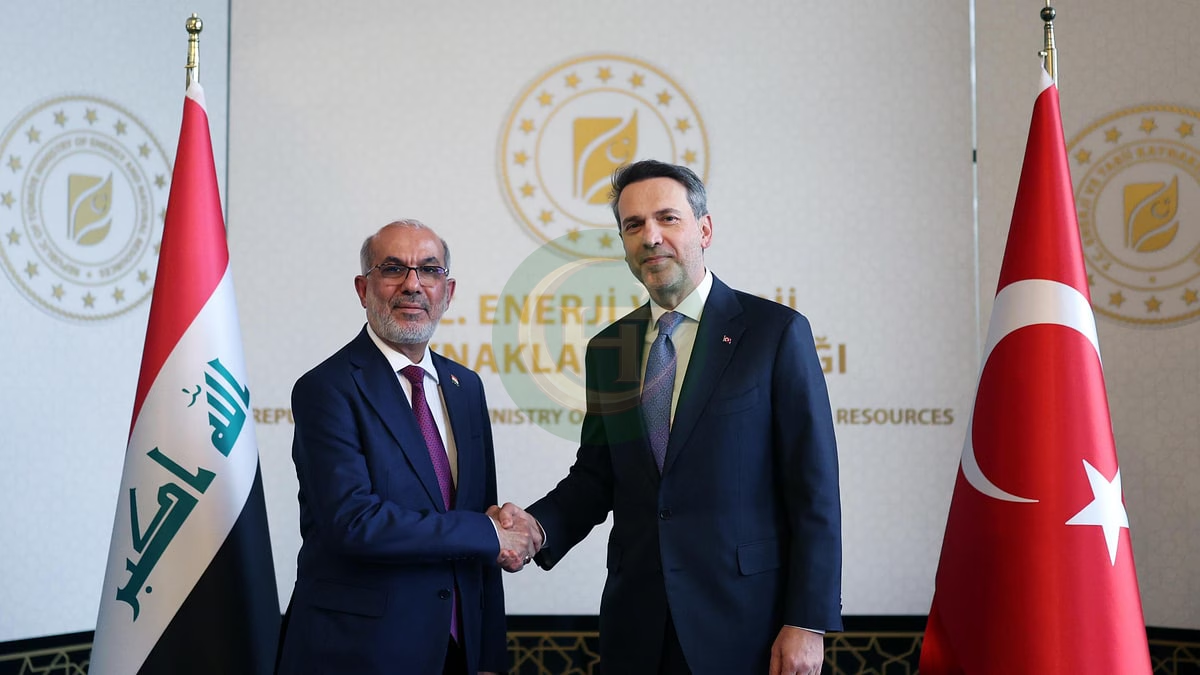
Speaking to Anadolu Agency after talks in Ankara with Iraqi Oil Minister Basim Mohammed Khudair, Turkish Energy Minister Alparslan Bayraktar said a long-term, comprehensive energy deal with Iraq is in the works. He also discussed extending the Kirkuk-Ceyhan pipeline to Basra and how the Development Road could offer Iraqi, Kuwaiti and Qatari energy an outlet that bypasses the Strait of Hormuz.
A long-term energy deal with Iraq is on the way
Where does energy cooperation with Iraq stand right now?
At a time when regional developments have made security of supply more critical than ever, we are taking energy relations between Türkiye and Iraq to a new and much stronger level.
After the crude oil transport contract signed last August between our national company BOTAŞ and SOMO and NOC, we are finalising our roadmap for a new, long-term and more comprehensive agreement. To that end, we plan to launch joint working groups that will quickly deliver projects in oil and gas infrastructure, exploration and production, oil trade, refining and petrochemicals, and electricity.
In close cooperation with the new Iraqi government, we will continue firmly to implement these concrete projects for the stability and prosperity of our shared region.
Kirkuk-Ceyhan should reach Basra
Given the tensions in the Gulf, what role do you see for the Kirkuk-Ceyhan line?
When security of supply matters this much, routes that avoid the Strait of Hormuz become ever more valuable. Extending the Kirkuk-Ceyhan Pipeline all the way to Basra and expanding its capacity matters to us because it would give the Gulf region a strong alternative to the Strait of Hormuz.
We aim for our national company TPAO to play an active role not only in the Kirkuk fields but in other fields in Iraq as well, to reach the target of 1 million barrels of crude supply set out by Iraqi Prime Minister Ali al-Zaidi, and to make Ceyhan a global energy hub by increasing trade volume.
The Development Road will be an "energy road"
What place will energy have on the Development Road running from Basra to Türkiye?
As Türkiye, we are determined to build the Development Road not only as a transport corridor but as a strategic 'energy road' supported by oil, natural gas and electricity transmission lines along the route. If the energy infrastructure is developed simultaneously and in an integrated way, the economic value of the route will rise significantly.
How much Iraqi and Kuwaiti oil could move along this route?
A capacity of up to 2.5 million barrels of oil a day is within reach on this route, and much of the region's output could be channelled through it.
If we reach a capacity of 2.5 million barrels a day, and the production is there in Iraq: Iraq produces 4 million barrels. Kuwait produces 2 million barrels of oil a day. So if we can put 50 percent, 40 percent of that on this route, its economic value comes to roughly $65-70 billion a year.
Qatari gas to Europe via Iraq
Where does Qatari gas fit into this picture?
Qatar is the Gulf's largest gas exporter and sends most of its gas to the world by LNG tanker, which means through the Strait of Hormuz. If the Development Road becomes an energy road, it could open an alternative route for Qatari gas as well.
If you add a project in which Qatari gas comes to Türkiye via Iraq, especially through this Development Road once it is turned into an energy road, with some of the gas staying in Türkiye and some exported to Europe, then oil and gas alone create an economic size of $80 billion a year. The Development Road will no longer be just a project that strengthens trade and transport links between Iraq and Türkiye; it can become a multidimensional energy corridor that also covers oil, gas and electricity infrastructure.
Featured Listings
Sponsored
Similar Interviews


President Erdoğan to Al Jazeera: the Mecca pact, Hormuz, Syria, Gaza and the F-35s
قناة الجزيرة
- 9/30/2026


President Erdoğan to Asharq Al-Awsat: the Mecca pact, Hormuz, Saudi Arabia, Lebanon and Syria
غسان شربل («الشرق الأوسط»)
- 9/29/2026


President Erdoğan to Newsweek: UN reform, Iran, the Mecca pact and Russia-Ukraine
Newsweek
- 9/29/2026
Featured News


Job Listings
Stay Updated with Hilal Times
Subscribe to be informed about special news, developments and announcements. We will keep you informed.
By signing up, you agree to our Privacy Policy











