- BIST10011,618-0.88%
- USD49.45+0.05%
- EUR55.62+0.37%
- GOLD4,188.80+0.18%
- INTEREST37.00%-1.00
- BITCOIN82,453+0.54%
- October 19, 202617°
- BIST10011,618-0.88%
- USD49.45+0.05%
- EUR55.62+0.37%
- GOLD4,188.80+0.18%
- INTEREST37.00%-1.00
- BITCOIN82,453+0.54%
- October 19, 202617°
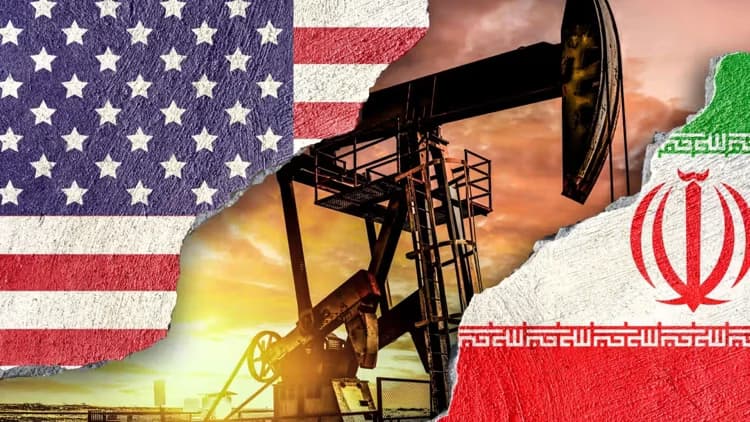
Expectations of US-Iran diplomacy push Brent crude below $100 in Middle East
November Brent crude futures fell nearly 4% to $99.75 a barrel on expectations that diplomatic contacts between the United States and Iran could resume. Expectations that supply risks in the Middle East could ease also pushed November West Texas Intermediate crude futures down to $92.14 a barrel.


Expectations that diplomatic contacts between the United States and Iran could resume eased concerns about oil supplies in the Middle East. Against this backdrop, November Brent crude futures fell nearly 4% to $99.75 a barrel.
Brent crude had risen as high as $105 the previous day and closed at $103.87. November West Texas Intermediate crude futures were also trading at $92.14 a barrel at the same time.
US-Iran diplomacy at the center of market attention
US President Donald Trump's statement that he was open to meeting Iranian President Masoud Pezeshkian on the sidelines of the United Nations General Assembly strengthened expectations that tensions between the parties could ease.
Expectations of a possible de-escalation limited concerns about supply disruptions in oil shipments from the region, particularly through the Strait of Hormuz. As a result, the geopolitical risk premium reflected in oil prices also declined.
The 81st session of the United Nations General Assembly will begin in New York on September 22. More than 150 heads of state and government, along with numerous senior officials, will attend the meeting, which will be held under the theme “Rebuilding Trust and Reigniting Global Solidarity: Accelerating Action on the 2030 Agenda and its Sustainable Development Goals towards peace, prosperity, progress and sustainability for all.”
Developments in Iran and the Strait of Hormuz, as well as Gaza, the Russia-Ukraine war and other regional conflicts, are expected to be on the agenda of the General Assembly meetings. Diplomatic efforts to restart talks between the United States and Iran are also among the issues being followed by oil markets.
Qatar's mediation efforts continue
Majed Al Ansari, spokesperson for Qatar's Ministry of Foreign Affairs, announced that different ideas had been under discussion for about two weeks with the aim of restarting talks between Washington and Tehran.
Al Ansari said Qatar's mediation team was maintaining contacts with Tehran and Washington to assess this possibility. He said the team was conducting diplomatic contacts between various capitals to make progress.
Statements about Washington's desire to reach an agreement supported expectations that US-Iran tensions could ease and supply risks in the region could decline. The perception of geopolitical risk also eased after Trump indicated that he was considering airstrikes against the Iran-backed Houthis in Yemen but had decided against taking that step for the time being.
Saudi Arabia's oil shipments rise
Saudi Arabia's increase in crude oil exports through the Strait of Hormuz after attacks by Yemen's Houthis on Saudi Aramco's East-West Petroline reduced supply concerns in the markets.
According to preliminary data, the country's crude oil exports rose to more than 4 million barrels per day so far in September after falling to 2.4 million barrels per day in August, their lowest level since 2013.
Assessments dated September 18 said oil flows from the Middle East remained strong despite the disruption on the East-West Petroline. Total oil flows in the region averaged 17.1 million barrels per day over the past 10 days, 6.1 million barrels per day below the 2025 average.
Interest-rate policy limits oil prices
Expectations of another interest-rate increase by the end of the year are putting pressure on oil prices after the US Federal Reserve raised interest rates last week for the first time since July 2023.
Rising energy costs in the United States are strengthening expectations of tighter monetary policy, supporting the view that economic activity and oil demand could slow. Expectations of tighter monetary policy are also strengthening the dollar, making oil more expensive for buyers using other currencies and pushing prices lower.
Stay Updated with Hilal Times
Subscribe to be informed about special news, developments and announcements. We will keep you informed.
By signing up, you agree to our Privacy Policy