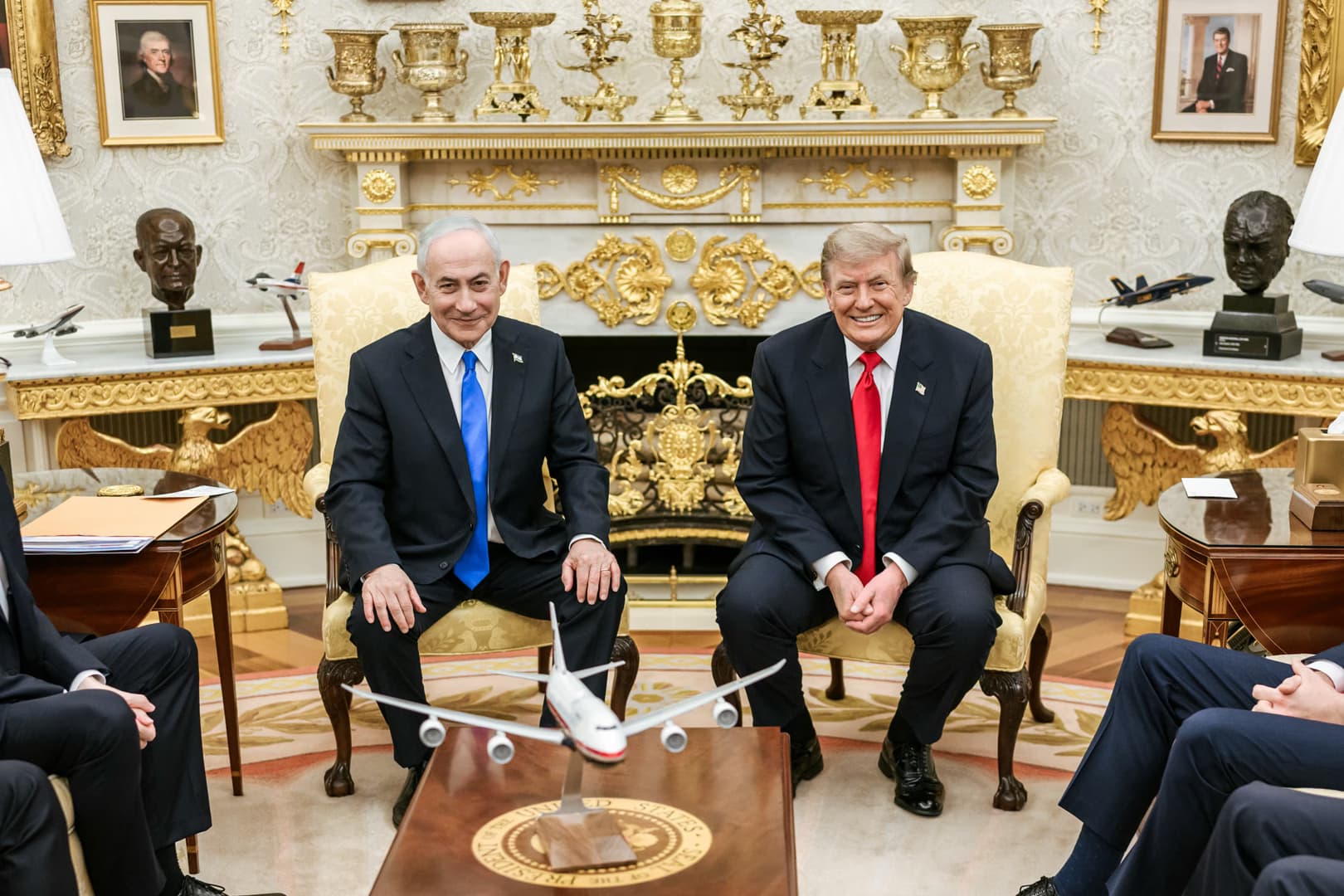
US President Donald Trump's positive statements on the supply of F-35 fighter jets to Turkey at the NATO Summit in Ankara have caused serious unease and security concerns in Greece.
Speaking at a panel organized by The Economist magazine, former Greek Prime Minister Alexis Tsipras said, 'Recent developments raise serious concerns for both European security and our national security.'
Tsipras criticized Prime Minister Kyriakos Mitsotakis' government for abandoning multilateral foreign policy and pursuing a 'blank check policy.' The former prime minister claimed that during the Joe Biden era, when Mitsotakis was in opposition, he engaged in 'extreme actions' to the point of labeling himself a 'Trumpist.'
Tsipras said, 'In the current situation, Turkey is being given F-35s, F-16s, Eurofighters, and American aircraft engines, while we cannot even lay a cable to Çoban Island. Make no mistake, this is exactly the situation. Our national security is under threat.' He added that Turkey has achieved many successes, including the procurement of F-16s, F-35s, and Eurofighters, as well as signing an agreement with Libya on maritime jurisdiction areas.
Tsipras described Trump's positive remarks on Turkey's F-35 procurement as a 'national defeat.' Recalling that during his own premiership he had made demands from the US in exchange for a five-year use agreement for the Souda military base, Tsipras accused Mitsotakis of granting indefinite use rights for six different bases, including Alexandroupoli.
Greek media widely cover Turkey's gains
Following the first day of the NATO Summit, the Greek media devoted extensive coverage to Trump's laudatory remarks about Turkey and President Recep Tayyip Erdoğan. They assessed his statements on the F-35 and CAATSA sanctions as significant gains for Turkey.
In its report titled 'Athens concerned about developments,' the Kathimerini newspaper reported that Greek Defense Minister Nikos Dendias, during a meeting with US Congress members in Athens, said that 'Turkey's F-35 procurement could have serious consequences for stability and security in the region.'
The same newspaper wrote that Foreign Minister Giorgos Gerapetritis also expressed unease over Turkey's F-35 acquisition during his meeting with US Congress members in Athens on July 10.
Kathimerini suggested that Greece had so far treated the F-35 issue as a bilateral matter between Turkey and the US and maintained a balanced stance, and commented: 'The new reality requires Greece to convey its position through all channels and to communicate the full range of Greek views to Washington. However, it is striking that the Greek side lacks the means to exert pressure on Washington.'
In its Saturday edition, the Ta Nea newspaper, citing an experienced diplomat who requested anonymity, included the statement that 'Trump's praise for Erdoğan plays a key role in improving relations between the two countries.'
The report also assessed: 'This is precisely where the problems begin for Athens. It sees two allies drawing closer, Turkey entering the European security architecture, and seeking a role in the Middle East. Unlike the Europeans, who often disappoint Trump, Turkey appears ready to send troops wherever it is told.'