- BIST10011,518-1.74%
- USD49.45+0.05%
- EUR55.62+0.37%
- GOLD4,169.30-0.28%
- INTEREST37.00%-1.00
- BITCOIN81,844-0.21%
- October 19, 202617°
- BIST10011,518-1.74%
- USD49.45+0.05%
- EUR55.62+0.37%
- GOLD4,169.30-0.28%
- INTEREST37.00%-1.00
- BITCOIN81,844-0.21%
- October 19, 202617°
Former Israeli soldier Nir says medics were buried in Gaza
A former soldier who served in the Israeli army for 10 years and uses the alias Nir alleged that civilians and medical workers were targeted during operations in Gaza. Nir said those killed in the medical convoy attacked in Rafah on March 23, 2025, were buried at the scene and that ambulances were crushed by an armored bulldozer.


Nir, a former soldier who served in the Israeli army for 10 years, alleged that targets could be struck during operations in Gaza without anyone taking responsibility. Nir, who uses an alias for security reasons, argued in an interview with Haaretz that civilians and medical workers were targeted.
Nir said he voluntarily returned to active duty a few hours after the attacks on Gaza began in October 2023. Saying that there were no rules in place during the first days of the operations, Nir stated that it was clearly apparent that some of the vehicles struck by the Israeli army were ambulances.
Allegations concerning the medical convoy in Rafah
One of the incidents described by Nir was an attack on a medical convoy with its sirens activated in Rafah on March 23, 2025. Nir said statements issued after the attack initially referred to 15 Hamas members among those killed, then 12 people and finally three suspects, adding that the accounts changed over time.
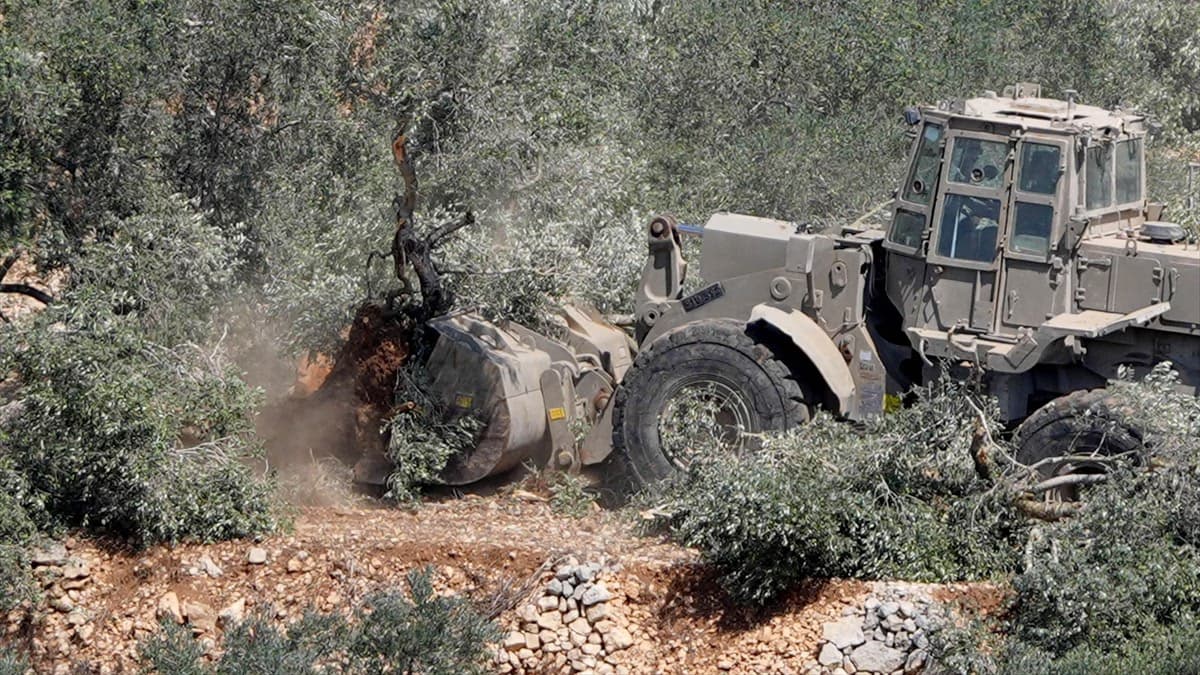
The former soldier alleged that the medical workers killed in the attack were buried at the scene and that the ambulances were crushed by a heavily armored bulldozer. He claimed that the incident he witnessed was effectively concealed and that military service continued without any changes being made.
Nir argued that what happened could not be explained solely by the conduct of some soldiers and was linked to the army’s overall operating system. He said that while serving in Gaza, he tried to cope with his psychological problems by maintaining physical distance from civilians, but that this approach gradually intensified his sense of guilt.
Soldiers’ exhaustion and friendly fire
Nir said he left the army about a year after the ambulance attack and later experienced post-traumatic stress disorder and psychosis. Saying that he saw the faces of people, children and families in Gaza, Nir alleged that soldiers encouraged one another by shouting so they would open fire without fully understanding the nature of their targets.
Nir said he commanded a unit during the fighting in Gaza and that Israeli soldiers experienced severe physical and emotional exhaustion. He said there were numerous friendly-fire incidents, recounting that two paratroopers were killed in one of them and that, in another, eight soldiers narrowly escaped being attacked.
Nir alleged that incidents in which Israeli soldiers were mistakenly targeted were described as errors or malfunctions, while similar cases involving Palestinians were met with understanding or approval.
Claim that the Yellow Line was changed
Nir also alleged that a division commander changed the boundary of the Yellow Line, which marks the area of Israeli control in the Gaza Strip, on his own initiative. According to Nir, the concrete blocks marking the line were moved hundreds of meters forward.
Nir argued that Palestinians were not informed of the change along the boundary and said that people heading to areas they were accustomed to visiting became military targets. He alleged that when civilians remained behind the altered line, soldiers justified attacks by assuming that the individuals might have planted explosives or been involved in arms trafficking.
The former soldier also argued that, in order to justify attacks on certain people, efforts were later made to portray them as criminals without intelligence or evidence.
Stay Updated with Hilal Times
Subscribe to be informed about special news, developments and announcements. We will keep you informed.
By signing up, you agree to our Privacy Policy