Investors in global markets, where developments in the Middle East, rising oil prices and volatility in bond yields have come to the fore, are monitoring US growth and core personal consumption expenditures data due to be released.
The yield on the US 10-year Treasury note stabilized at 5.24% after testing 5.30% the previous day, its highest level since 2007. The 30-year Treasury yield fell to 5.56% from 5.62%, its highest level since 2002. The two-year Treasury yield moved sideways at around 4.90% after reaching 4.97%, its highest level since May 2024.
Rising oil prices have heightened inflation concerns and strengthened expectations that central banks, particularly the Federal Reserve, may implement tighter monetary policy. Concerns about persistent inflation, combined with worries over rising borrowing by companies financing public spending and artificial intelligence investments, increased demand for higher yields in the bond market.
Expectations that artificial intelligence investments will accelerate the economy also contributed to the rise in the US 10-year Treasury yield. Money markets are pricing in a series of Federal Reserve rate hikes over the course of next year, while economic data due to be released is expected to influence the direction of those expectations.
Brent crude for November delivery traded at 103.1 after rising 0.5%, following US President Donald Trump’s rejection of reports that he was preparing to take steps to ease sanctions against Iran. Mohsen Rezaei, secretary of Iran’s Supreme National Security Council, also addressed Trump in remarks on negotiations and war.
Trump hosted Meta Chief Executive Mark Zuckerberg, Alphabet Chief Executive Sundar Pichai, Microsoft Chief Executive Satya Nadella, Nvidia Chief Executive Jensen Huang, Tesla and SpaceX Chief Executive Elon Musk, Advanced Micro Devices Chief Executive Lisa Su, Anthropic Chief Executive Dario Amodei and OpenAI President Greg Brockman at an artificial intelligence meeting at the White House. After the meeting, he said the talks had gone well and been productive.
Federal Reserve Board Member Michael Barr said risks to achieving the inflation target had increased, while risks to the labor market had declined. Barr said additional policy adjustments might be needed to bring inflation back to the target within a reasonable period.
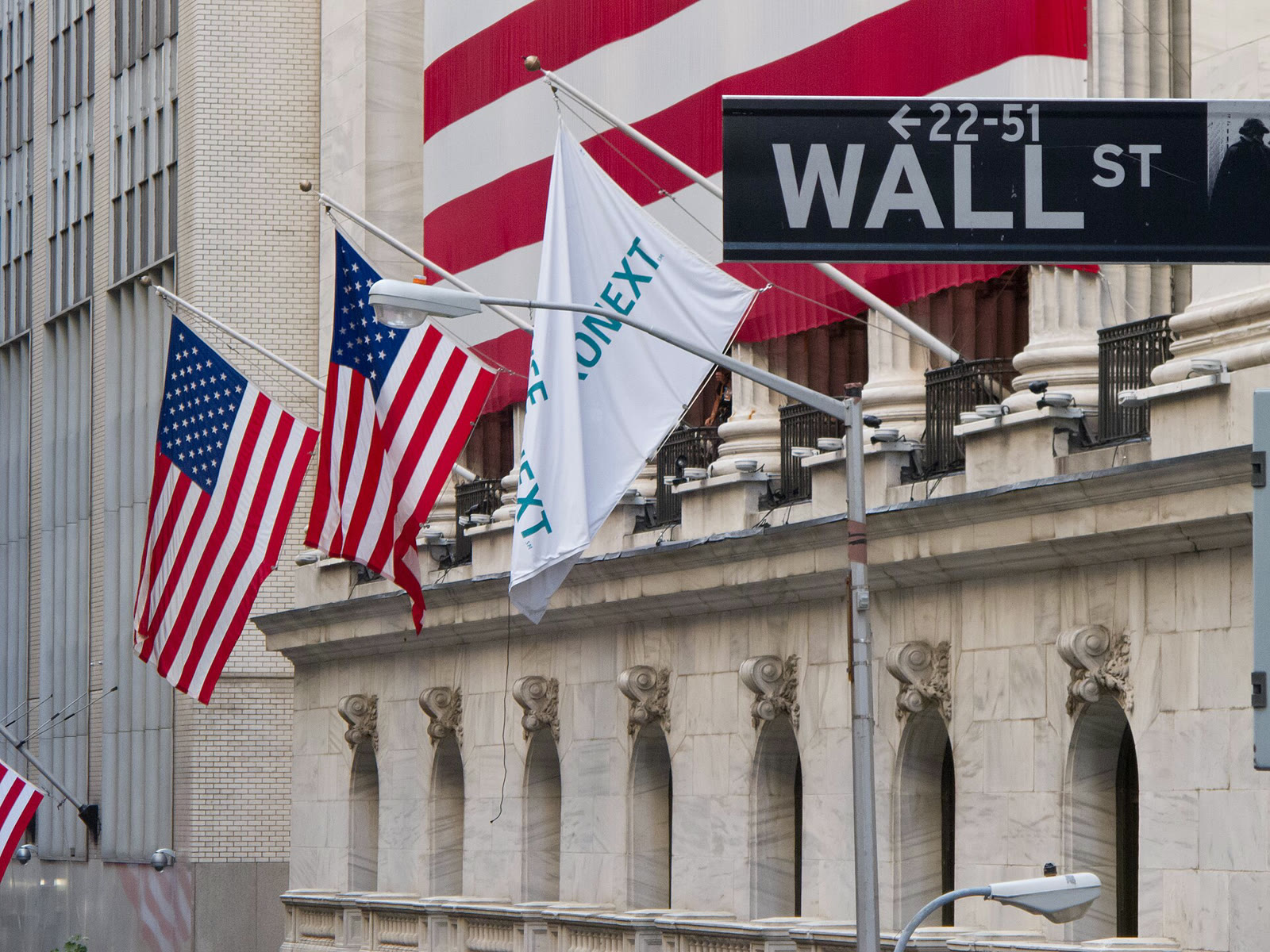
New York Fed President John Williams said there was no emergency following the policy decision taken this month. Chicago Fed President Austan Goolsbee described inflation remaining above the 2% target for five and a half years as “playing with fire.”
US and European markets move in different directions
Following comments from Federal Reserve officials, the dollar index remained at 101.5. Gold fell 0.1% to $4,180 per ounce. The consumer confidence index in the United States fell to 81.9 in September, while JOLTS job openings declined to 7.079 million in August, both below expectations.
On the New York Stock Exchange, the Dow Jones fell 0.26%, the S&P 500 declined 0.17% and the Nasdaq dropped 0.09%. US stock index futures, however, began the new day higher.
In European equity markets, energy prices and expectations about possible Federal Reserve interest-rate decisions, along with geopolitical tensions, influenced pricing. Economic confidence in the euro area fell 0.5 points to 97.9 in September, while consumer confidence declined from minus 15.5 to minus 16.5.
Germany’s public debt rose to 2.7535 trillion euros in the second quarter, driven by spending from special funds for infrastructure, climate investments and the defense industry. Dan Jorgensen, the European Commission member responsible for energy, said the European Union had paid more than 100 billion euros extra this year for the same amount of oil and natural gas.
Expectations that new tax increases could be considered in France, along with debt problems and political deadlock ahead of next year’s presidential election, increased pressure on the stock market. The euro-dollar exchange rate fell to 1.1312, its lowest level since May 2025, amid the impact of energy prices and expectations that the Federal Reserve could pursue tighter policy.
Germany’s DAX 40 rose 0.1% and Italy’s FTSE MIB gained 0.09%. France’s CAC 40 fell 0.53% and the UK’s FTSE 100 declined 0.45%. European stock index futures opened mixed.
China’s support measures watched in Asian markets
Investors’ cautious stance ahead of US data was reflected in mixed trading across Asian equity markets. The Chinese government announced that it would introduce new support policies to limit the economic slowdown and stabilize the property market.
The People’s Bank of China cut the one-year lending rate of three policy banks by 25 basis points to support the real economy. The rise in the manufacturing Purchasing Managers’ Index from 49.8 to 50.1 in September indicated that the sector had returned to growth.
Weak domestic demand and the prolonged stagnation in the property market continued to weigh on household and business confidence in China, while geopolitical uncertainty and rising trade tensions posed risks to the export outlook. In Japan, retail sales fell 1.2% month-on-month in August, while industrial production declined 1.7%.
Near the close, the Nikkei 225 rose 2.1% and the Shanghai Composite gained 0.1%. South Korea’s Kospi fell 0.2%, while Hong Kong’s Hang Seng moved sideways.
Borsa İstanbul ends the day down 2.40%
The BIST 100 index on Borsa İstanbul ended the day down 2.40% at 12,290.58 points. The October futures contract based on the BIST 30 index also fell 0.19% in the evening session compared with the regular-session close.

The dollar/Turkish lira exchange rate ended the previous day flat at 48.9894. At the opening of interbank trading, the rate stood at 49.0130, up 0.1% from the previous close.
An Economic Coordination Meeting was held under the chairmanship of President Recep Tayyip Erdoğan, with senior economic officials and executives from relevant institutions in attendance. Developments in the capital markets were discussed at the meeting.
Erdoğan announced that a fully authorized board chaired by the Vice President had been established to coordinate the process concerning funds slated for liquidation. The Fund Coordination Board is planned to provide overall coordination so that the liquidation process is conducted with due regard for investors’ legitimate rights and the public interest.
The State Supervisory Council launched an examination and inspection process concerning investment fund transactions in the capital markets. The Capital Markets Board also presented a roadmap for making payments to investors whose entitlements had been reconciled in funds subject to liquidation, based on their assets and liquidity.
In Türkiye, the unemployment rate, foreign trade balance, services producer price index, and monetary and banking statistics will be monitored during the day. In Germany, unemployment and inflation data will be followed, while in the United States, ADP private-sector employment, personal income, personal spending, core personal consumption expenditures and second-quarter growth data will be watched.
Analysts view 12,200 and 12,100 points as support levels and 12,400 and 12,500 points as resistance levels for the BIST 100 index.