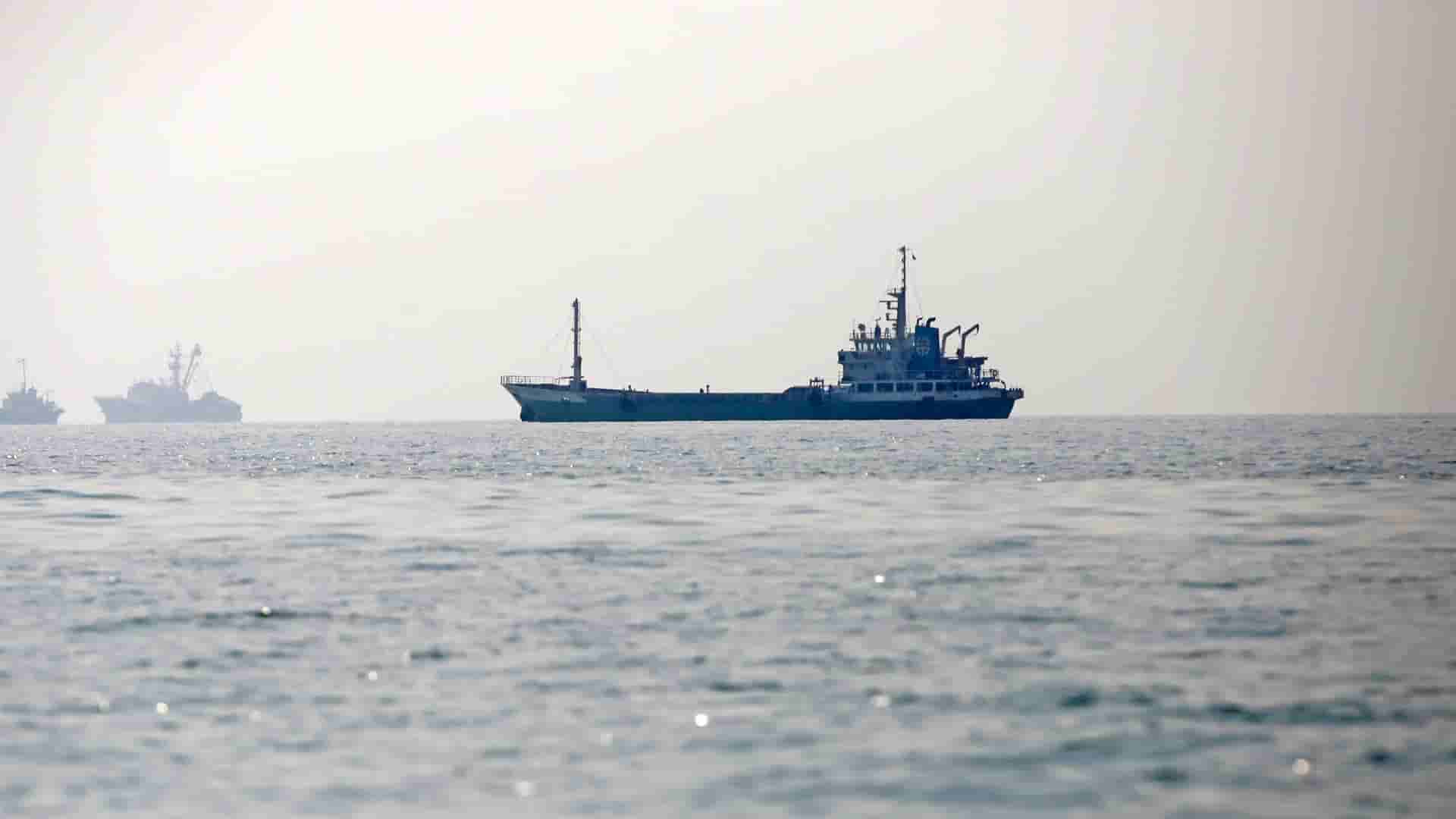
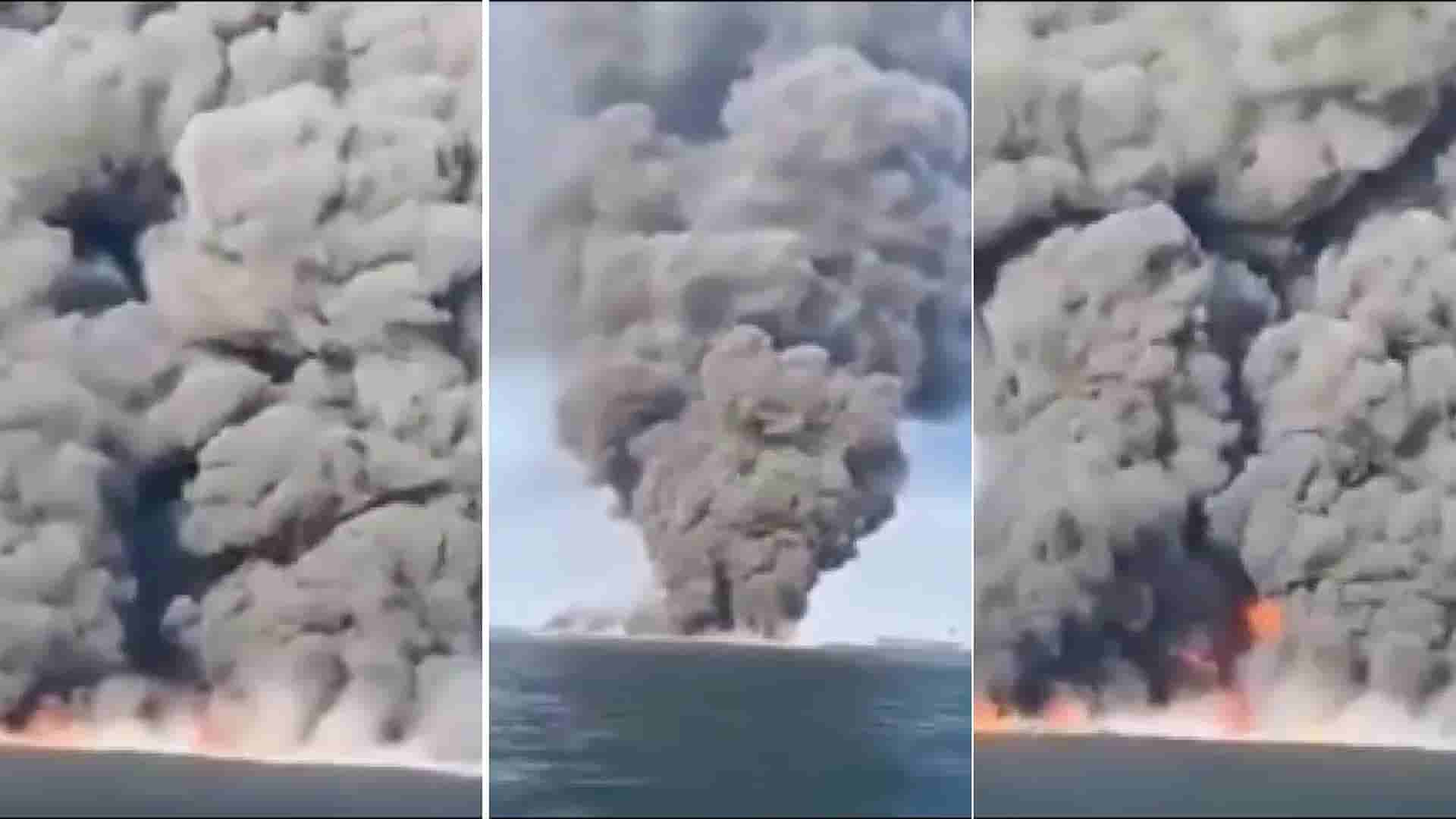
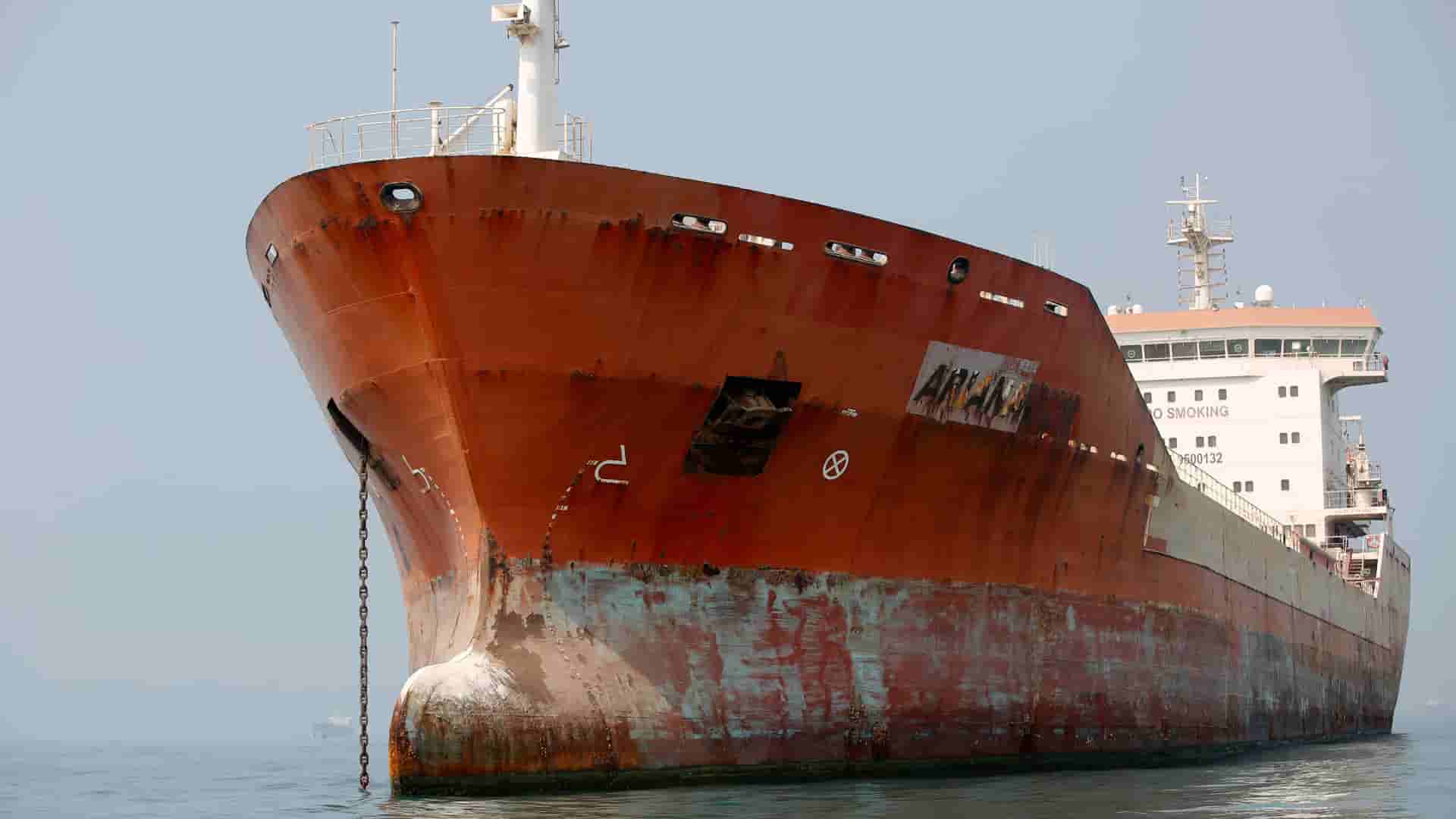
The naval forces of Iran’s Islamic Revolutionary Guard Corps said Monday morning, November 16, 2026, that two more oil tankers struck naval mines while attempting to cross the southern route of the Strait of Hormuz, causing a series of powerful explosions that it said “lit up the sky over the strait for hours.”
The IRGC Navy’s public relations office said in a statement carried by Iran’s official media that the tankers were moving “under the direct direction of U.S. officers and with support from U.S. fighter jets” and exploded near the two tankers whose damage was announced on Sunday. The statement said the number of tankers that had caught fire and were sinking in the strait since Sunday had risen to six.
The IRGC did not disclose the names or flags of the two tankers or the companies that owned them. It also provided no information about their crews or any casualties, and no independent confirmation of its account had been issued.
“Walls of fire” along the southern route
The statement said that “the southern route created by the Americans in the Strait of Hormuz has been mined with walls of fire,” warning tanker owners and oil companies not to trust statements by U.S. military personnel or cooperate with them because their tankers would be at risk if they used the route.
The IRGC described the targeting of the tankers as a “punitive act” in response to what it called the “illegal U.S. naval blockade” and violations of the rules Iran had set for navigation in the strait. It added that pollution caused by the explosions had spread through the waters of the strait and along its shores.
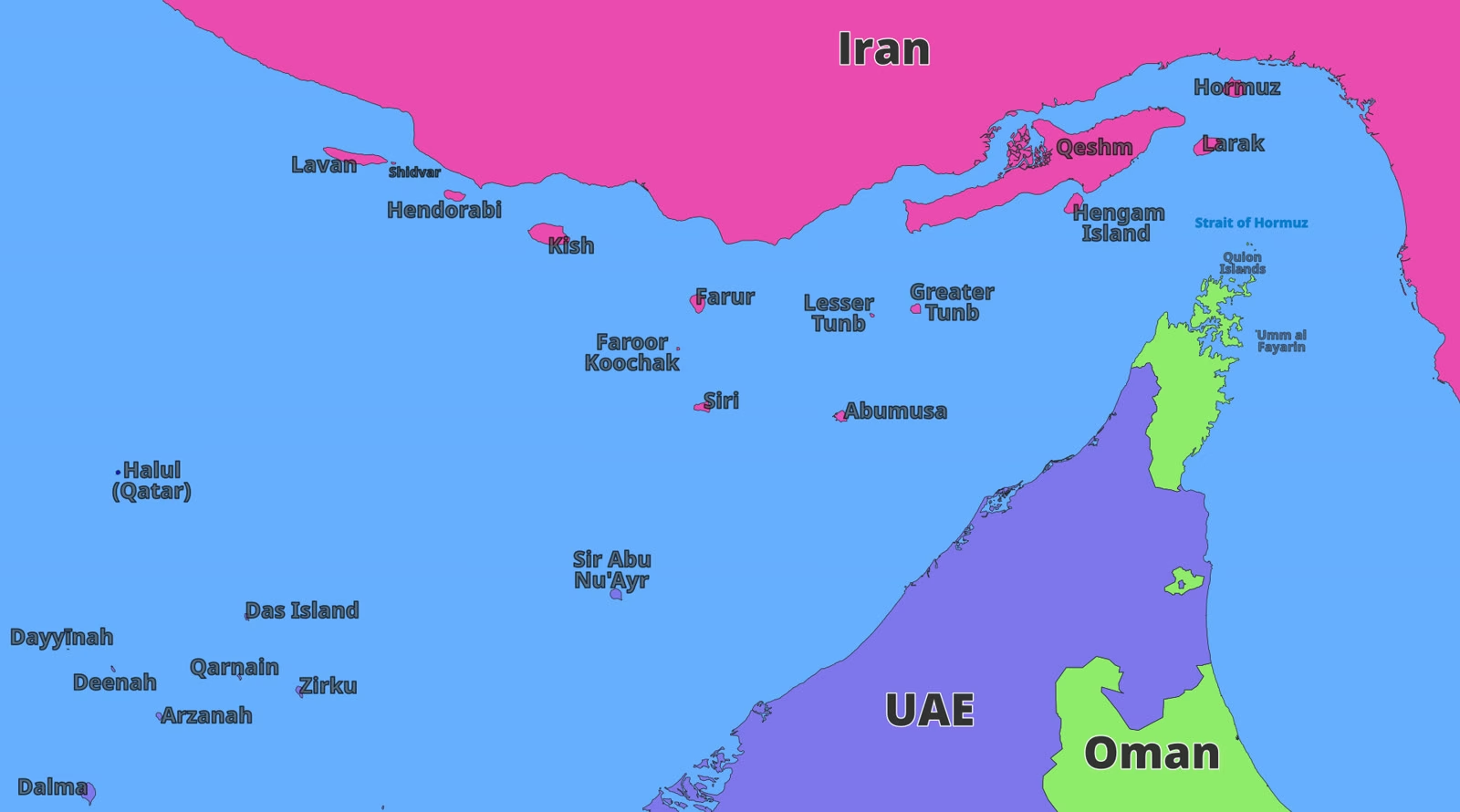
The Strait of Hormuz links the Gulf with the Gulf of Oman and separates Iran’s coast from Oman’s Musandam Peninsula. Under normal conditions, about one-fifth of the world’s oil trade passes through it. Tehran closed the strait again on July 12 after the United States resumed strikes on Iran on July 8, saying that vessels crossing outside the route it had designated or without its permission put themselves at risk.
A series of announcements over two days
The latest announcement came a day after the IRGC said that a giant tanker carrying more than 2 million barrels of crude had sunk south of the strait after striking a mine. Late Sunday evening, the Iranian military announced that another oil tanker had struck a naval mine and caught fire, while Iranian state television said that five tankers had struck mines within 48 hours.
The United Kingdom Maritime Trade Operations center, or UKMTO, said Sunday that it had received a report from Indian shipping authorities about an attack on a tanker sailing east in the Gulf before entering the strait, adding that its crew was safe. The U.S. military had not immediately commented on Iran’s latest account. Washington says it has cleared the main routes through the strait of mines, and U.S. Central Command previously denied a similar Iranian account in September, saying the tanker in question had been hit by a missile and a drone, not a mine.
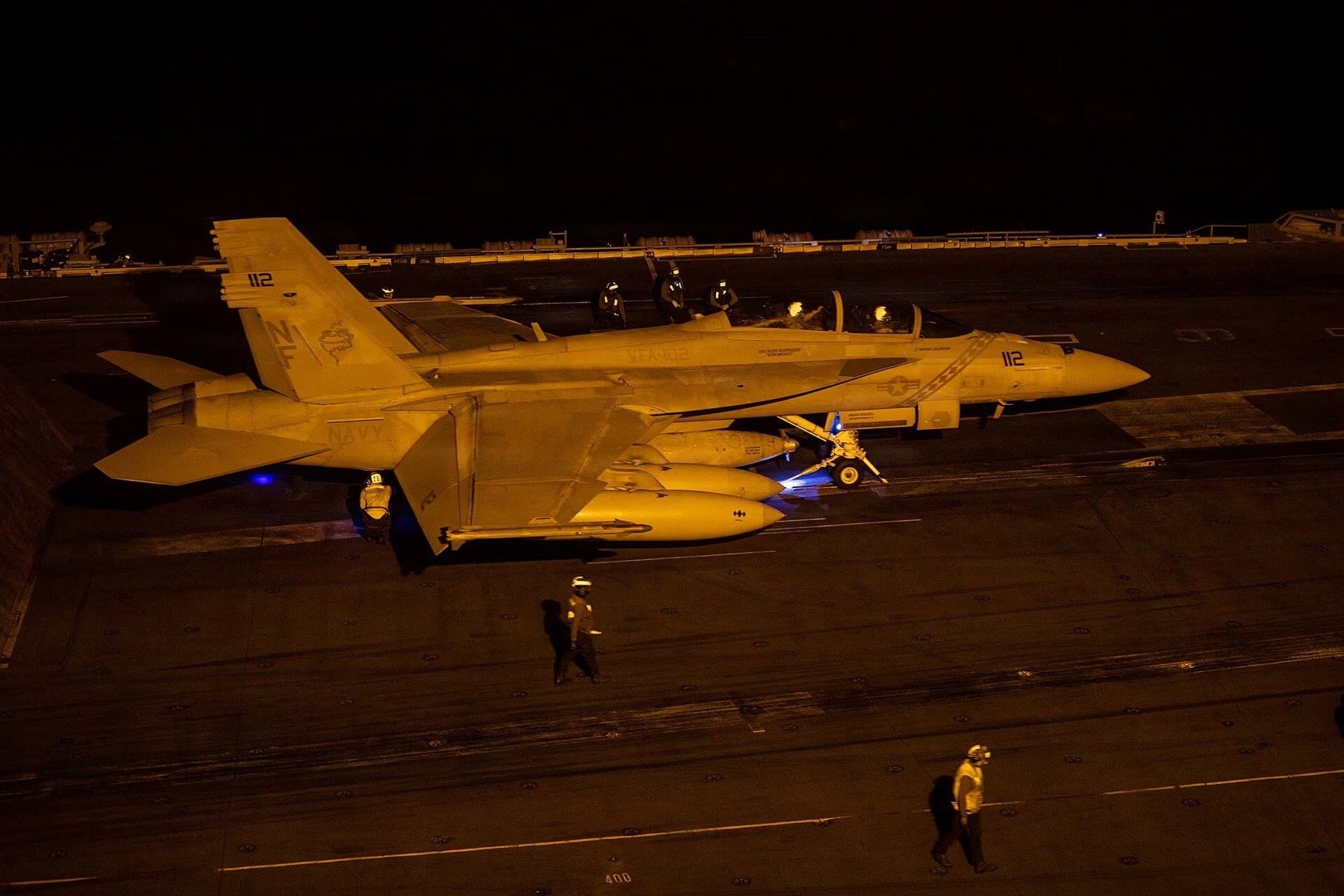
The Iranian account of “U.S. fighter jets” coincided with Washington’s reinforcement of its military presence in the region. The aircraft carrier Theodore Roosevelt arrived in the area covered by Central Command on Sunday, according to an account by the Axios website citing a U.S. official, bringing the number of U.S. carrier strike groups there to three. On the same day, the IRGC announced that it had launched drones at a U.S. radar system at Al Riffa Air Base in Bahrain, while Manama said its defenses had intercepted them.
U.S. President Donald Trump said that launching new attacks on Iran might not be “necessary,” while stressing that U.S. forces were “on standby.” Iranian Parliament Speaker Mohammad Bagher Ghalibaf, meanwhile, said the war could end if Washington accepted Tehran’s “logical conditions.”
Oil markets await developments
Oil prices were steady in Asian trading Monday morning after a two-week decline, with Brent crude trading near $95 to $96 a barrel and U.S. crude near $88. Traders were weighing renewed tensions in the Gulf against the International Energy Agency’s forecast of a supply surplus of nearly 2 million barrels per day this quarter, following the partial return of flows through Hormuz.
In a statement issued Monday morning, the Iranian army’s naval forces said a “non-compliant” oil tanker struck a naval mine early that day in a restricted area east of the Strait of Hormuz after switching off its tracking systems and attempting to use an “alternative” route not approved by Tehran. The tanker caught fire and was disabled. UKMTO, for its part, said a tanker had reported being hit by an unknown projectile while leaving the strait, causing a fire in the engine room. It confirmed that there were no injuries and that all crew members were safe, while the extent of the damage and its environmental impact remained unclear.
Cover photo: Anadolu (archive). Map: Wikimedia Commons (CC0). Fighter photo: U.S. Navy. Sources: Anadolu, IRGC Navy statement, UKMTO, Reuters, Bloomberg, Axios.