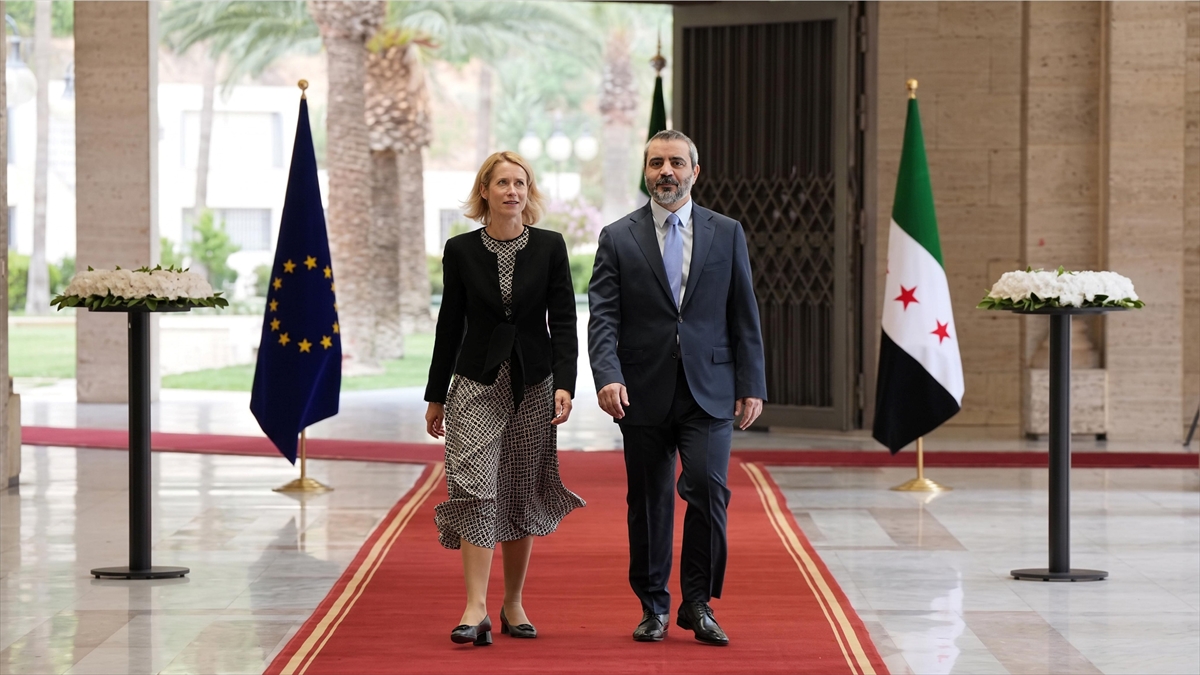
Kallas met with Syrian Foreign Minister Asaad al-Shaibani at the Tishreen Palace in Damascus. The visit came days after the two officials met in New York on the sidelines of the 81st session of the UN General Assembly. The EU had sent an ambassador back to Damascus after a 14-year hiatus.
At a press conference following her meeting with Syrian Foreign Minister Asaad al-Shaibani, Kallas explained the importance of the transitional period for Syrians who had hoped for peace, freedom and a future for years. She said the EU was using its political and economic tools to support an inclusive and peaceful transition.
Political dialogue resumes between Damascus and Europe
Recalling that the EU had lifted economic sanctions to support Syria’s recovery and reconstruction after the overthrow of the Assad regime, Kallas said cooperation between the two sides had been revived. She said high-level political dialogue had resumed in May.
Kallas said they aimed to attract more investment to Syria and develop the partnership, adding that this also depended on steps to be taken by the Syrian side. She said technical, political and security contacts were continuing and announced plans to hold another high-level political dialogue meeting before next summer.
Reconstruction linked to a secure and fair investment climate
Kallas said she had visited Damascus’s Jobar neighborhood to see the destruction caused by the Assad regime. She said the EU was providing support for recovery, humanitarian aid, institution-building and demining.
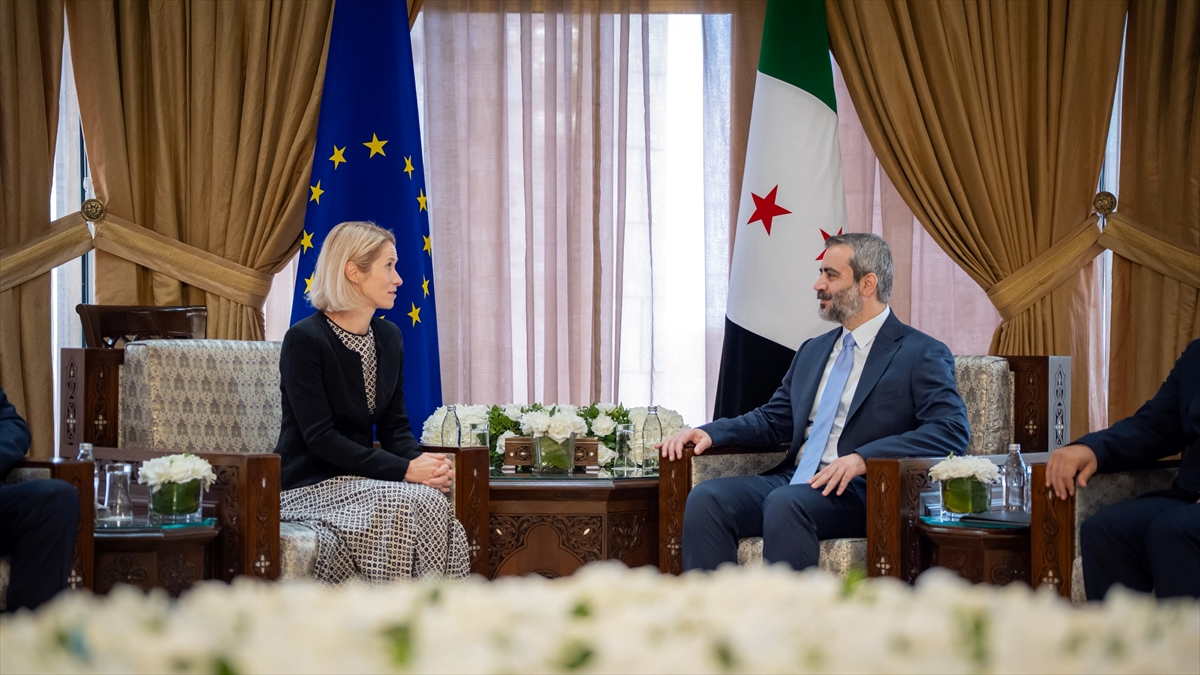
According to Kallas, private-sector investment is one of the main elements of reconstruction. She said companies need a secure environment, the rule of law and well-functioning institutions to make investment decisions, adding that investors must have confidence that they can turn to the courts in the event of a dispute and receive fair rulings.
Reiterating that the EU was ready to help build institutions in Syria, Kallas said this support would promote investment and employment. She said more than three million people had returned to Syria since the war and stressed that the return of refugees must be safe, dignified and sustainable.
Kallas said security, housing, schools and opportunities for reintegration were necessary for returns to continue, describing the reintegration of northeastern Syria as an important step. She also said the rights of Kurds must be protected and trust and dialogue strengthened in Suwayda.
Damascus prepares a new partnership agreement with the EU
Al-Shaibani said Kallas’s first visit to Damascus in 15 years was significant for Syrian-European relations. He said the meeting addressed bilateral relations as well as the high-level political dialogue launched last year, and announced that Syria would elevate its diplomatic representation to the EU to ambassadorial level.
Al-Shaibani said the EU had removed several Syrian state institutions, including the ministries of defense and interior, from its sanctions list on May 18. He added that the European Commission had participated in a national framework workshop on voluntary return at the beginning of September and said a technical support platform for Syrian institutions had also been launched.
Al-Shaibani said they aimed to prepare a joint scoping document by the end of the first quarter of next year for a new partnership agreement between Syria and the EU to replace the 1977 agreement. He said the sides had agreed to conduct negotiations through technical committees.
Al-Shaibani said Syria wanted to be included in the EU’s multiannual financial framework for 2028-2034 and to elevate cooperation to the level of a strategic commitment. He said Syria wanted to advance cooperation with the EU on improving governance and public services, adding that the two sides had also discussed supporting the capacity of Syria’s coast guard units.
Al-Shaibani calls for sanctions on state institutions to be lifted
Al-Shaibani said Syria was continuing to implement its national framework for voluntary returns and that its position on sanctions, which it considers one of the obstacles to recovery, had not changed. He said Syria supported the continuation of sanctions against prominent figures of the former regime but called for sanctions on state institutions and government-affiliated entities to be lifted.
Al-Shaibani argued that Syria had left behind its legacy of weapons of mass destruction. He said Syria’s rights at the Organisation for the Prohibition of Chemical Weapons had been restored and that the file dating from the former regime had been closed at the International Atomic Energy Agency.
Al-Shaibani said the political transition was continuing and that national unity had been strengthened through the convening of the People’s Assembly in July and the integration of the Syrian Democratic Forces into state institutions.
Regional security and the Golan Heights on the agenda
Kallas said regional security had also been discussed during the meetings in Damascus. She said Syria’s choice to stay out of the conflict between Iran and the United States had helped prevent the conflict from spreading to the country.
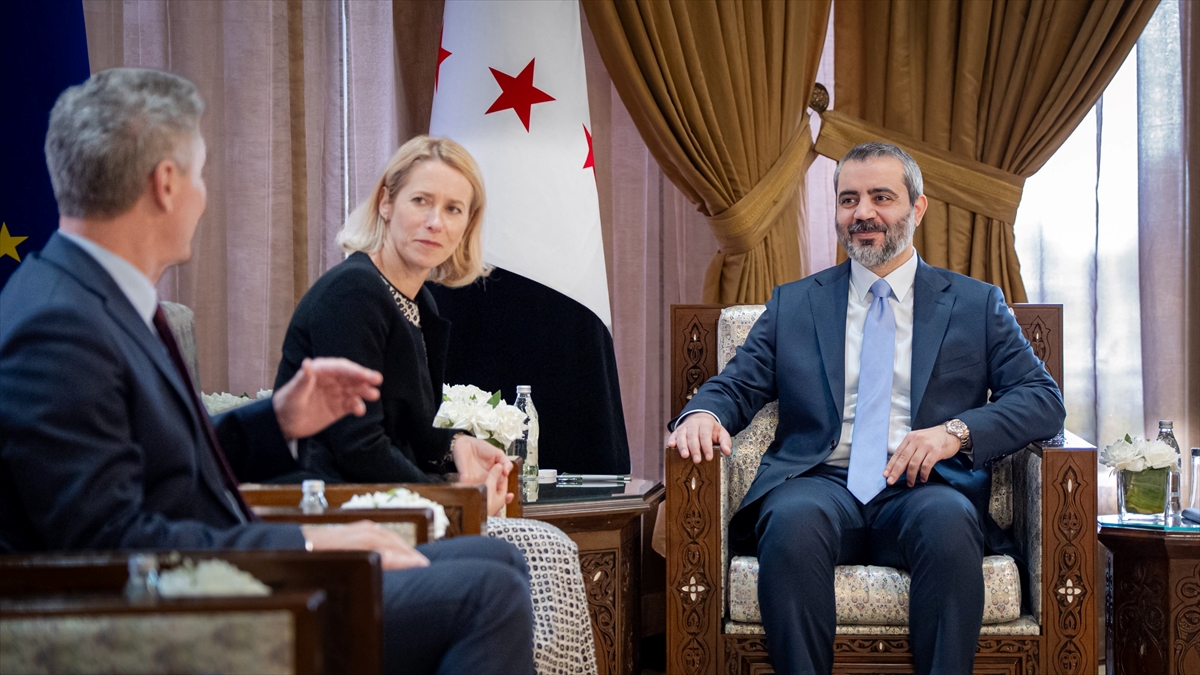
Referring to talks on security arrangements between Syria and Israel, Kallas stressed the need to respect the 1974 Disengagement of Forces Agreement. She also said they believed the Syrian government could reduce the Russian military presence in the country and that the EU could be a reliable partner for Syria.
Kallas said Europe wanted the transition in Syria to be successful and lasting, adding that they aimed to ensure that developing relations translated into tangible improvements in Syrians’ daily lives.
Al-Shaibani said they did not accept Syrian territory being turned into a platform for any attack. He said Syria stood in solidarity with the Gulf countries and Jordan in the face of Iranian attacks against those countries and called for disputes to be resolved through diplomatic means.
Al-Shaibani said Syria’s geographic position was important for energy and trade routes between East and West, adding that stability in his country was an integral part of Europe’s own security.
Al-Shaibani argued that Israel’s attacks on Syria targeted a country in the process of recovery and said Europe should not limit itself to statements of concern. Calling for a firm EU stance, Al-Shaibani demanded that the EU Foreign Affairs Council clearly define the attacks and that Israeli forces withdraw to the lines of December 8, 2014.
Al-Shaibani called for Israel’s attacks on Syria to be explicitly placed on the agenda of the EU Political and Security Committee and stressed that the Golan Heights were Syrian territory. He said UN Security Council Resolution 497 considered Israel’s annexation of the Golan null and void and expressed appreciation for the EU’s position rejecting Israeli sovereignty over the Golan Heights.
Al-Shaibani said Syria remained committed to the 1974 Disengagement of Forces Agreement. He also said Syria expected the EU to support the renewal of the mandate of the United Nations Disengagement Observer Force.