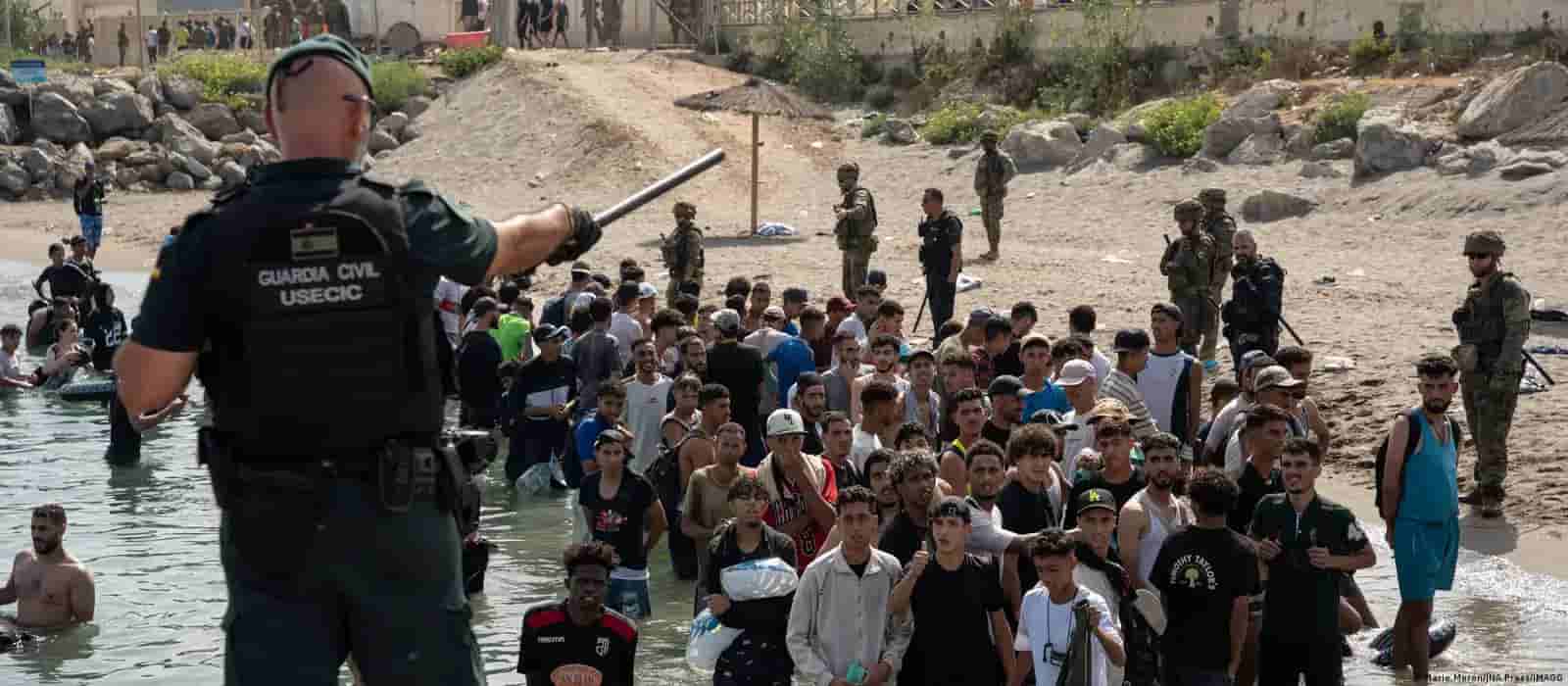
The Spanish city of Ceuta, located on the northern coast of Africa, faced one of the largest migration waves in its modern history after tens of thousands of people crossed the border from Morocco within a few days.
According to figures announced by the Spanish authorities, around 72,000 people entered Ceuta during the crisis. The crossings took place at various points along the land and coastal borders, while large numbers of people also tried to reach Spanish territory by swimming across the sea.
The arrival of tens of thousands of people within a short period placed enormous pressure on a city with a population of around 84,000, particularly its reception centers, public services and security agencies.
Spanish Interior Minister Fernando Grande-Marlaska said that around 72,000 people had entered Ceuta, noting that nearly 70,000 of them later returned to Morocco.
Social media helped encourage the wave of crossings
The role played by social media was one of the most prominent aspects of the crisis.
Videos, messages and posts encouraging people to head toward Ceuta spread within a short period, contributing to the rising number of people who tried to reach the Spanish city, particularly among young Moroccans.
According to intelligence assessments and Spanish media reports, economic conditions, unemployment and young people's concerns about their future, along with the rapid spread of messages on social media, emerged as key factors behind the migration wave.
The spread of interpretations on social media concerning a Spanish court decision related to the immediate return of migrants arriving by sea also strengthened the belief among some people that reaching Ceuta could give them an opportunity to remain in Spain.
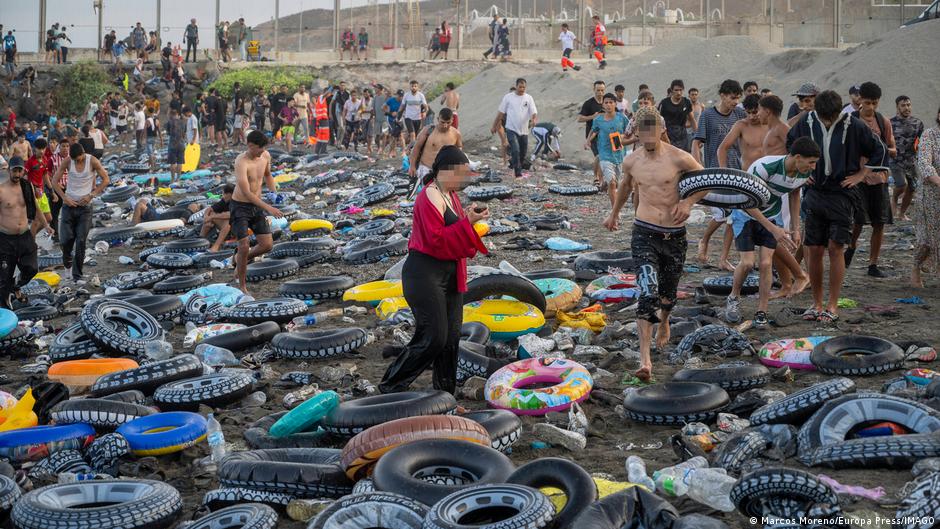
Thousands head toward the border
The wave of crossings began in the final days of July before accelerating sharply over a short period.
Thousands of people headed toward the border, while other groups tried to reach Ceuta on foot through coastal areas or by swimming.
The escalation in crossings coincided with Morocco's Throne Day celebrations on July 30, marking one of the most significant points in the development of the crisis.
Spanish security forces reinforced their presence at the border to confront the large influx, while reception centers and public services in Ceuta faced mounting pressure.
Deaths during crossing attempts
The crisis took on a dangerous humanitarian dimension as a number of migrants tried to reach Ceuta by swimming across the sea.
Authorities recorded deaths during the crossings, while rescue teams and security agencies faced difficult conditions because of the large numbers of people who tried to reach the city.
The developments highlighted the significant risks associated with attempts to cross maritime borders, especially for those who tried to swim the distance in difficult sea conditions.
Spain strengthens security measures
The mass wave of crossings prompted the Spanish authorities to strengthen security measures in Ceuta.
Additional police and Civil Guard units joined border security operations, while military personnel also took part in efforts to control the situation.
The authorities reinforced their presence in coastal areas to prevent further crossings by sea, while Morocco also took additional measures on the other side of the border.
Tightened measures on both sides helped curb the mass crossing wave after the first days of the crisis.
Approximately 70,000 people returned to Morocco
According to data announced by the Spanish Interior Ministry, around 70,000 of the nearly 72,000 people who entered Ceuta returned to Morocco within a short period.
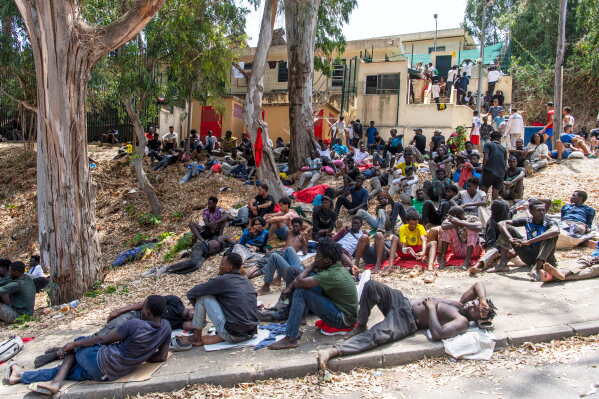
However, the presence of thousands of people inside the city opened a new issue for the Spanish authorities, particularly concerning unaccompanied minors.
Ceuta's authorities requested that a number of minors be transferred to other areas in mainland Spain amid heavy pressure on the city's reception facilities.
The distribution of minors among Spain's regions became a domestic political issue, as disagreements emerged between the central government and some regional governments over receiving them.
The crisis reaches the European Union agenda
The Ceuta crisis did not remain solely a border issue between Spain and Morocco, but quickly moved onto the European Union's agenda.
European officials discussed the crisis's repercussions and the security of the bloc's external borders as debate resumed over how to handle mass migration waves.
The Spanish government said that the crisis did not lead to an uncontrolled flow of migrants from Ceuta into the Schengen Area.
The Spanish interior minister said that the vast majority of those who entered Ceuta returned to Morocco, stressing that the security of the Schengen Area had not been at risk.
Nevertheless, the crisis once again highlighted political divisions within Europe over border security, migration and the sharing of responsibility among member states.
Moroccan youths' economic conditions come to the fore
The crisis also refocused attention on the economic and social conditions facing young people in Morocco.
International analyses indicate that unemployment, limited economic opportunities and the desire to build a better future in Europe were among the factors that drove large numbers of young people to try to reach Ceuta.
Spanish assessments also indicated that there was no conclusive evidence so far that the wave of crossings resulted from an organized political operation or direct external intervention.
Instead, the convergence of economic and social pressures with the rapid spread of calls to cross via social media is viewed as one of the main explanations for the unprecedented scale of the movement.
The Ceuta crisis reopens the European border debate
Although geographically located in Africa, Ceuta is part of Spain and represents one of the European Union's most sensitive external border points in North Africa.
The city has long been one of the points through which migrants have tried to reach European territory, but the crossing of tens of thousands of people within a short period made the current crisis significantly different from previous migration waves.
The crisis demonstrated the scale of the challenges Spain faces in protecting its borders, while also highlighting the economic and social problems affecting young Moroccans and the continuing European disagreements over migration policies.
Although the mass crossing wave has receded and the vast majority of arrivals have returned to Morocco, the situation of those remaining in Ceuta, particularly unaccompanied minors, along with cross-border cooperation between Spain and Morocco and European measures to prevent a similar crisis from recurring, remain among the key issues likely to be addressed in the coming period.