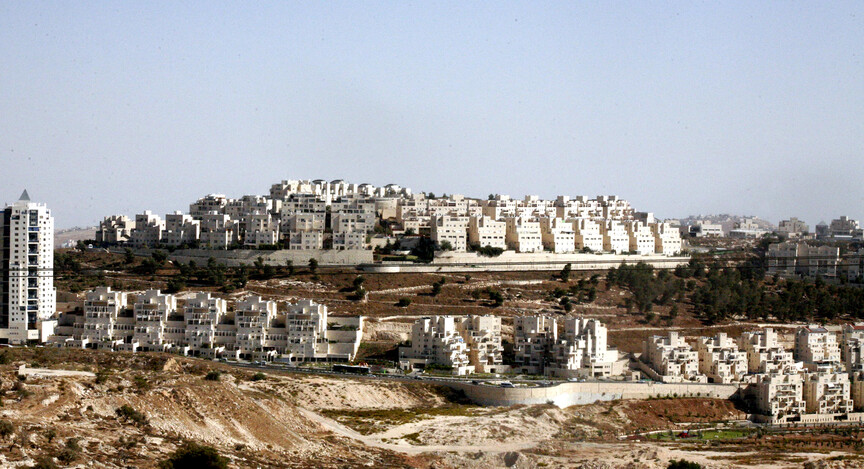
Calls to restrict trade with settlements established by Israel in the occupied Palestinian territories are turning into legal steps across Europe. Twelve countries have announced their intention to impose restrictions on trade in settlement products, while regulations including prison sentences are being prepared in some countries.
Joint stance against settlements by 12 countries
France, the United Kingdom, Canada, Denmark, Finland, Iceland, Ireland, Norway, Poland, Portugal, Spain and Sweden have announced their intention to restrict trade with Israeli settlements.
In a joint statement, the countries called on Israel to immediately halt the expansion of settlements and settler violence. The statement said the measures aim to preserve the two-state solution, reject the annexation of Palestinian territory and forced displacement, and ensure that those responsible for violence are held accountable.
The stance emerged after Israel opened a tender for the construction of approximately 1,200 settlement units in the E1 area, which is said could affect the territorial continuity between the occupied West Bank and East Jerusalem.
Prison sentences in Norway, the Netherlands and the United Kingdom
A legal framework aimed at boycotting settlement products is being prepared in Norway. The draft provides for prison sentences of up to three years for individuals and companies that conduct transactions involving these products.
Norwegian Foreign Minister Espen Barth Eide said he expected parliament to approve the bill in its current form. Eide said the worsening situation in the occupied West Bank had strengthened the arguments supporting the measure and added that other countries would adopt similar measures.
In the Netherlands, a regulation banning the import, purchase or sale of products from settlements in the occupied territories is expected to enter into force on September 22. The regulation provides for prison sentences of up to six years.
In the United Kingdom, prison sentences of up to 10 years could be imposed for establishing commercial relations with settlements.
France and the Palestinian side seek broader measures
France’s Foreign Ministry said it supported implementing a ban on trade with Israeli settlements in the occupied Palestinian territories at the European Union level. Amnesty International described the decision by the 12 countries to ban trade as necessary but overdue.
Mohammad Shtayyeh, a member of Fatah’s Central Committee, also described the statement as an important step. Shtayyeh said boycotting only products from illegal settlements would not be enough, and that measures should also be taken against the settlement project and the state supporting it.

Debate over the origin of settlement products
It had previously emerged that some settlement products produced in Israel were being presented as if they originated within Israel’s 1948 borders in order to circumvent similar bans in Europe.
An assessment by an Israeli newspaper described the announcement by the 12 countries as a diplomatic setback and major failure for the government of Israeli Prime Minister Benjamin Netanyahu. The Israeli government maintains that, since its formation at the end of 2022, it has approved the establishment of 104 new settlements and 160 agricultural settlement outposts in the occupied West Bank.
The United Nations defines the West Bank, including East Jerusalem, as occupied Palestinian territory and considers Israeli settlements in the area contrary to international law. Palestinians say the expansion of settlements, along with attacks by the army and settlers, is paving the way for the annexation of the West Bank and weakening the possibility of establishing a Palestinian state.