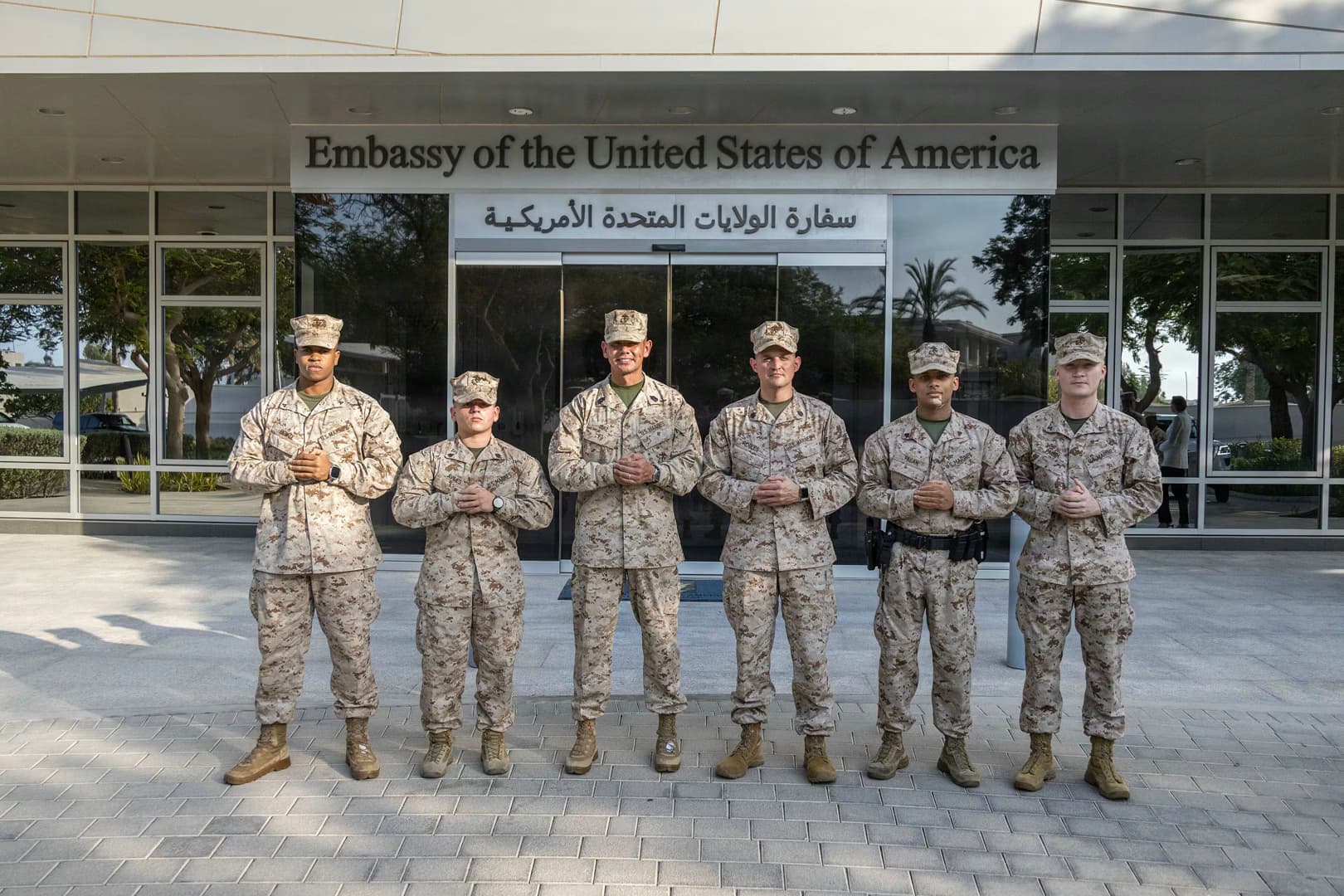
Iran's Revolutionary Guards announced that they targeted US air defense systems, radar installations and administrative buildings in Kuwait and Bahrain.
According to the state news agency IRNA, the Revolutionary Guards warned Washington to prepare for 'more decisive and powerful waves of drone and missile attacks' following these strikes.
The statement came hours after US Central Command (CENTCOM) announced it struck military command centers, missile and drone launch sites, and air defense systems in Iran. The US said it aimed to further reduce Iran's ability to attack commercial vessels in the Strait of Hormuz.
US President Donald Trump warned on Monday that Iran would 'pay many times over' for every American soldier killed, while Iranian President Masoud Pezeshkian described the conflict as a 'full-scale war.' The Pentagon said about 100 US soldiers have been wounded since July 7, most with mild concussions.
Attacks on tankers in Strait of Hormuz
Iran also announced new actions in the Strait of Hormuz. The Revolutionary Guards said they stopped and detained two 'non-compliant oil tankers' attempting to transit the strategic waterway. It was later reported that explosions and fires broke out on the two tankers, rendering them unusable.
The United Kingdom Maritime Trade Operations (UKMTO) agency also said in a separate statement that a tanker was hit by an 'unknown projectile' off the coast of Oman. Later on Tuesday, a second tanker was reported hit in a similar incident.
The renewed conflict has pushed the Strait of Hormuz, through which about a fifth of the world's seaborne oil passes, to the center of the crisis, threatening global energy supplies.
Houthis threaten blockade of Saudi ports
In another development that has heightened regional tensions, the Iran-backed Houthis in Yemen announced plans to blockade Saudi Arabian ports. This raised fears that the conflict could spread beyond the Gulf.
If the blockade is implemented, Saudi Arabia's ability to export crude oil through facilities like the Yanbu port on the Red Sea could be disrupted. Saudi Arabia condemned the threats from what it called 'terrorist Houthi militias,' and reiterated its support for Yemen's internationally recognized government.
Diplomatic contacts continue
Despite the escalating military conflict, diplomatic channels remain active. Iranian Foreign Ministry Spokesperson Ismail Baghaei said indirect contacts with Washington through mediators are continuing.
Meanwhile, Iranian Interior Minister Eskandar Momeni arrived in Islamabad for a two-day visit during which he is expected to meet with Pakistani Prime Minister Shehbaz Sharif and Army Chief General Asim Munir to discuss regional security developments.
Lebanese President Joseph Aoun is also scheduled to meet with President Trump in Washington on Tuesday. International pressure is forcing Beirut to disarm Hezbollah, a key demand tied to any future Israeli withdrawal from southern Lebanon.
The latest developments show that the conflict is rapidly expanding beyond direct US-Iran hostilities, with maritime security, global energy supplies and a growing number of regional actors increasingly drawn into the fray.