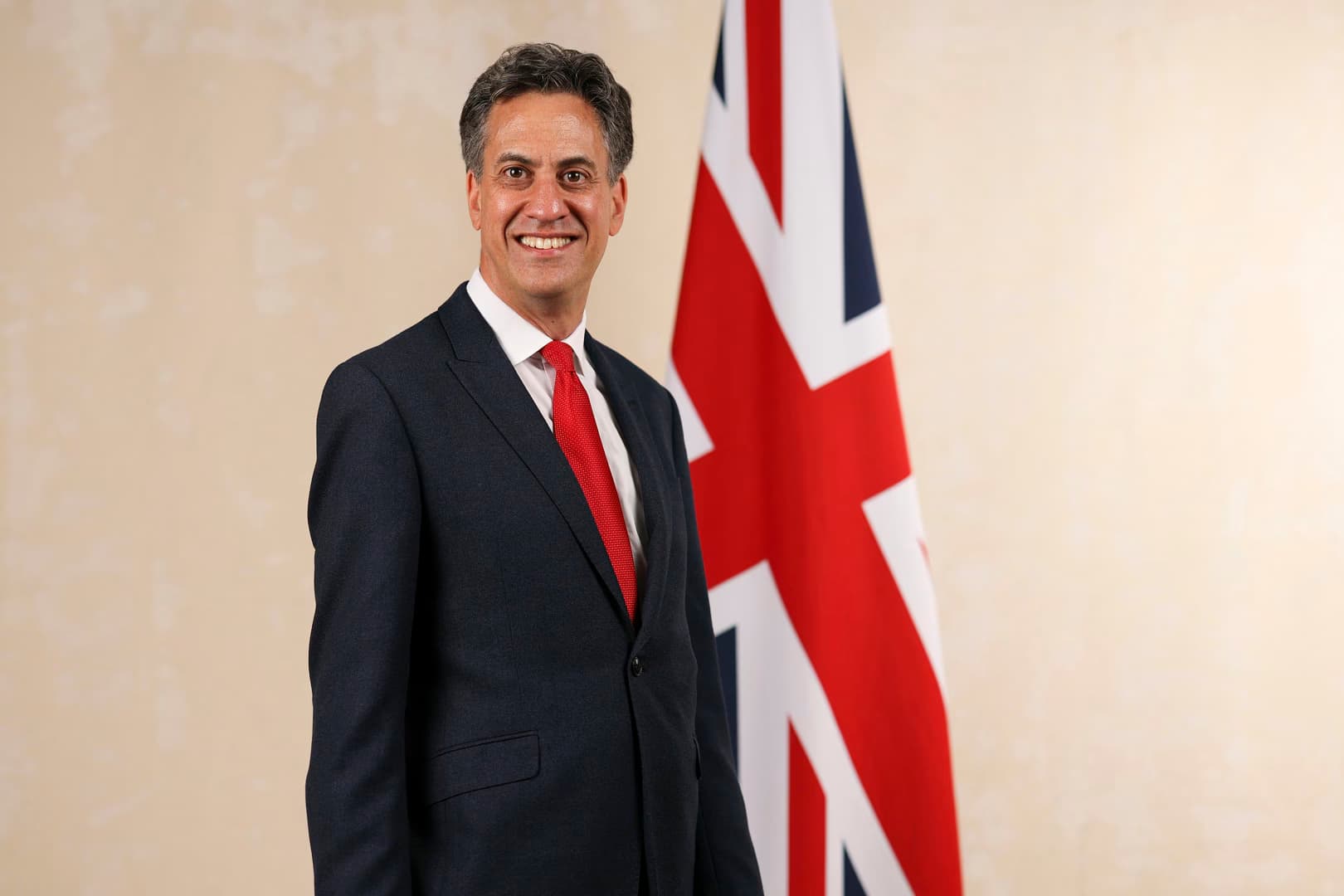
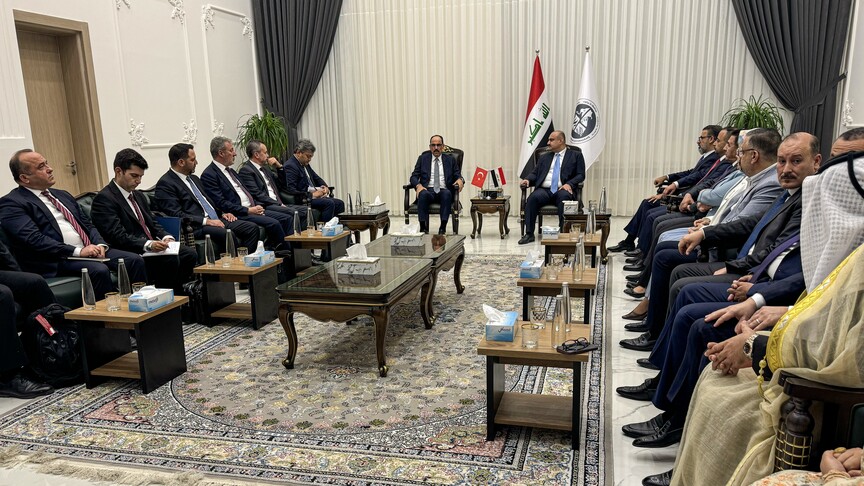
National Intelligence Organization Chief İbrahim Kalın, together with his delegation, carried out a critical two-day visit to Iraq. Kalın's last Iraq visit took place exactly one year ago and had come to the agenda especially with the 'Terror-Free Turkey' process. However, this time the visit gained a different dimension in light of the new regional dynamics brought about by the US/Israel-Iran War and recent developments in Iraq.
Simultaneously with the visit, intense diplomatic traffic took place in Ankara. Under the organization of the Foreign Economic Relations Board (DEİK) Turkey-Iraq Business Council, a delegation of Turkish businesspeople held meetings with Federation of Iraqi Chambers of Commerce President Amir Fahdavi, Iraqi Prime Minister Ali Zeydi, Minister of Industry and Minerals Muhammed Nuri and Minister of Trade Mustafa Ani. On the same days, Minister of Energy and Natural Resources Alparslan Bayraktar received Iraqi Deputy Foreign Minister M. Hussein Bahr Al-Uloom and his accompanying energy delegation in Ankara. This picture revealed that Turkey sees security, energy, trade, investment and political stability as complementary areas in its Iraq policy.
The Iraq leg of the 'Terror-Free Turkey' Process
Foreign Minister Hakan Fidan's statement in February that 'after the Syria leg is over, there is the Iraq leg' had turned attention to Iraq at this stage of the process. Signs of laying down arms in Iraq, the main geography of the PKK, remain weak. The organization continues its presence in different areas stretching from Sinjar to Qandil, from Makhmour to the surroundings of Sulaymaniyah.
In this context, Kalın's meeting with Iraq's National Security Advisor Basim al-Bedri, who holds the PKK file in Iraq, went beyond routine intelligence coordination. The contact was important in terms of clarifying counterparts in the Iraq leg of the process, strengthening working mechanisms between security institutions, and encouraging Baghdad to take more responsibility.
Kalın's meeting with Supreme Judicial Council President Faik Zeydan also drew attention in the same context. With the legal and political steps expected to be taken in Turkey, issues such as judicial follow-up, evidence sharing, extradition of fugitives, and cutting off the organization's financial and logistical networks are becoming part of the process. The fact that the pursuit of fugitives wanted on corruption charges in Iraq and located abroad came up during the meetings is also connected to this.
Kalın's reception by Iraqi President Nizar Amedi showed that the visit was also considered highly important by Baghdad. However, about six months after the November 11, 2025 elections, the government formed under Prime Minister Ali Zeydi setting out with incomplete ministers, the fragmentation in Shia politics, the internal competition among Sunni blocs, the KDP-PUK split and the chronic problems on the Baghdad-Erbil line limit the new government's decision-making capacity. Ankara sees this risk closely; because the weak state capacity in Iraq expands the operational area of non-state armed structures, including the PKK.
Critical contacts on the Erbil-Sulaymaniyah line
Kalın's contacts with the Iraqi Kurdistan Regional Government (KRG) after Baghdad had a unique character. In Erbil, during the meeting with KDP leader Masoud Barzani, the need to develop relations between the KRG, Iraq and Turkey in various fields and strengthen cooperation was emphasized. This showed that Ankara is not making a Baghdad-centric reading of the Iraq file.
The most striking leg of the visit was Kalın's meeting with PUK leader Bafel Talabani and KRG Deputy Prime Minister Kubat Talabani in Sulaymaniyah. While the diplomatic dimension of Ankara-Sulaymaniyah relations was normalizing with Turkey's Baghdad Ambassador Anıl Bora İnan's meeting with Bafel Talabani last month, Kalın's visit also improved the security dimension of the relations. The main agenda of the meeting was the Terror-Free Turkey process; the PUK holds a critical position both in terms of its area of control and facilitation in the PKK's disarmament process. Kalın's meeting with Bafel Talabani after his meeting with Masoud Barzani was also important in terms of the tension between the KDP and PUK, which have been unable to form a government for nearly two years.
First Kirkuk visit at the MIT Chief level
The Kirkuk leg of Kalın's Iraq visit had a strategic meaning in its own right. The first visit of an MIT Chief to Kirkuk carried messages beyond being symbolic. Kirkuk is important for Turkey not only because of the Turkmen presence but also because it is one of the most sensitive centers of Iraq's energy geopolitics, the disputed territories file, Baghdad-Erbil relations and the competition in Kurdish internal politics. The fact that the Kirkuk governor is Turkmen makes it meaningful for Ankara to follow developments in the region more closely.
The meeting with Progress Party Chairman Mohammed al-Halbousi revealed that Ankara is also closely following Sunni political structures in Iraq. Considering the new government balances, corruption investigations and the competition among Sunni parties, it was assessed that this contact was not merely a bilateral courtesy meeting.
Multi-track diplomacy and the changing global environment
Kalın's security contacts, Minister Bayraktar's energy meeting and the economic contacts of the DEİK delegation are read as complementary steps. Turkey is demonstrating that it does not want to be an actor that only provides security or proposes an energy route in Iraq, but is trying to establish a lasting ground in areas of economic integration, production, trade and investment.
This picture is also reshaping the approach of external actors to the region. It is observed that the US interest in Iraq is beginning to shift from a military framework to an economic and investment-focused ground. The appointment of US Ambassador to Ankara Tom Barrack also as Special Envoy for Iraq suggests that Washington is reading the Iraq-Syria-Turkey line within a broader regional equation. The announcement by Iraqi Prime Minister Ali Zeydi that he will also visit Turkey after his US visit coincides with this reading.
In conclusion, Kalın's contacts on the Baghdad, Erbil and Kirkuk line constitute the security backbone of Turkey's Iraq policy. At the center of the visit lies the fight against terrorism and the Iraq leg of the Terror-Free Turkey process. However, the multidimensional diplomacy conducted by Turkey shows that progress in this file cannot be considered independent of Iraq's internal political balances, the new government's security reform capacity, Baghdad-Erbil harmony, the status of Kirkuk, energy routes and economic integration between the two countries.