- BIST10010,743-2.03%
- USD50.64+0.03%
- EUR55.40+0.14%
- GOLD3,597.40+0.92%
- INTEREST36.00%-1.00
- BITCOIN60,445+0.11%
- November 26, 202610°
- BIST10010,743-2.03%
- USD50.64+0.03%
- EUR55.40+0.14%
- GOLD3,597.40+0.92%
- INTEREST36.00%-1.00
- BITCOIN60,445+0.11%
- November 26, 202610°
Allianz: Iran war to cost Gulf states $790 billion in output by 2030
A report by Allianz Research estimated that Gulf Cooperation Council states will lose about $790 billion in output between 2026 and 2030, in addition to more than $200 billion in material damage, with substantial variations based on dependence on the Strait of Hormuz.


Allianz Research, the economic arm of German insurance group Allianz, estimated that the war with Iran will cost the six Gulf Cooperation Council states about $790 billion in lost output between 2026 and 2030, in addition to more than $200 billion in material damage, most of it to energy infrastructure. The report was published on November 9 and has drawn coverage from international media in recent days.
The figure does not represent money actually spent. Rather, it is the gap between what the economies of Saudi Arabia, the United Arab Emirates, Qatar, Kuwait, Bahrain and Oman had been expected to achieve and what Allianz now forecasts, equivalent to 5.9% of the region's gross domestic product. The report projects a 4% contraction in the GCC states' GDP in 2026, 8.2 percentage points below prewar forecasts, while the International Monetary Fund expects a deeper contraction of 4.8%.
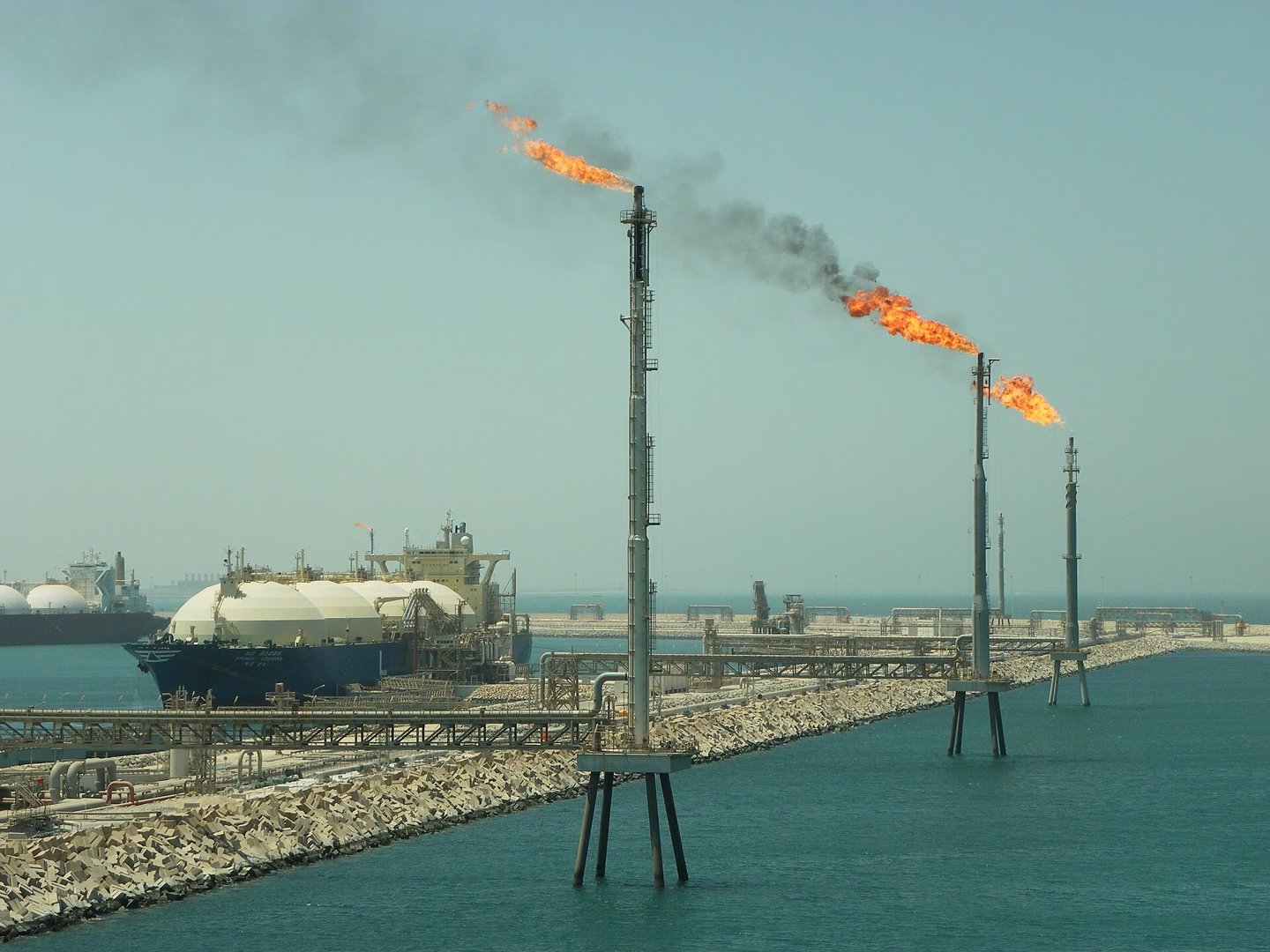
The Strait of Hormuz determines the scale of losses
According to the report, the scale of the damage is linked to each country's dependence on the Strait of Hormuz. Qatar's economy is expected to contract by 14%, Kuwait's by about 11% and Bahrain's by 8%, while Saudi Arabia (-2.8%) and the United Arab Emirates (-0.9%) will mitigate the impact through pipelines and Red Sea ports. Oman is expected to be the only beneficiary, with projected growth of 3.3% because it has a fully independent outlet beyond the strait. Qatar appears most exposed because it has no alternative route for exporting its liquefied natural gas.
Cumulative fiscal deficit of $475 billion
Allianz considers the shock primarily financial and expects a cumulative budget deficit of $475 billion across the six states during 2026-2030. With $247 billion in maturing debt, total financing needs will reach $722 billion, expected to be covered through $301 billion in new borrowing, $125 billion from foreign-exchange reserves and $90 billion from sovereign wealth funds “as a last resort.”
Bahrain is considered the most exposed to risk: its central government debt stands at 134% of GDP, while the oil price needed to balance its budget is $161 per barrel. The report also points to a “new support program” for the kingdom. By early October, credit default swap spreads had risen by 80% in Bahrain, 58% in Qatar, 32% in Dubai and 26% in Kuwait.
Images: P. Hughes / Wikimedia Commons (CC BY 4.0); Matthew Smith / Flickr (CC BY 2.0).
Stay Updated with Hilal Times
Subscribe to be informed about special news, developments and announcements. We will keep you informed.
By signing up, you agree to our Privacy Policy