- BIST10010,998-1.98%
- USD49.63+0.05%
- EUR55.70+0.05%
- GOLD4,038.90-0.53%
- INTEREST36.00%-1.00
- BITCOIN81,666+0.43%
- October 23, 202621°
- BIST10010,998-1.98%
- USD49.63+0.05%
- EUR55.70+0.05%
- GOLD4,038.90-0.53%
- INTEREST36.00%-1.00
- BITCOIN81,666+0.43%
- October 23, 202621°
Ebu Bakr Shawqi's 'Al-Qisas' film tells Egyptian history through family stories
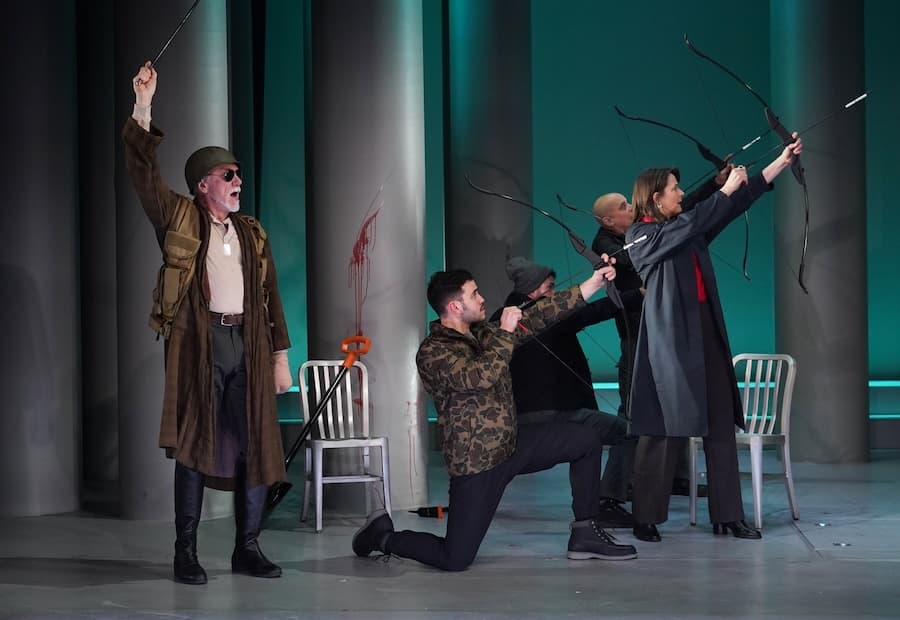
Egyptian director Ebu Bakr Shawqi's new film 'Al-Qisas' takes on a period from 1967 to the 1980s through the love story of a pianist. Starring Amir El-Masry and Nilli Karim, the film won the Golden Tanit award at the Carthage Film Days.


Egyptian director Ebu Bakr Shawqi's new film "Al-Qisas" had its world premiere at the Red Sea International Film Festival. The production, considered Shawqi's most ambitious project to date known for "Yomeddine," was subsequently awarded the Golden Tanit at the Carthage Film Days.
The film features an international cast led by Amir El-Masry and Nilli Karim. Shot and produced with the contribution of multiple countries, the production also worked with international names in cinematography and music.
Egypt's recent history in a love letter
"Al-Qisas" tells the story of a period stretching from before 1967 to the 1980s through the tale of young pianist Ahmed. As Ahmed engages in a long-term relationship that begins with corresponding with an Austrian girl, he reflects the dreams of a generation shaped by Egypt's political upheavals, defeats, economic openings and social transformations.
Shared spirit with the series 'Zat'
The production bears a clear resemblance to the series "Zat," in which Nilli Karim also starred. Both works use the family as a lens to understand Egypt's social and political changes. While "Zat" conveyed the spirit of the era through the life of an ordinary family from the 1950s onwards, "Al-Qisas" continues the same approach through a love story and correspondence.
Stage aesthetic and acting
A theatrical atmosphere dominates its cinematography. Carefully designed apartment flats, costumes and the everyday conversations of side characters meticulously detail the social fabric of the period. Rather than documenting the past word for word, the director transforms it into a memory, turning it into an emotional celebration.
Nilli Karim delivers one of her strongest performances in recent years. Far from the self-sacrificing mother cliche, her character, the emotional compass of the family with its fatigue and sorrow, bears the weight of a motherhood under the threat of war and displacement. Amir El-Masry, on the other hand, conveys the fluctuations in Ahmed's inner world with understated naturalness.
The film succeeds in capturing life's complex rhythm by bringing together sorrow and humor in the same frame. Keeping a natural warmth and momentary jokes alongside great pains, "Al-Qisas" stands out as a production that reminds that history is written not only in books but in everyday details.
Stay Updated with Hilal Times
Subscribe to be informed about special news, developments and announcements. We will keep you informed.
By signing up, you agree to our Privacy Policy