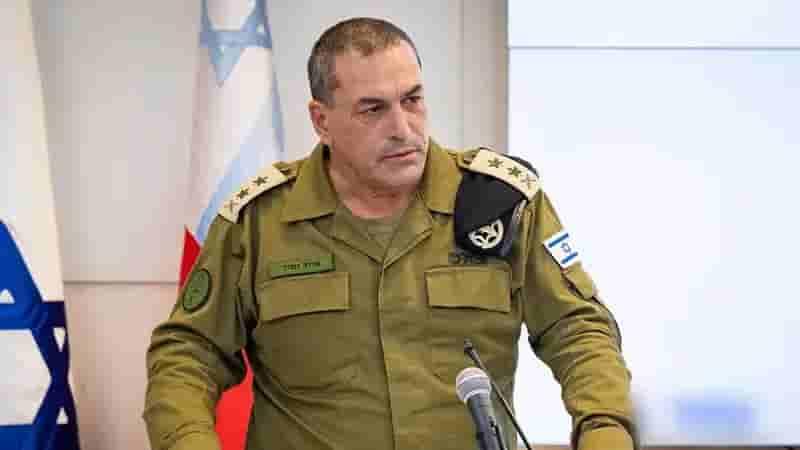
Israeli public broadcaster Kan reported that Chief of Staff Eyal Zamir ordered restrictions on military operations in the Gaza Strip. The report, citing unnamed security sources, alleged that Zamir required airstrikes to be limited and his prior approval for assassination attempts targeting specific Palestinians.
The directive reportedly does not prevent Israeli forces from continuing strikes in the event of an 'imminent threat'. Sources said that troops in Gaza could still respond if they perceived any immediate danger.
Peace Council Pressure and Roadmap
The alleged directive came to the fore after the Peace Council's pressure on Israel. The Council's High Representative Nikolay Mladenov and his adviser, US official Arye Lightsone, had asked Israeli Prime Minister Benjamin Netanyahu on Monday to halt attacks on Gaza in line with US President Donald Trump's plan.
Trump announced last week that an agreement had been reached on implementing the next phase of the ceasefire deal. The Peace Council, in its roadmap text published on Friday, envisioned Israel halting its military operations, followed by the Gaza Administration National Committee and the International Stabilization Force taking over, the gradual collection of heavy weapons, and the destruction of tunnels. It stated that the weapons would be under the responsibility of the Palestinian committee and would not be handed over to Israel or any non-Palestinian party.
Attacks Continue
Despite the restriction claims, the Israeli military killed two Palestinians in an airstrike targeting a vehicle in the Sheikh Ajlin area, southwest of Gaza City, on Monday evening. The strike came hours after Mladenov and his team called on Netanyahu.
On Sunday, Israeli strikes across various parts of Gaza killed 18 Palestinians, making it one of the bloodiest days since the ceasefire took effect. Egypt, Qatar, and Turkey stated that the continued Israeli attacks violated the ceasefire agreement and undermined efforts to implement the second phase.
Israel's Objections and Hamas's Stance
In a statement after the meeting between Mladenov and Netanyahu, the Peace Council said that Israel's full withdrawal beyond the 'yellow line' would only take place after the complete destruction of light and heavy weapons and tunnels. This statement contradicts the roadmap text published on Friday, which linked the collection of weapons to Israel's phased withdrawal.
Hamas, for its part, said in a statement that it remained committed to the agreed text for implementing the second phase, which includes all parties' obligations, and that it was awaiting a clear and official response from Mladenov and the mediators.
According to a report by the Hebrew newspaper Haaretz, citing an unnamed Israeli source, Tel Aviv informed the Peace Council that it rejected three items in the roadmap. The rejected items include not destroying weapons collected from Hamas, having implementation supervised by Qatar and Turkey, and not granting the Israeli military freedom of movement in areas to be handed over to the international stabilization force.
Ceasefire Toll and Occupation
While Israel refuses to fully withdraw until all weapons and tunnels are destroyed, it continues to occupy 70 percent of Gaza. Since the ceasefire agreement took effect on October 10, 2025, Israeli attacks have killed 1,252 Palestinians and wounded 4,120, according to the Gaza Health Ministry.
This ceasefire came after the war that Israel launched on October 8, 2023, which killed more than 73,000 Palestinians, mostly children and women, wounded 174,000, and caused massive destruction to civilian infrastructure.