With the ceasefire in the Gaza Strip, the yellow line designated as the Israeli army’s withdrawal boundary gradually became a line of control that narrowed the area available for Palestinian use. Israel’s area of control expanded as the line shifted westward in several areas.
After the ceasefire began on October 10, 2025, Israeli forces were said to have withdrawn behind the yellow line. At that stage, about 53% of Gaza remained under Israeli control, mainly covering the northern and eastern areas and large parts of Rafah.
Ceasefire maps initially showed the yellow line as the boundary to which Israeli forces would withdraw, with further withdrawals envisaged in later stages. However, as talks on moving to the second stage stalled, the line became a boundary that the Israeli army gradually pushed westward.
Yellow line moved into central Gaza
On October 18 and 19, 2025, the Israeli army placed concrete markers about 3.5 meters high, with their upper sections painted yellow, along the yellow line. Israeli Defense Minister Yisrael Katz warned that anyone crossing or attempting to cross the line would be fired upon.
A review published on October 23, 2025, found that in the Atatira area the markers extended about 500 meters beyond the route shown on ceasefire maps, and about 290 meters beyond it in Khan Younis. In December, the control area was expanded by about 200 meters in the Tuffah neighborhood east of Gaza City; at least 40 buildings were demolished in the area between the old and new lines.
In January 2026, evacuation warnings were sent to residents around Bani Suheila, east of Khan Younis. International reports published that month found new markers hundreds of meters west of the yellow line in Khan Younis, while some buildings were demolished and two tent communities housing displaced people were dismantled.
The United Nations Office for the Coordination of Humanitarian Affairs said on January 28 that excavation and demolition activities were continuing along the yellow line. The office said military activity west of the line had displaced civilians and led to the destruction of homes.
Stephane Dujarric, spokesperson for the United Nations secretary-general, said in May that a new “orange line” had been established adjacent to the yellow line in areas where Palestinians were present. Dujarric said humanitarian teams were required to coordinate their movements with Israel before crossing the line.
In May, Israeli vehicles advanced 200 to 400 meters west of the yellow line at some points along the Netzarim Corridor. The United Nations Relief and Works Agency for Palestine Refugees in the Near East said the line had expanded significantly in Gaza City and Khan Younis. The agency said five of its facilities had moved closer to a military zone, including two schools housing displaced people.
Demolitions and displacement expanded
Israeli Prime Minister Binyamin Netanyahu said on May 15 that the area under his army’s control had reached 60%. In May and June, yellow concrete blocks were moved 150 to 300 meters westward in Bani Suheila, Tuffah, the area around Wadi Gaza, Maghazi refugee camp and some areas east of Deir al-Balah.
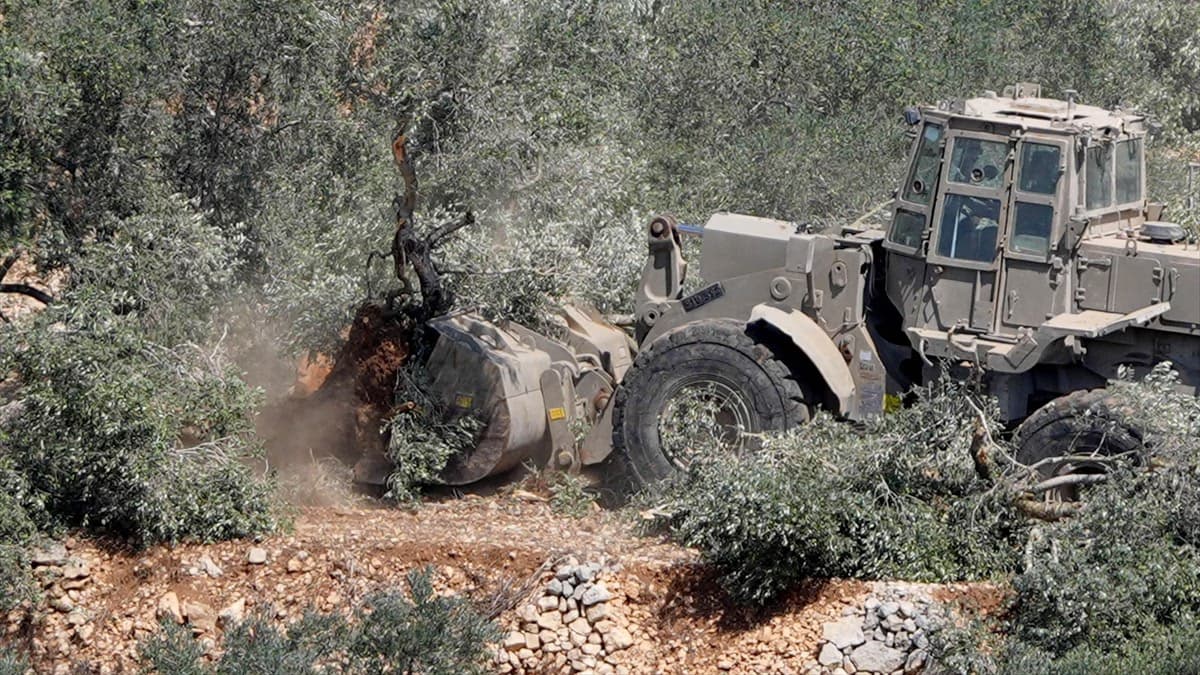
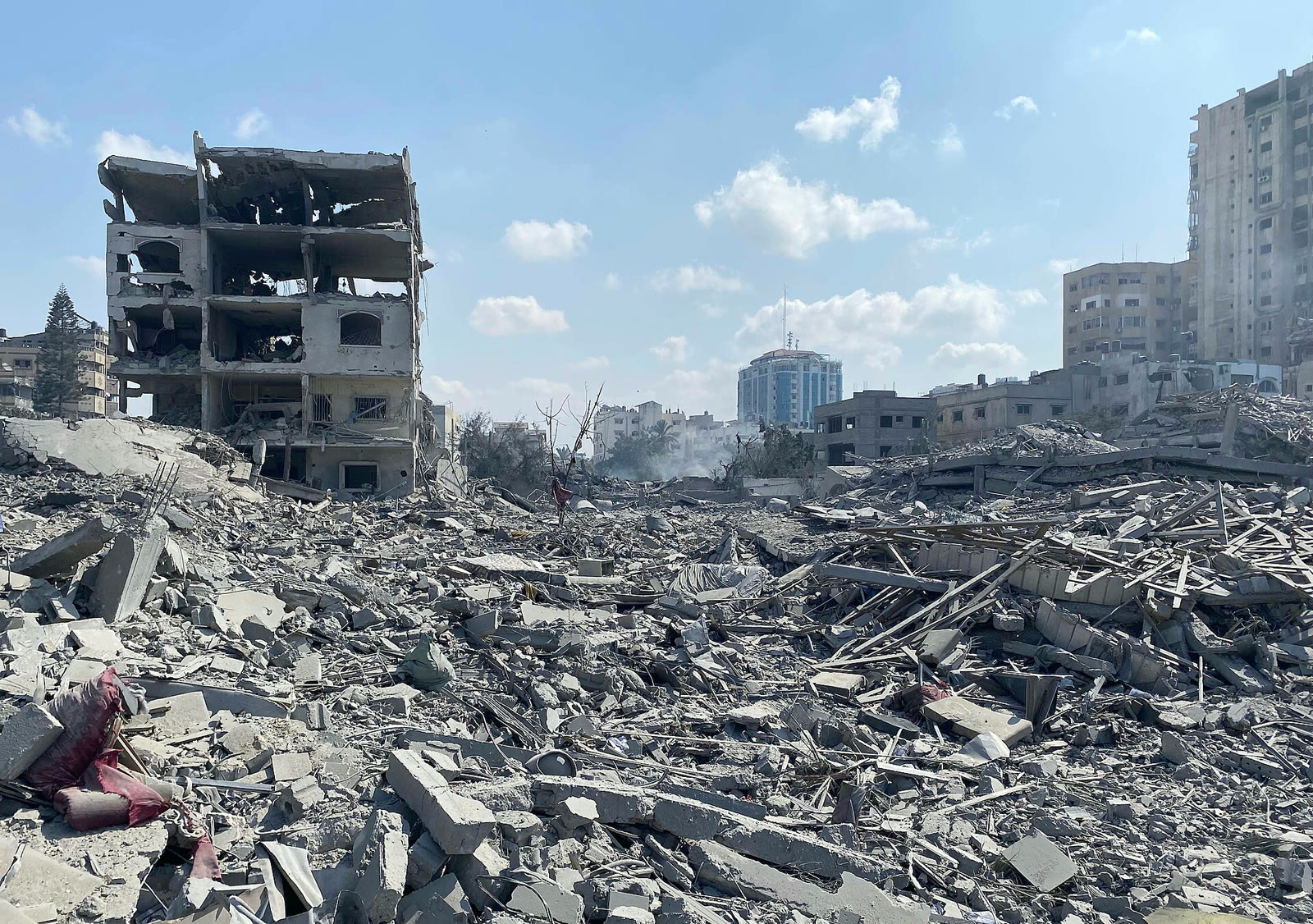
Homes were demolished during these advances, forcing dozens of families to move westward. On the night of June 23-24, about 30 families left their shelters around the Atatira Junction in northern Gaza. An incendiary munition dropped from a drone reportedly caused fires in three tents.
In July, large earth embankments and trenches were added to the yellow concrete blocks. The advance around the Zeitoun neighborhood in southeastern Gaza City between July 16 and 22 displaced numerous families.
Reports published through July 28 found that the yellow line had expanded in Gaza City’s Zeitoun, Tuffah and Shujaiyya neighborhoods, as well as in parts of Deir al-Balah, Khan Younis and Rafah. The same reports documented new evacuation orders and the westward movement of the markers. Israel’s military presence thus extended beyond positions in the east into central areas, residential neighborhoods and shelter sites.
Future of control area remains uncertain
Reviews by international media, United Nations reports and testimonies from residents showed that the area Palestinians could use in practice had narrowed, despite differing estimates of its exact size. Gaza’s population was described as exceeding 2 million, with civilians increasingly confined to the western coastal strip.
On September 30, Netanyahu said his government would not return to the Palestinians areas seized by its army during the war. In a statement attributed by an Israeli army-affiliated website to Gaza Division Commander Liron Bitto on October 2, the army was said to control 63% of Gaza and to have established 40 new military positions.
Despite the ceasefire remaining in force, bombardments, gunfire and the expansion of the control area continued. These violations reportedly resulted in the deaths of 1,445 Palestinians and injuries to 5,072 people.
More than 74,000 Palestinians were said to have been killed, more than 175,000 injured and about 90% of civilian infrastructure destroyed in the Israeli attacks that began on October 8, 2023.