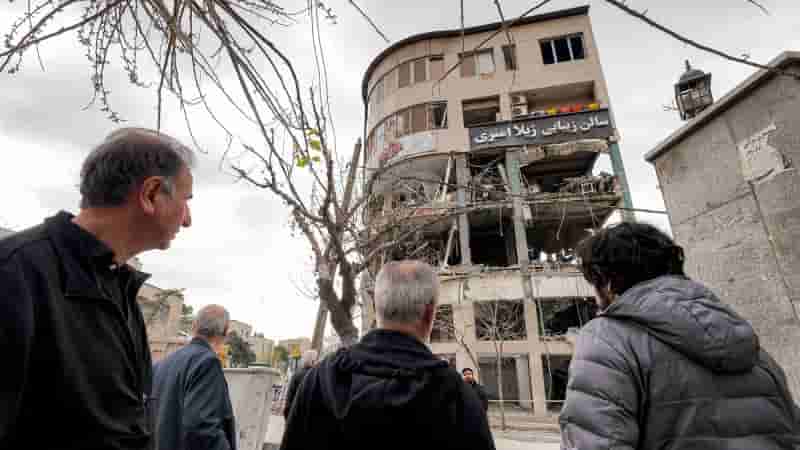
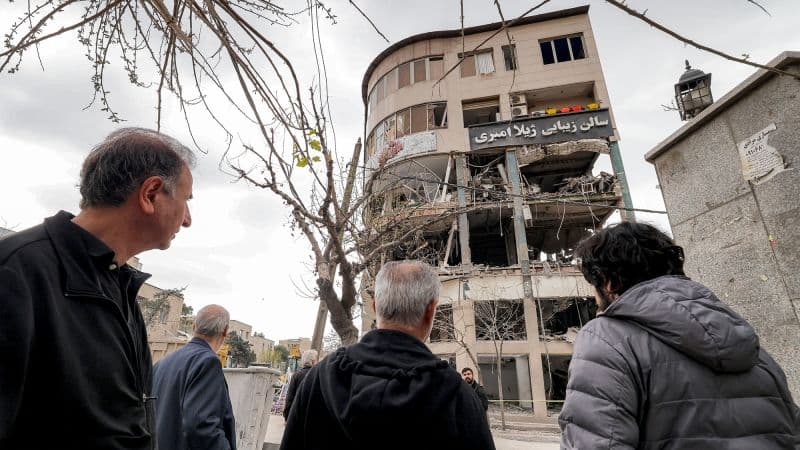
The United Nations Development Programme (UNDP) shared details of ongoing debris removal efforts in four key areas following the war in Syria. UNDP Rural Damascus Director Muhammed Miftah announced a comprehensive project aiming to clear a total of 570,000 tons of debris in Aleppo, Deir ez-Zor, Homs, and Rural Damascus.
Explaining the project's progress so far, Miftah stated that 15,000 cubic meters of debris have been recycled, producing over 123,000 building materials. Beyond debris removal, the project also includes road repairs, rehabilitation of water and sewage networks, and awareness training on explosive hazards.
Miftah emphasized that in the completed phase, 10 kilometers of road were reconnected, allowing residents safer access to their homes and public spaces. He stated that debris removal facilitates people's freedom of movement and access to livelihoods. He added that over 1,300 people participated in the work, supporting the livelihoods of over 6,000 family members.
Millions of tons of debris cleared
Last March, UNDP announced that it had removed over 2.1 million cubic meters of debris (approximately 3.15 million tons) in Syria with its partners. The organization stated that the return of displaced Syrians after over a decade of conflict is a significant historical event, but it brings urgent challenges.
Ministry cleared 4 million tons of debris
Syrian Minister of Emergency and Disaster Management Raed al-Saleh also said in a statement on June 29 that ministry teams had cleared approximately 4 million tons of debris in various provinces, of which 1 million tons were recycled. Al-Saleh stated that they are preparing to launch a new debris removal project in Deir ez-Zor, Rural Damascus, and Homs after completing the necessary procedures.
Reconstruction requires $400 billion
According to earlier United Nations estimates, Syria's reconstruction requires $400 billion. Since 2011, over 130,000 buildings have been destroyed across the country. Reinforced concrete structures accounted for 70 percent of these buildings.
The greatest destruction occurred in Aleppo, where over 35,000 buildings were completely or partially destroyed, and in the Eastern Ghouta region of the capital Damascus. In Homs, 14,000 buildings were destroyed; in Raqqa, 13,000; and in Hama, Deir ez-Zor, and the Yarmouk Camp south of the capital, approximately 6,000 buildings each were completely or partially destroyed.