After the influx of irregular migrants to the Spanish-governed city of Ceuta from Morocco, 22 European countries called for tighter European Union border controls.
The letter, signed by Italy, Denmark, Belgium, the Netherlands, Germany, Finland, Czechia, Poland, Lithuania, Slovenia, Slovakia, Croatia, Bulgaria, Romania, Latvia, Estonia, Hungary, Sweden, Greece, the Greek Cypriot Administration of Southern Cyprus, Malta and Austria, was sent to European Commission President Ursula von der Leyen and European Council President Antonio Costa.
The letter stressed that uncontrolled mass crossings must not be allowed and that the impression of being able to enter the EU through irregular channels should not be created. It noted that recent developments required a swift and coordinated response, welcomed cooperation between Spain and Morocco, and voiced the expectation that the current situation be fully brought under control with EU support.
The countries also demanded the organization of a meeting of EU member states' interior ministers to discuss steps that can be taken to combat irregular migration.
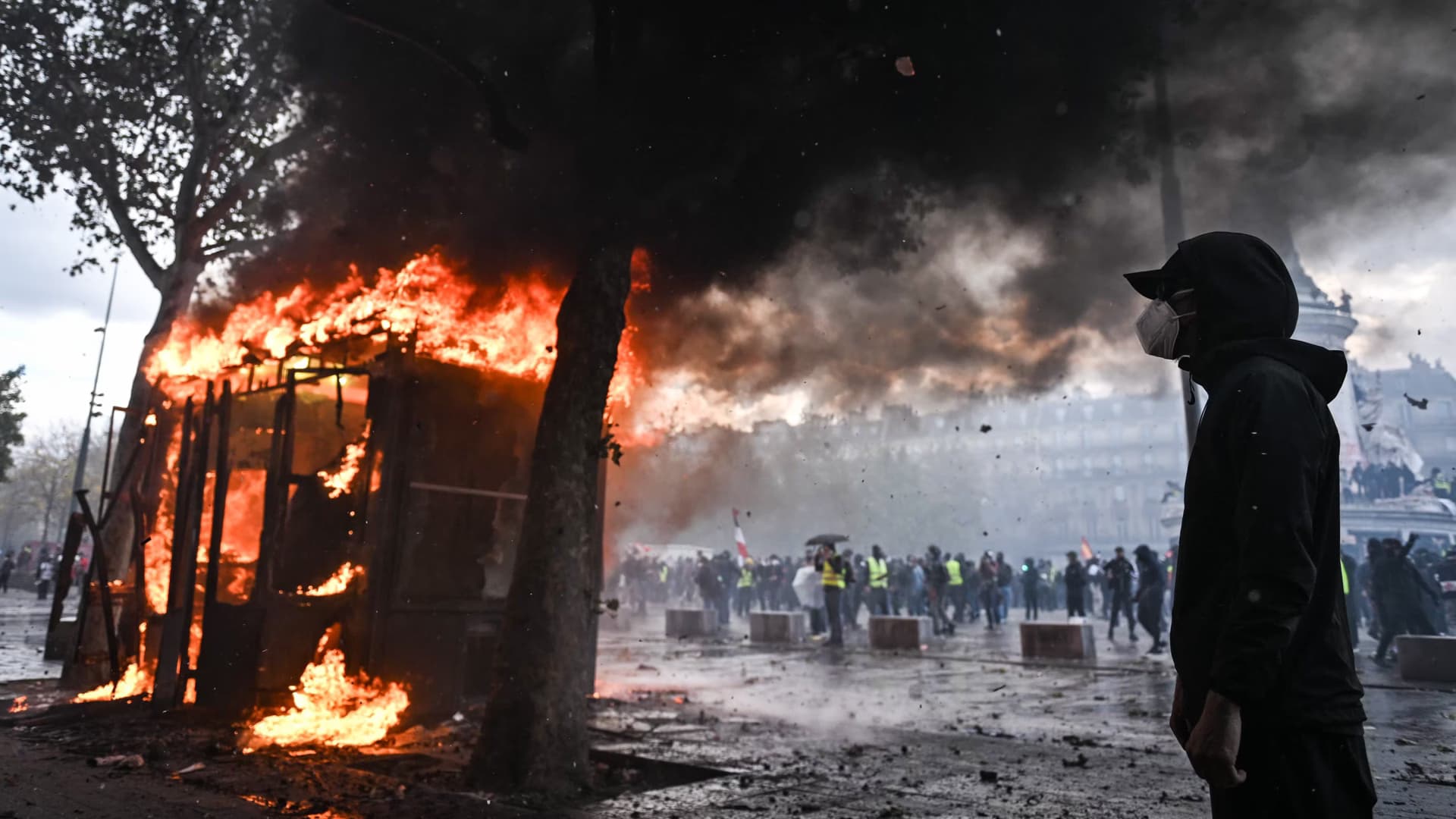
Meanwhile, irregular migration attempts toward Ceuta have intensified in recent days in the northern Moroccan city of Fnideq. Moroccan security forces have increased measures along the border line and are preventing crowds from approaching the barbed wire. According to observations by an AA correspondent, tensions occasionally flare in the border region between security forces and groups attempting to cross illegally. Some individuals set vehicles on fire near the border crossing, and security forces removed many people from the area. Moroccan authorities have not issued a detailed statement on the irregular migration movements.
According to information obtained from Spanish security sources, around 69,500 irregular migrants who crossed from Morocco to Ceuta have returned to Moroccan territory, and the death toll during the incidents rose to 67.
Ceuta and Melilla lie on Morocco's northern coast and are under Spanish administration. The Rabat administration is demanding the return of these two cities.