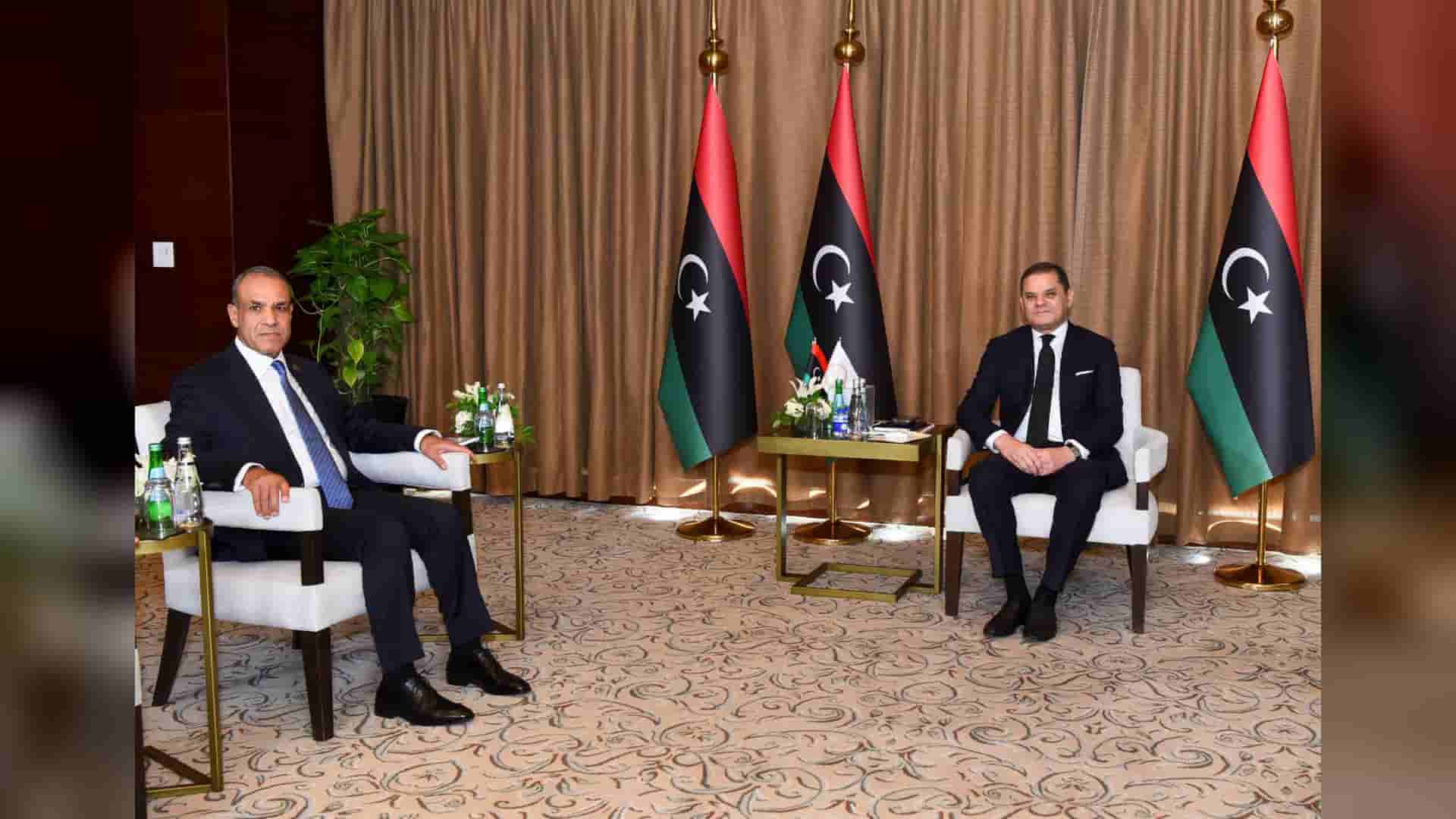
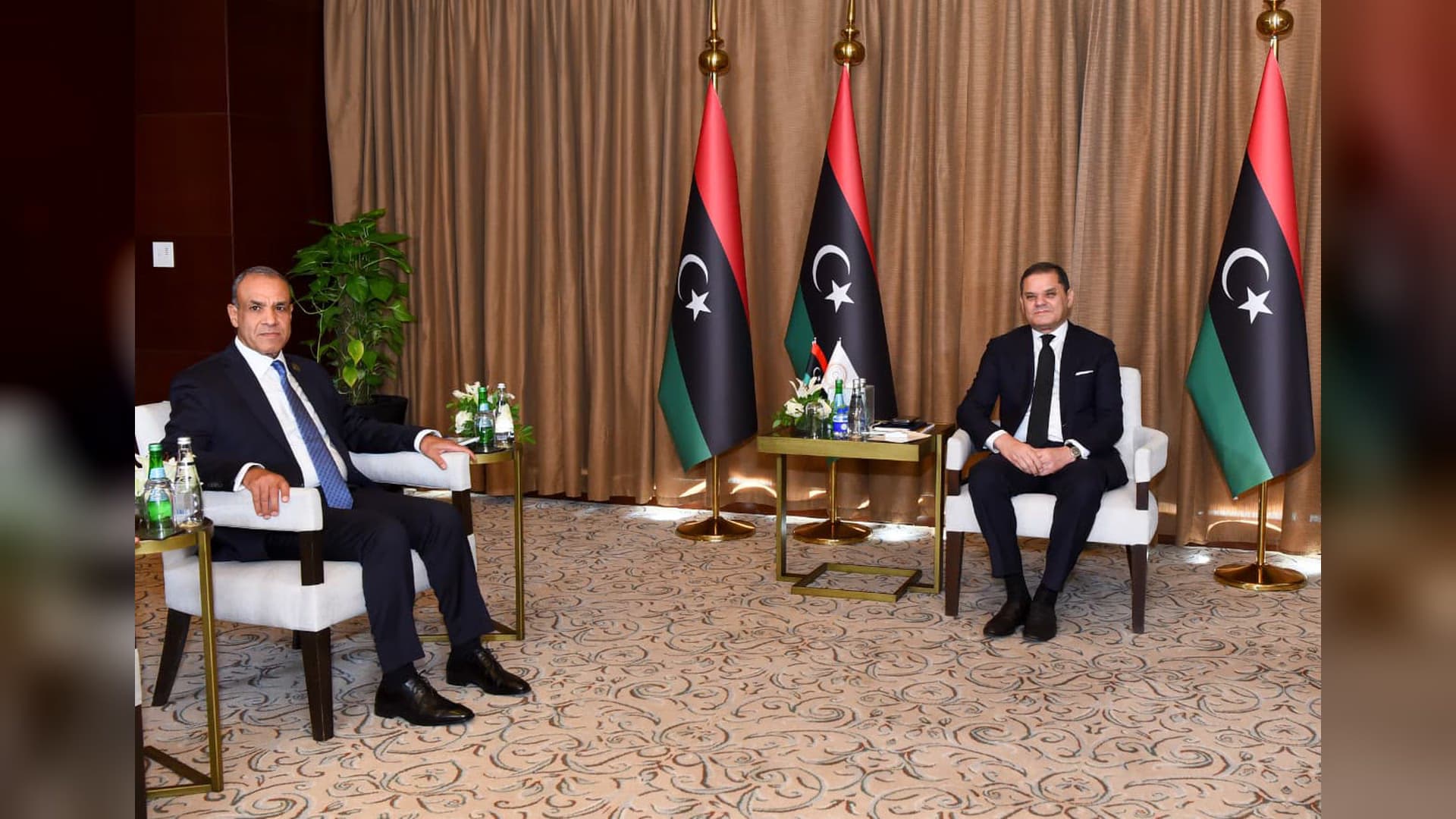
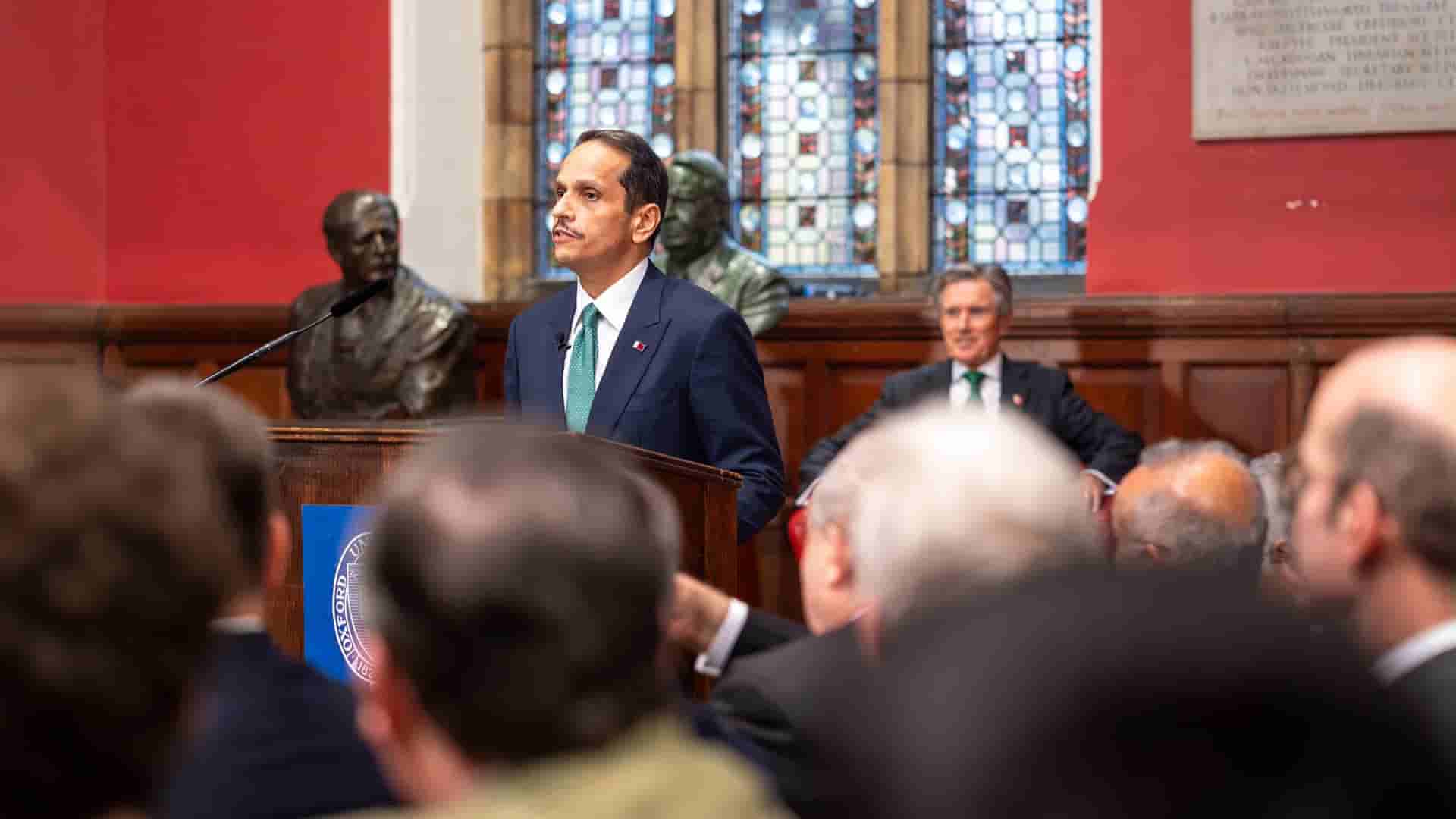
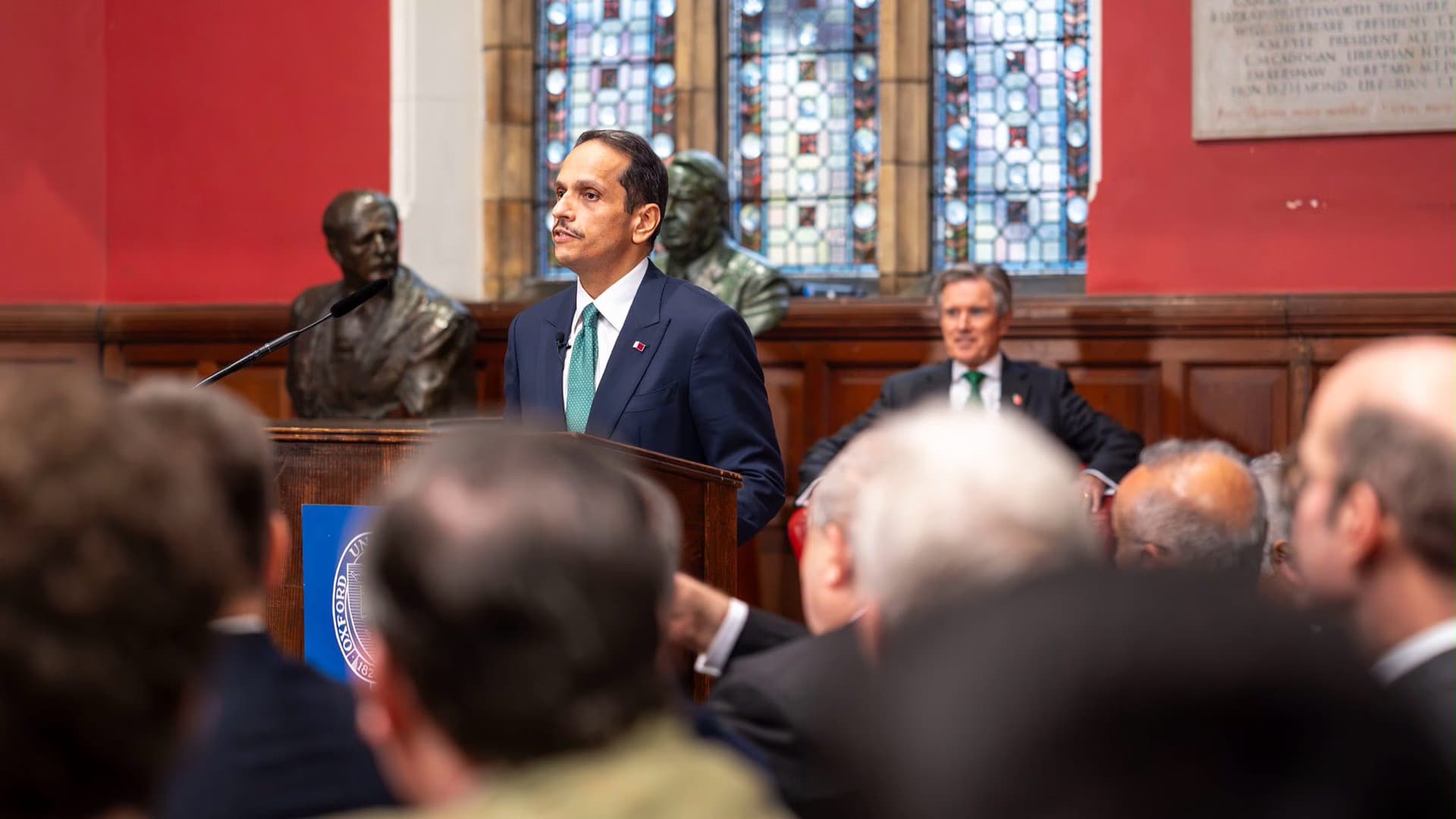
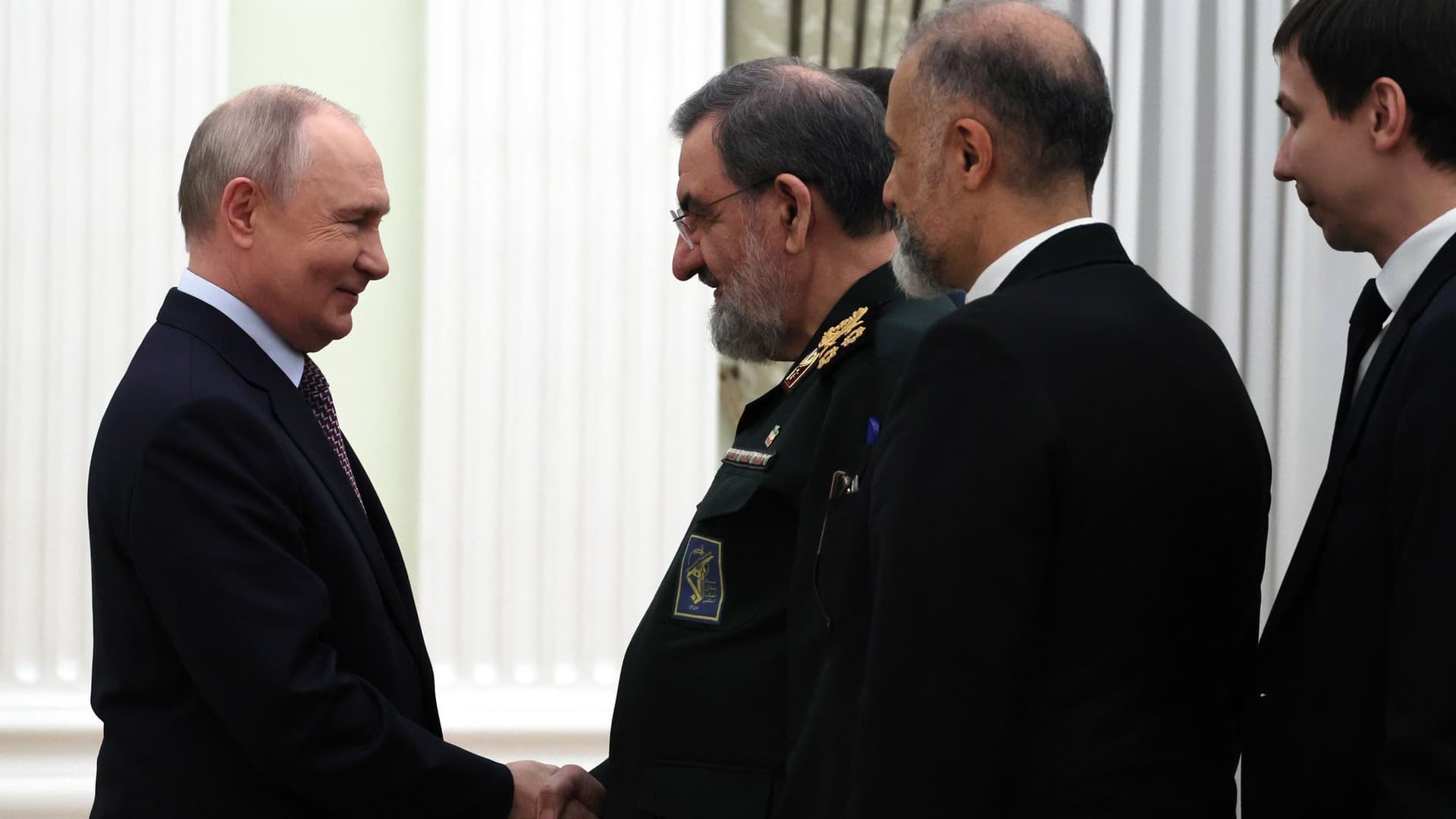
Egyptian Minister of Foreign Affairs, International Cooperation and Egyptians Abroad Badr Abdel Aaty reiterated Cairo’s commitment on Saturday to a political solution as “the only way out of the Libyan crisis.” He made the remarks during a meeting with Libyan Prime Minister of the Government of National Unity Abdul Hamid Dbeibah in the capital, Tripoli, during a visit that coincided with the reopening of the historic premises of Egypt’s embassy in Libya.
Egyptian Foreign Ministry spokesman Ambassador Nader Zaki said in a statement that Abdel Aaty reaffirmed Egypt’s “firm” position on a political solution “through an inclusive dialogue owned and led by Libyans, within a framework of broad national consensus and in accordance with the reference frameworks for a solution, foremost among them the Skhirat Agreement,” and “without dictates or foreign interference.” He said the aim was to reach “a political settlement that preserves Libya’s unity, protects state institutions and ensures their unification,” stressing Egypt’s steadfast commitment to Libya’s unity, stability and territorial integrity.
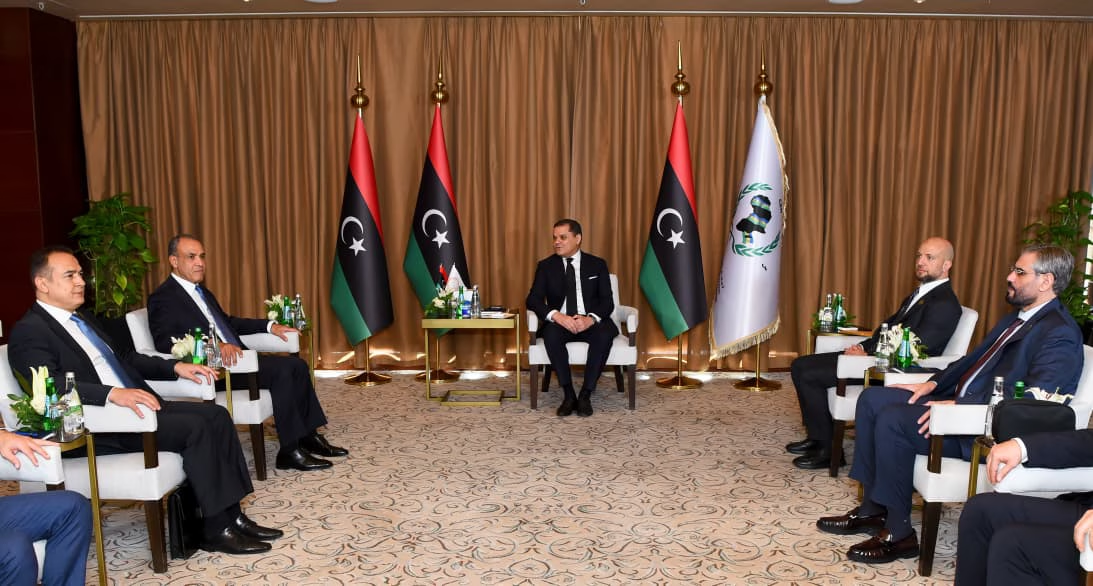
The meeting addressed ways to develop bilateral relations in trade, investment, education and culture, as well as infrastructure and reconstruction in Libya and the role of Egyptian workers and companies in rebuilding efforts, the statement said. Abdel Aaty asked the Libyan side to provide more facilities for the Egyptian community, including extending the deadlines in force and waiving accumulated fines, as well as facilitating matters for Egyptian students in Libya. The two sides also agreed to prepare for the next session of the joint higher committee. According to the Egyptian newspaper Al-Shorouk, Dbeibah oversaw the signing of a memorandum of understanding on health cooperation between the two countries on the sidelines of the meeting.
Embassy returns to Tripoli after 12 years
During the visit, Abdel Aaty reopened the historic premises of his country’s embassy in Tripoli in the presence of Libya’s acting foreign minister, Taher Al-Baour. Egypt had closed its embassy and consulate in Libya in January 2014 amid deteriorating security conditions, according to Al-Araby Al-Jadeed. Egypt’s minister was received upon arrival by Minister of State for Communication and Political Affairs Walid Al-Lafi.
Abdel Aaty also met with Libyan Presidential Council President Mohamed al-Menfi and reaffirmed during the meeting Egypt’s position in favor of a political solution through an inclusive dialogue owned and led by Libyans. The council’s media office said the talks covered energy, oil and gas, infrastructure, agriculture and electricity interconnection. The Egyptian minister also discussed with acting Oil and Gas Minister Khalifa al-Sadiq the acceleration of projects connecting gas pipelines, the completion of projects to refine Libyan crude in Egypt and re-export it, and the rehabilitation of Libyan refineries.
Participation in Sahel-Sahara gathering meeting
The visit coincided with the 22nd regular session of the Executive Council of the Community of Sahel-Saharan States in Tripoli. Abdel Aaty attended its opening session and called for stronger regional cooperation in combating terrorism and cross-border organized crime, as well as the reactivation of the community’s institutions. He also outlined Egypt’s support for the Sahel-Sahara counterterrorism center in Cairo. On the sidelines of the meeting, he met with the foreign ministers of Chad and Guinea-Bissau.
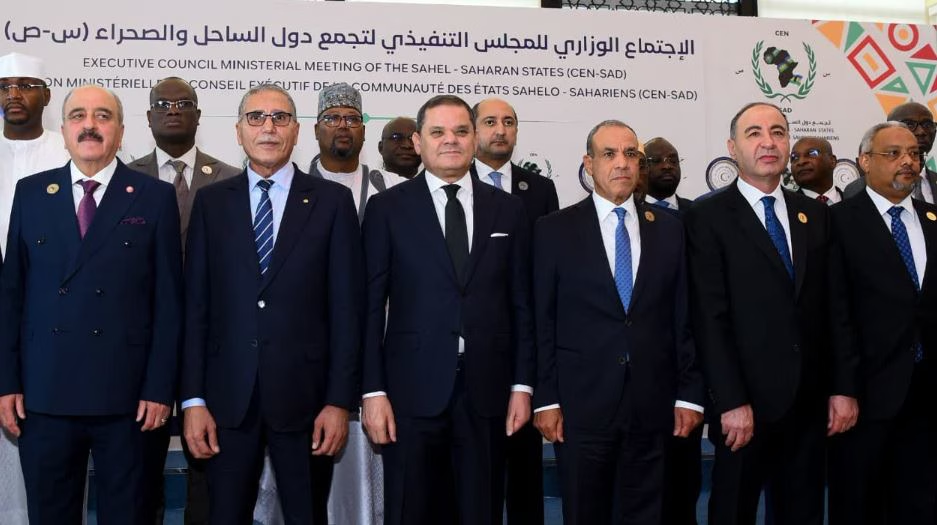
The group photograph from the ministerial meeting shows Prime Minister of the Government of National Unity Abdul Hamid Dbeibah, whose government hosted the session, alongside the Egyptian foreign minister and several heads of participating delegations.
Skhirat and the UN road map
The Skhirat Agreement, signed in Morocco on December 17, 2015, under UN auspices, is the framework from which the Government of National Accord emerged. Cairo refers to it in its successive statements as one of the foremost reference frameworks for a political solution in Libya.
The United Nations Support Mission in Libya is seeking to end the transitional period through a road map presented by UN envoy Hanna Tetteh to the Security Council in August 2025. The road map aims to unify institutions and hold presidential and legislative elections. On August 30, 2026, the Libyan parties, through the 4+4 small dialogue committee facilitated by the mission, reached an agreement to reconstitute the board of the High National Elections Commission and amend the legal framework for elections. Parliamentary and presidential elections are to be held within two years under a unified government. The Security Council welcomed the agreement as an “important step,” while Tetteh said trust among the parties remained “fragile,” according to UN News.
On October 25 last year, Abdel Aaty participated in a meeting of the trilateral mechanism of Libya’s neighboring countries in Algeria, alongside Algerian Foreign Minister Ahmed Attaf and Tunisian Foreign Minister Mohamed Ali Nafti. The ministers affirmed their support for a Libyan-led and Libyan-owned political process leading to simultaneous presidential and parliamentary elections, reviewed the results of the small dialogue committee and the framework agreement signed on August 30, and called for accelerating the unification of Libyan institutions. Abdel Aaty said at the time that “the Libyan-Libyan solution is the fundamental pillar.”
Sources: Egyptian Foreign Ministry, Egyptian and Libyan media, and UN News. Photos: Egyptian Foreign Ministry and Egyptian media