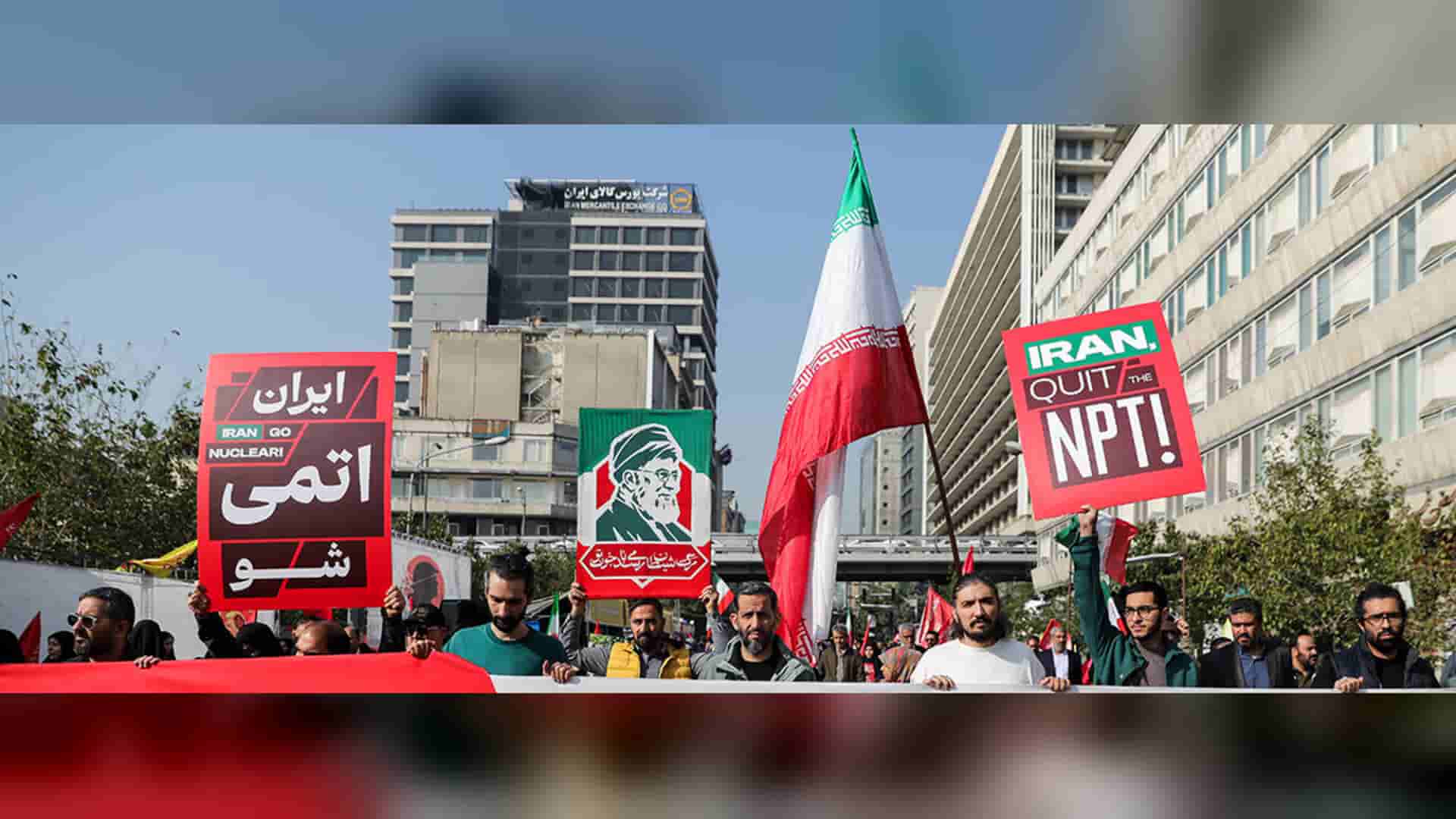
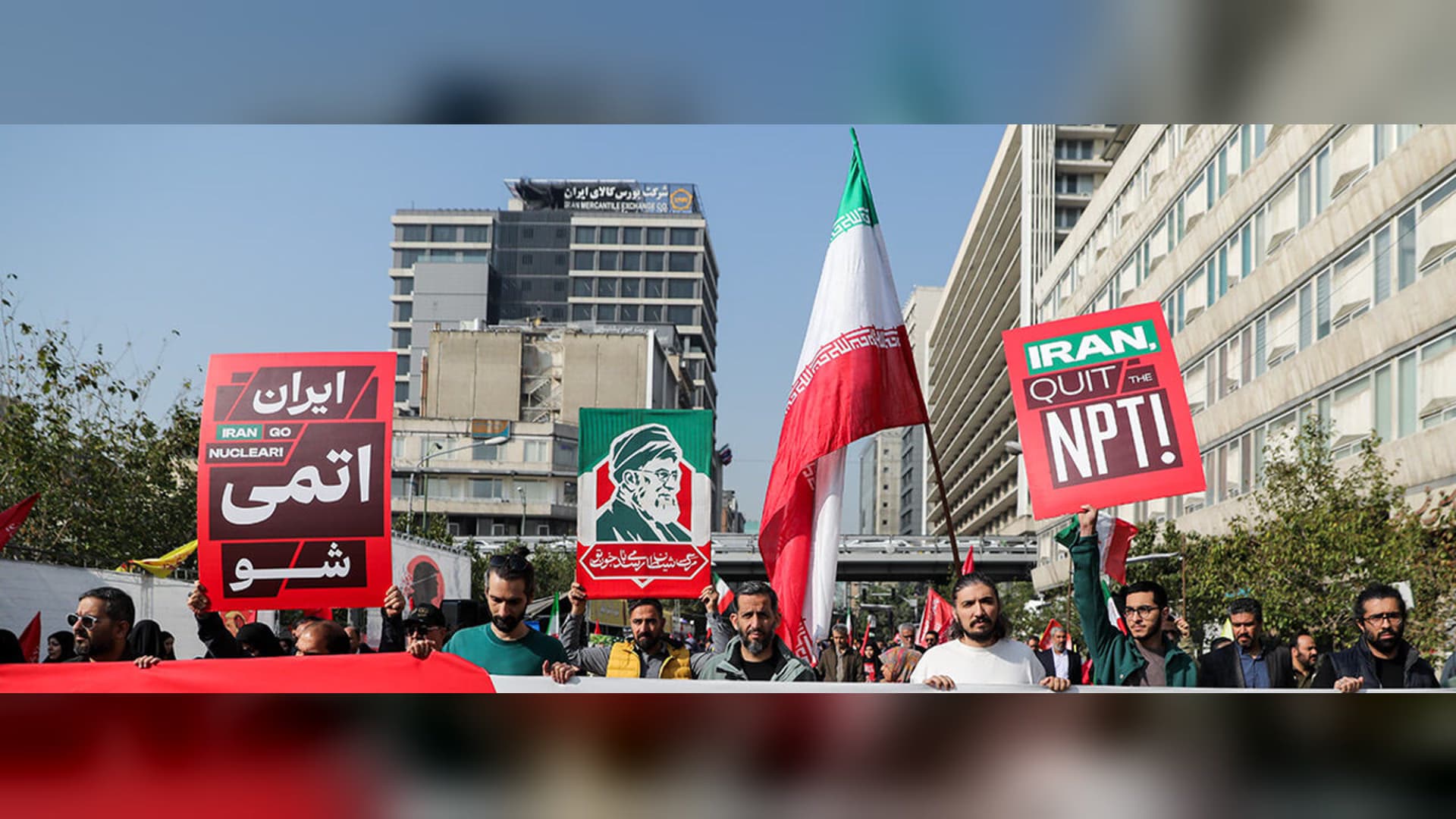
Iran’s Islamic Revolutionary Guard Corps announced that it was ready for any shift in the country’s nuclear doctrine if the leadership decided to make such a move, as calls by Iranian lawmakers and clerics to “review” the doctrine intensify.
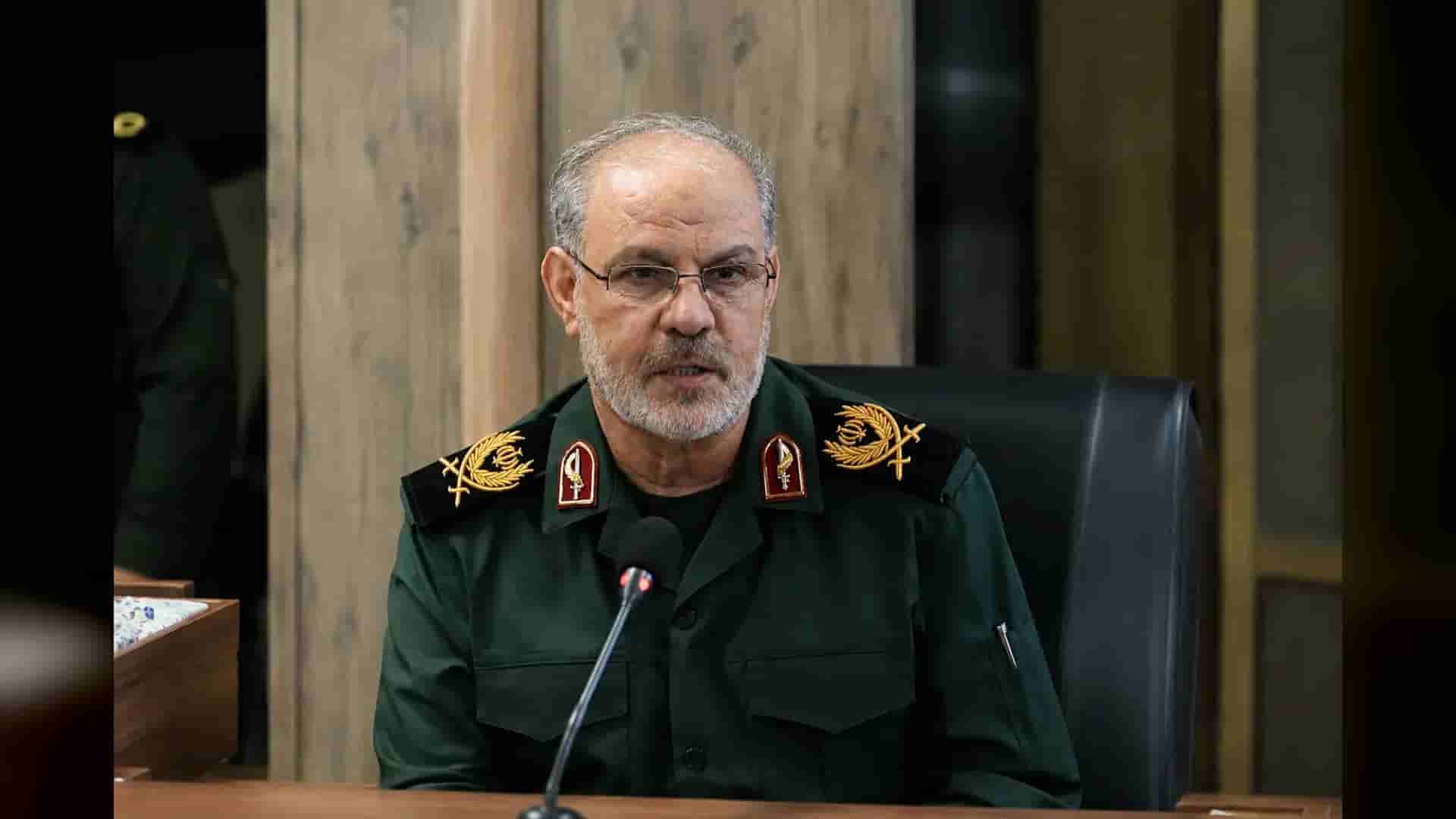
Brigadier General Hossein Mohebi, the IRGC spokesman, said in a filmed interview with Fars News Agency published on Saturday morning, November 7: “If the regime decides to review the nuclear doctrine, the necessary preparations will be made.” He added that “the extension of the range of Iranian missiles is continuing without interruption, and there is no pause in this area,” and that “what hostile countries possess is not limited to their geography; their material and nonmaterial capabilities are within our reach.” Mohebi was appointed IRGC spokesman in April, succeeding Brigadier General Ali Mohammad Naeini, who was killed in a US-Israeli airstrike, Tasnim News Agency reported.
In the footage broadcast by Fars under the headline “We are ready for any change in strategy,” Mohebi speaks to an agency correspondent while wearing a camouflage military uniform. Fars said the spokesman referred to “the people’s demand” for a change in the nuclear doctrine, saying: “If the regime concludes that it should move in this direction, we will make the necessary preparations.”
“Removing range restrictions” on missiles
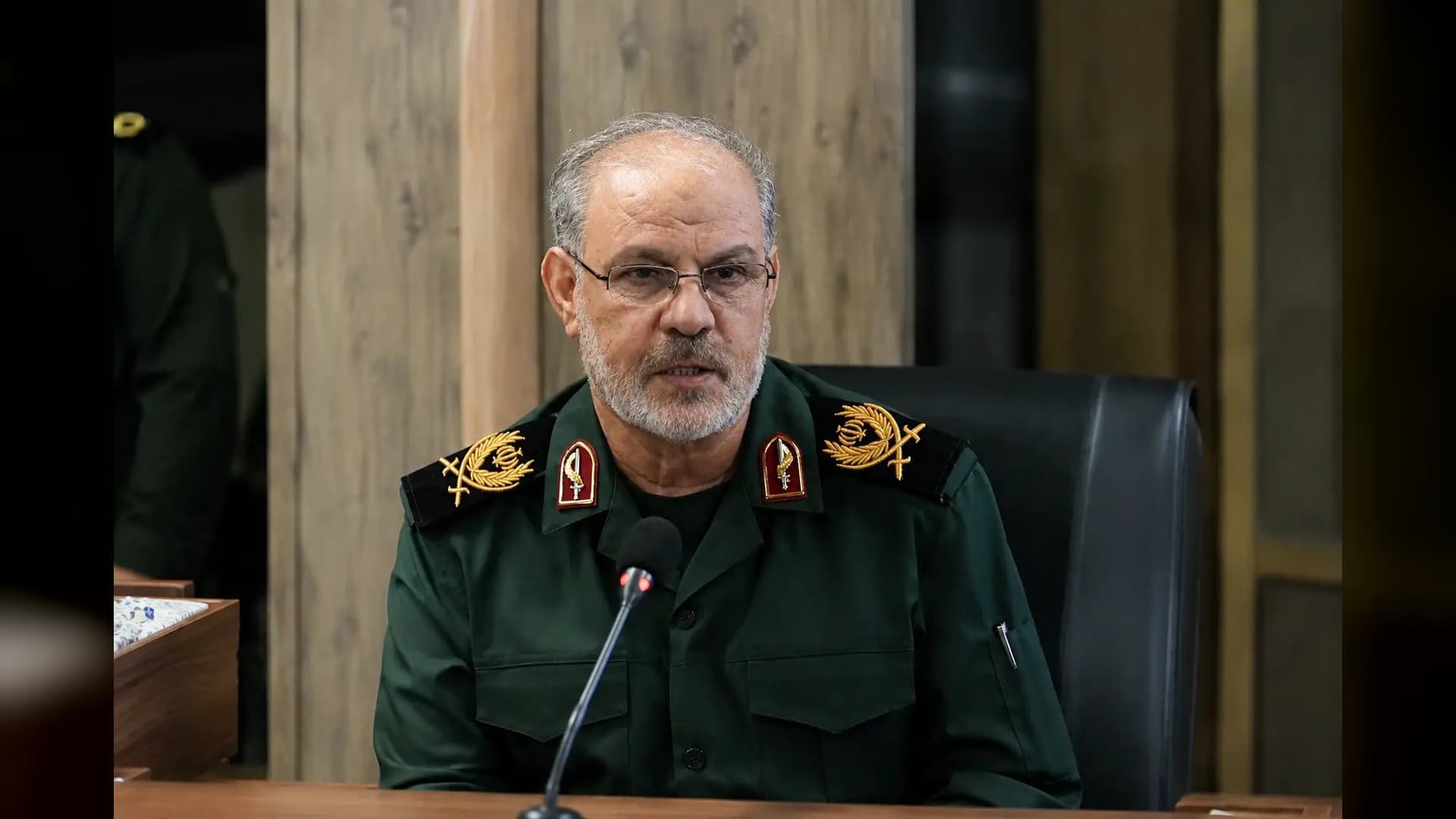
The interview came on the same day that Mohebi held a press conference in Tehran to mark the IRGC’s “Aerospace Power Week.” At the conference, according to the Student News Network (SNN), he said that “our martyred imam,” referring to the late leader Ali Khamenei, “used to set the range of our missiles, sometimes ordering us to stop and sometimes to increase the range.”
He added that following instructions from the commander-in-chief of the armed forces during his meeting with senior military commanders, Iran’s missiles were now ready to defend the country “without geographical restrictions.” He warned: “If we feel at any point that the enemy poses a serious threat to us, that will be our target, and we will target it through asymmetric operations.” He also said the Aerospace Force would unveil “surprises that would astonish the world” if a “third wave” of confrontation broke out.
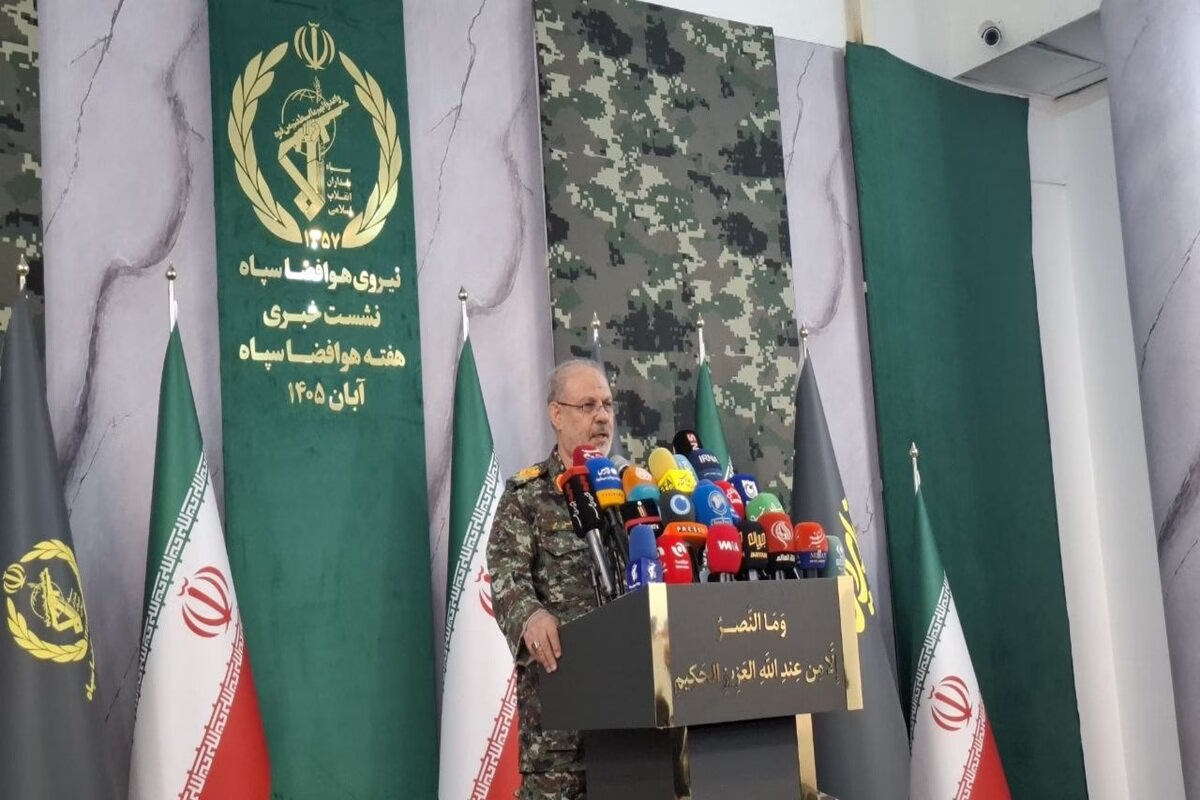
During the conference, Mohebi stood behind a podium inscribed with the verse, “Victory comes only from God, the Almighty, the Wise,” beside a sign in Persian reading, “IRGC Aerospace Power Week press conference — Aban 1405.”
Echo of the leader’s order to update the “target bank”
Mohebi’s reference to “material and nonmaterial capabilities” echoed instructions issued by Iranian leader Mojtaba Khamenei on October 31 during his meeting with Chief of Staff Ali Abdollahi, Army Commander Amir Hatami and IRGC Commander Ahmad Vahidi. The Hawza News Agency reported that Khamenei ordered every level of threat to be met with “an immediate and effective response, without any geographical restrictions.” It was also decided to update the “target bank” so that “all types of material and nonmaterial assets belonging to the American-Zionist enemy” would be placed within the firing range of the armed forces.
From the fatwa to “no decision has been made”
On September 29, Mohebi himself said during a press conference for foreign media in Tehran that Iran “has not sought to possess nuclear weapons,” that “its martyred leader declared the production of such weapons religiously forbidden,” and that, as a member of the Treaty on the Non-Proliferation of Nuclear Weapons, Iran had “obligations in this regard,” according to Iran’s Press TV.
On October 31, Secretary of the Supreme National Security Council Mohsen Rezaei said in televised remarks carried by Tasnim that discussions were underway on whether Iran would retain its previous doctrine if war broke out again, adding: “No new decision has been formally and governmentally made.” In parliament, lawmaker Ebrahim Rezaei told Fars that 10 proposals to withdraw from the Non-Proliferation Treaty had been registered, Al Jazeera reported.
This is not the first time the IRGC has hinted at its nuclear doctrine. In April 2024, Ahmad Haghtalab, the IRGC official responsible for protecting nuclear facilities, spoke of the possibility of “reviewing the nuclear doctrine and policies,” before Iran’s Foreign Ministry affirmed that “there is no place for nuclear weapons in our nuclear doctrine.”
Qeshm and the $20 million reward
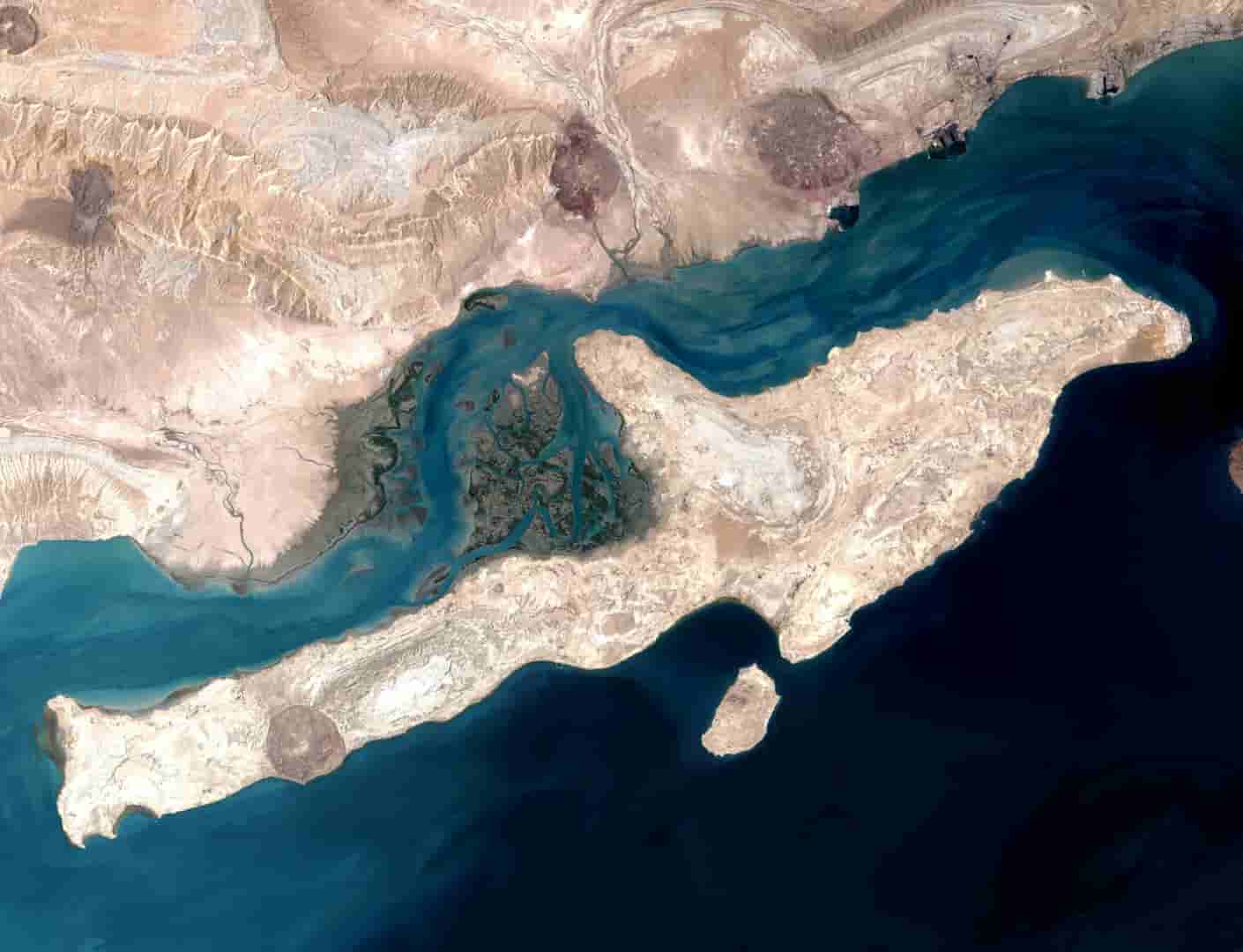
The remarks came a day after Iranian state media announced that two missiles had fallen on Qeshm Island in the Strait of Hormuz and that air defenses had shot down a US MQ-9 drone over the island, while US President Donald Trump confirmed that “small strikes” had destroyed an anti-aircraft system. On the same day, US Central Command (CENTCOM) announced that the State Department’s Rewards for Justice program was offering up to 20 million dollars for information about Iran’s nuclear program, citing Tehran’s “noncompliance” with its obligations to the International Atomic Energy Agency.
The agency has been unable to access Iran’s main nuclear facilities since the June 2025 war. A resolution it issued in September expressed “grave concern” over Iran’s “continued noncompliance,” which Tehran rejected as politicized, Al Jazeera reported. As of the time this report was prepared, there had been no comment from the United States, Israel or the agency on Mohebi’s remarks.
Video: Fars News Agency. Press conference photo: Mehr News Agency. Cover photo: X platform (archive)