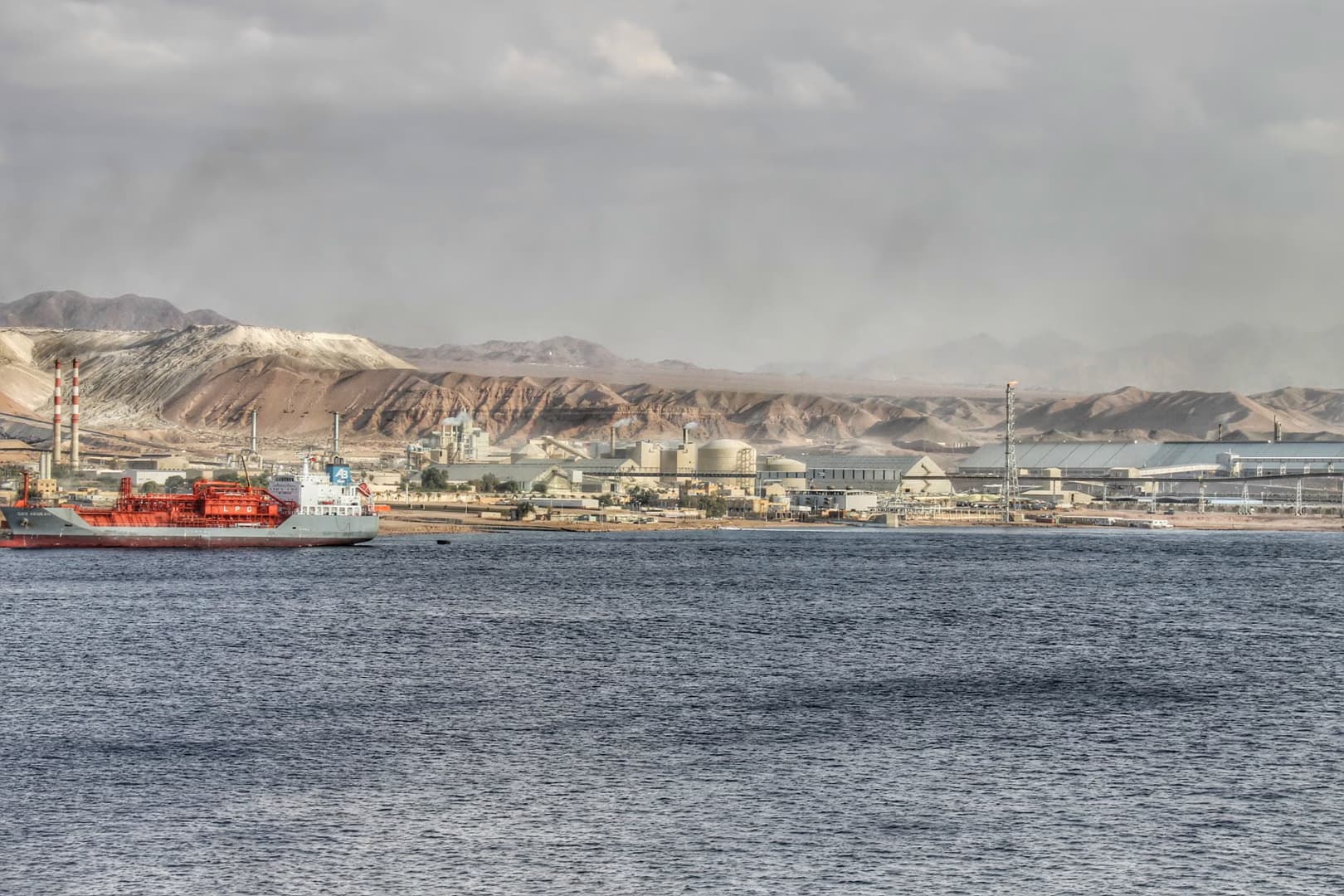
As uncertainty continues in the Strait of Hormuz, Oman is expanding the Ras Markaz Terminal so that crude oil can be stored and exported via the Arabian Sea and the Indian Ocean. The process of building eight new crude oil tanks has begun at the facility near Duqm.
Once the new tanks are completed, Ras Markaz is expected to add 5.2 million barrels to its existing storage capacity of 26.7 million barrels. Oman Tank Terminal Company, which operates the terminal, invited engineering, procurement and construction companies to take part in a prequalification process; applications closed on August 4.
Oil infrastructure outside the strait
Ras Markaz’s direct access to the Arabian Sea and the Indian Ocean allows the facility to store and export crude oil outside the Strait of Hormuz. Omani authorities have not directly linked the capacity expansion to recent developments in the Strait of Hormuz, but the terminal has been developed since its establishment as a storage and export option outside the strait.
Built on an area of approximately 40 square kilometers, the terminal’s maritime infrastructure allows very large crude carriers to berth, oil to be loaded and unloaded, and different types of oil to be stored and blended. Ras Markaz is expected to eventually reach storage capacity of up to 200 million barrels, depending on demand.
Gulf and Iraqi links
Abdulsalam Al Murshidi, chairman of the Oman Investment Authority, said some Gulf countries and other nations were considering the option of storing oil at Ras Markaz and marketing it to international markets through Oman. Murshidi said the terminal could reach a scale capable of storing an amount of crude oil equivalent to approximately one week to one month of Oman’s oil exports.
OQ’s 2025 annual report said Oman Tank Terminal Company and Iraq’s state oil marketing company SOMO had signed an agreement to develop a crude oil storage facility at Ras Markaz with an initial capacity of 10 million barrels. OQ Trading and SOMO also agreed to cooperate on marketing Iraqi crude oil in international markets.
OQ and the trading arm of Saudi Aramco have also reached an agreement to evaluate various cooperation options, including storage facilities at Ras Markaz and the supply of crude feedstock to the Duqm Refinery.
Pipeline connection takes center stage
Taking advantage of the terminal’s location outside the Strait of Hormuz will depend on transporting oil to the facility by land. Oman’s Ministry of Energy and Minerals and Oman Tank Terminal Company previously signed a framework agreement to develop a new crude oil pipeline connecting the country’s main oil system to Ras Markaz.
If the connection is developed, oil produced in Oman’s interior could be transported directly to Ras Markaz, stored there and shipped to global markets via the Arabian Sea.
Talks between Iran and Oman
Progress has been made in talks between Iran and Oman on new maritime transit routes to be used in the Strait of Hormuz. Iranian Foreign Minister Abbas Araghchi said on August 9 that the arrangement between the two countries had reached its final stage, but added that this did not mean the strait would immediately reopen.
Justin Dargin, a senior research fellow and energy markets specialist at Harvard University’s Mossavar-Rahmani Center, said Ras Markaz’s strategic advantage stemmed from its geographic location. Dargin said the terminal’s position outside the Strait of Hormuz gives Oman a storage and export option that is less exposed to political and security risks.
Dargin said every barrel stored outside Hormuz is not exposed to the political and security risks in the strait. He said the terminal could eventually become a regional hub serving international oil companies, trading companies and Gulf producers seeking a storage option outside the Strait of Hormuz.
Emphasizing that storage capacity would improve resilience but would not be sufficient on its own, Dargin said pipeline connections enabling oil to reach terminals without passing through the strait would be decisive. He said Ras Markaz is part of the same approach as regional infrastructure designed to reduce dependence on Hormuz, such as the United Arab Emirates’ storage and export infrastructure in Fujairah and Saudi Arabia’s East-West Pipeline.