- BIST10011,483+1.32%
- USD50.07+0.05%
- EUR55.96-0.52%
- GOLD4,074.90-0.94%
- INTEREST36.00%-1.00
- BITCOIN75,704-0.07%
- November 8, 20267°
- BIST10011,483+1.32%
- USD50.07+0.05%
- EUR55.96-0.52%
- GOLD4,074.90-0.94%
- INTEREST36.00%-1.00
- BITCOIN75,704-0.07%
- November 8, 20267°
Belgium’s king rejects De Wever’s resignation, orders budget talks to resume
Belgian King Philippe rejected Prime Minister Bart De Wever’s resignation on Friday after his coalition failed to agree on the 2027 budget. He asked De Wever to return to negotiations immediately and submit a new report on 16 November.

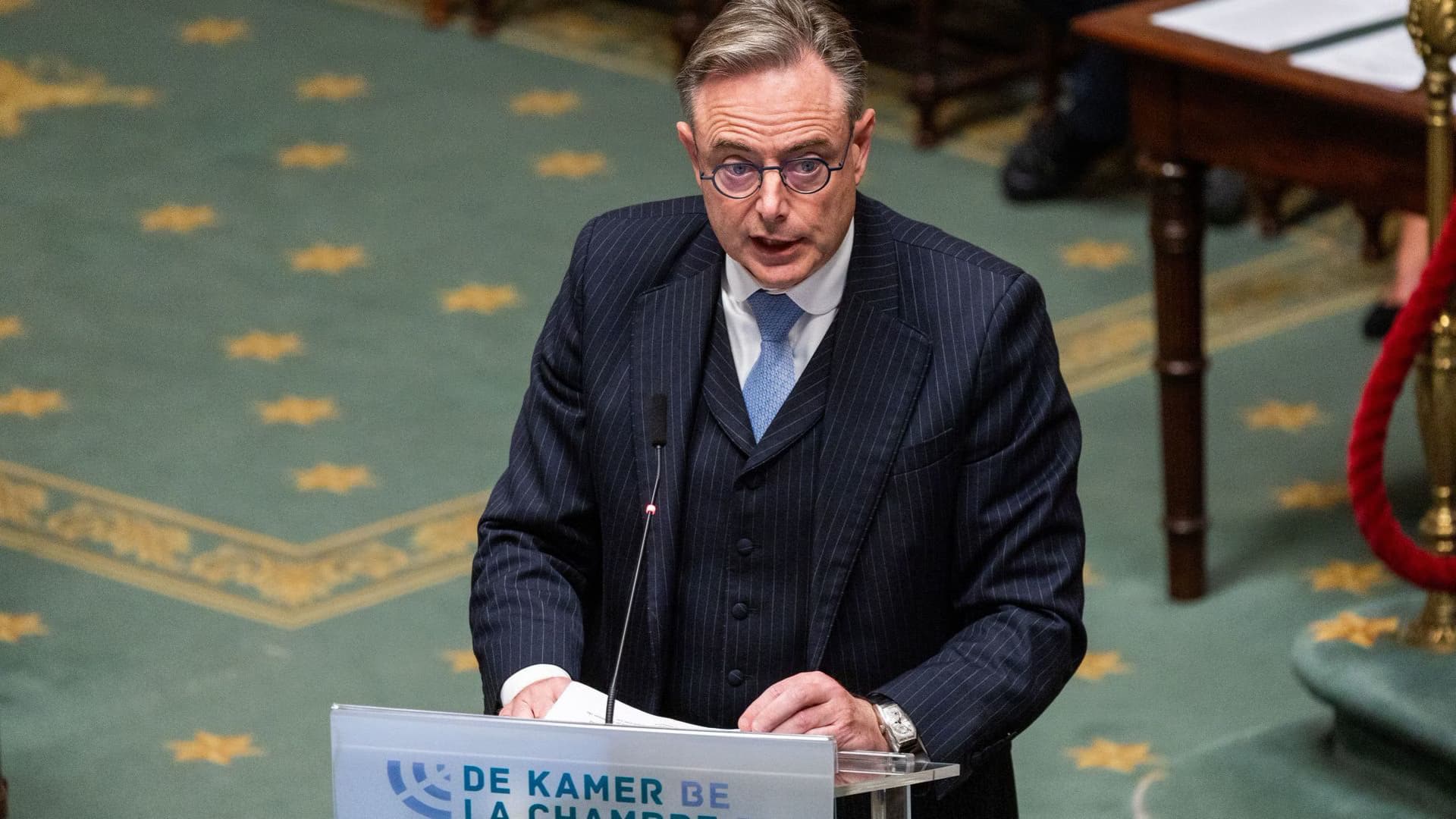
Belgian King Philippe rejected Prime Minister Bart De Wever’s resignation on Friday, 6 November, and asked him to resume budget negotiations immediately, according to a statement from the royal palace in Brussels. De Wever is due to return to the king with a new report on Monday, 16 November.
The decision came after the king held consultations over a week with the leaders of the five parties in the governing coalition. The palace said they had all reaffirmed their determination to reach an agreement on a “sound fiscal path” for the next three years and had given the king a “formal commitment” that their parties were prepared to make concessions to reach an agreement within the government.
The king stressed the need to find a “fair balance” between preserving social cohesion and stimulating economic growth. His meeting with De Wever on Friday morning lasted more than an hour.
Background to the crisis
De Wever, leader of the nationalist New Flemish Alliance (N-VA), submitted his resignation to the king on 2 November after talks on next year’s budget collapsed. The king postponed his decision that day, stressing that the country “cannot afford a prolonged political crisis” amid significant geopolitical uncertainty and major economic challenges.

The governing coalition, known as “Arizona” because the colors of its parties match those of the U.S. state’s flag, consists of five parties that took office in February 2025. The government is seeking to raise around €10 billion by 2029, but the parties are divided: the Flemish socialists (Vooruit), Flemish Christian Democrats (CD&V) and centrist party Les Engagés are demanding a greater contribution from the wealthiest, while N-VA and the French-speaking liberals of the Reform Movement (MR) oppose new taxes.
According to The Brussels Times, Belgium’s budget deficit stands at 5.2% of gross domestic product, the highest in the eurozone, while public debt will exceed 110% of GDP this year. Belgium has been subject to the European Union’s excessive deficit procedure since 2024 and must reduce its deficit to below 3% by 2029.
Pressure from financial markets is also mounting. Jean Deboutte, director of the Federal Debt Agency, told Flemish public broadcaster VRT that the spread between Belgian and German bond yields widened by around 10 basis points at the start of the week, attributing the increase entirely to the failed negotiations.
What comes next?
Speaking in parliament on Thursday, De Wever acknowledged that his country would begin next year, for the second consecutive year, under a system of “provisional twelfths,” which allows the government to spend each month one-twelfth of the previous year’s budget. He described this as a “resounding failure” for the government. He said he did not want to be prime minister except of a government that made public-finance reform its priority, “otherwise it makes no sense at all.”
In reaction, Les Engagés leader Yvan Verougstraete said the deadline was “a good signal and a first step for Belgium,” stressing that paralysis must be avoided “at any cost.” Reform Movement leader Georges-Louis Bouchez said holding elections would be “completely irresponsible” given the country’s financial situation. Opposition Socialist Party leader Paul Magnette, meanwhile, called on the government to use the 10 days to completely change course.
Photos: Belga and RTBF
Stay Updated with Hilal Times
Subscribe to be informed about special news, developments and announcements. We will keep you informed.
By signing up, you agree to our Privacy Policy