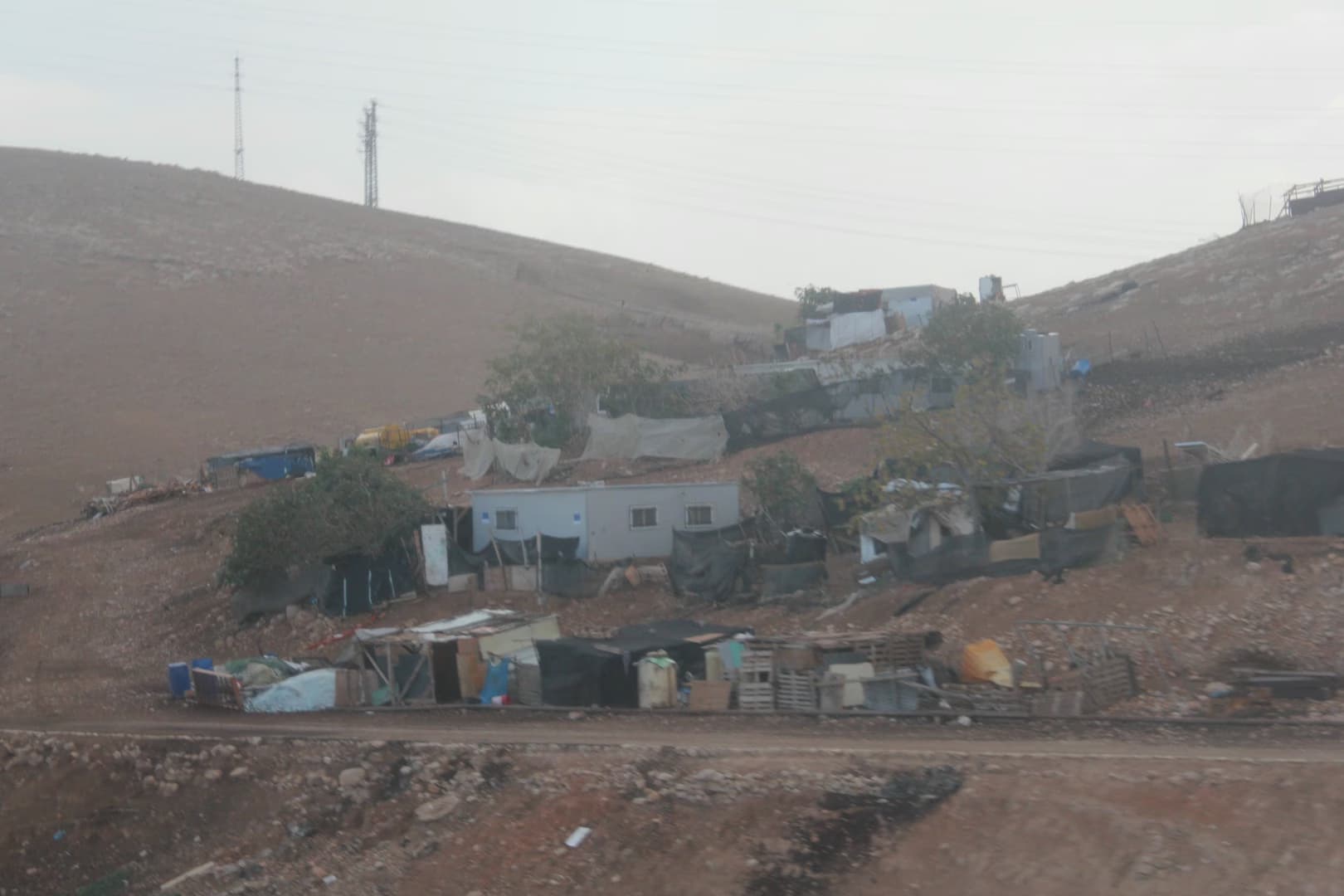
The European Union is charting a roadmap for new steps to restrict trade with Israel's rapidly expanding settlements in the occupied Palestinian territories. EU foreign ministers will address the issue at today's meeting in Brussels.
A senior EU diplomat and a European official who spoke to Reuters said the discussions would be based on a confidential document prepared by the European Commission. The document lists three main options for goods from Israeli settlements: an import licensing system, high customs duties, and a full trade ban.
EU had previously imposed sanctions
In May, the EU had imposed sanctions on four entities and three individuals over serious and systematic human rights violations against Palestinians in the occupied West Bank.
A diplomat speaking about today's closed session said, "What you will witness today will be a discussion on options, and we will get a clearer picture of each side's stance."
Division in decision-making process
Diplomats do not expect a concrete decision today due to differences of opinion among member states. At the heart of the disagreements is the question of how the decision will be taken.
Some diplomats argue that a trade ban with Israeli settlements could be adopted by qualified majority, while the Commission document indicates it may require unanimity. The unanimity requirement makes decision-making considerably more difficult.
European Commission spokesperson Paola Pinho confirmed that the document had been shared with member states but declined to comment on its content.
Pressure and cracks among member states
The EU often struggles to take strong decisions on Middle East issues due to deep divisions among its 27 member states. However, the recent surge in settler violence and the intensive expansion of settlements by Prime Minister Benjamin Netanyahu's government have increased pressure from some member governments to act.
According to a Politico report based on four diplomats, a group of EU countries including Belgium, the Netherlands, and Spain is trying to pressure the Commission to present a proposal to restrict trade with Israeli settlements.
Spanish member of the European Parliament's Foreign Affairs Committee Nacho Sánchez Amor stressed that settlements are illegal, saying, "The best solution is to simply ban the import of all goods produced in the settlements."
Meanwhile, a senior European diplomat said Germany plans to veto or abstain on any decision that would impose customs duties on Israel.
International Court of Justice opinion and Israel's reaction
The International Court of Justice (ICJ), in its advisory opinion issued in July 2024, stated that Israel's occupation of Palestinian territories and settlement construction in the West Bank are unlawful. The Court stressed that states must take steps to prevent trade or investment relations that help maintain this situation.
Israeli Foreign Minister Gideon Saar last year described efforts by some European governments to implement the advisory opinion as "shameful."
Record increase in settlement activity
On July 3, Israel approved a plan to establish 13 new settlement units in the middle of the West Bank. The Palestinian Jerusalem Governorate warned that this step would fragment the West Bank and isolate Jerusalem.
According to data from the Palestinian Center for Israeli Studies (MADAR), there has been an unprecedented surge in settlement outposts in recent years. Between 2012 and 2022, an average of 8 new outposts were established per year, while this number rose to 32 in 2023, 62 in 2024, and 86 in 2025.
In late June, the Israel Hayom newspaper reported that settler movements in the West Bank had prepared a plan to fundamentally alter the region's map and target Area A, which is under full Palestinian control. According to the newspaper, the plan, led by the "Settlement Farms Union" and the "Habita" (Homeland) forum, envisages a mechanism to deploy forces to about 100 strategic points in a "command day" scenario, and constitutes a clear violation of the Oslo Accords.