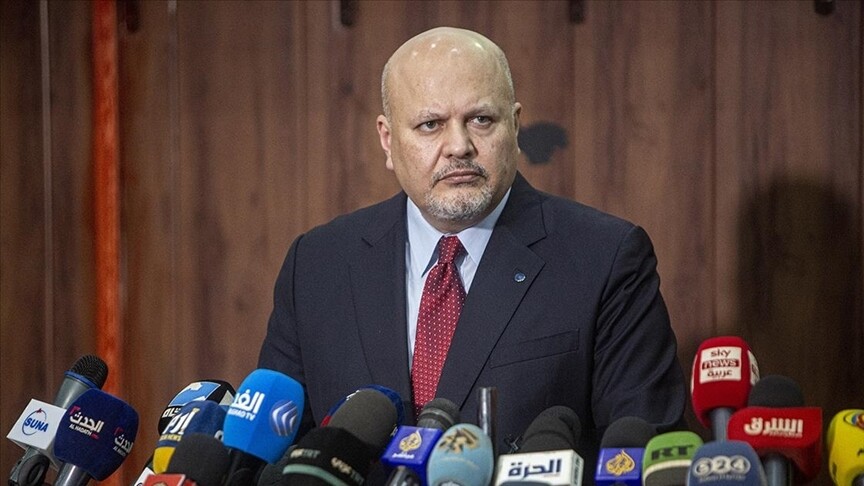
International Criminal Court (ICC) Chief Prosecutor Karim Khan was dismissed at a special session of the Assembly of States Parties (ASP) held on July 24 in New York. The decision, taken with the votes of 82 out of 125 member states, is seen as a serious threat to the court's independence.
Professor Martin Shaw from the University of Sussex in the UK and Dr. Heidi Matthews from York University in Canada stated that the decision was driven by US and Israeli pressure on the ICC. The experts warned that the investigations concerning Palestine and Gaza in particular could be negatively affected.
Independent Panel Finds Insufficient Evidence
The independent panel of judges appointed by the court found no evidence beyond reasonable doubt that Khan abused his office. Khan's lawyers, however, say their client was dismissed without an opportunity to defend himself, and that the process was unfair. Despite this, the ASP went straight to a vote instead of deepening the investigation.
US and Israeli Campaign Against the Court
Prof. Shaw noted that US Secretary of State Marco Rubio relaunched the campaign against the court last week, saying, "Israel and the US are trying to bring down the Court. It is impossible not to see this as part of the crisis." Shaw stressed that the dismissal does not formally change the arrest warrants against Israeli Prime Minister Benjamin Netanyahu and former Defense Minister Yoav Gallant, but the real concern is the court's future stance.
Shaw said the new prosecutor would be aware that they too could be dismissed if they take steps that disturb powerful states, adding, "The internal and external elements that want to roll back the Palestine investigation and the Gaza charges have been further empowered by the decision to remove Han."
The Court's Biggest Crisis in 24 Years
Dr. Heidi Matthews described Khan's dismissal as the most serious institutional crisis in the ICC's 24-year history. Matthews said the decision was taken in the context of the Trump administration's all-out assault on the court. Citing Rubio's description of the ICC decisions as a "government-wide campaign," Matthews said, "The dismissal decision cannot be seen in isolation from the unprecedented political efforts to discredit and disrupt the Court's work."
Palestine Investigation a Litmus Test
Matthews stated that the situation in Palestine is seen as a "litmus test" for the court's legitimacy within the international criminal law community. She noted that three arrest warrants were also issued for Hamas leaders as part of the same investigation, but the cases have not progressed because those individuals were killed by Israel.
Noting that it is unknown who the new prosecutor will be and that the process will be conducted under political pressure, Matthews warned, "If the new prosecutor abandons this investigation, we will be at a critical juncture for the Court's capacity to seriously address crimes committed by Western states or their allies."