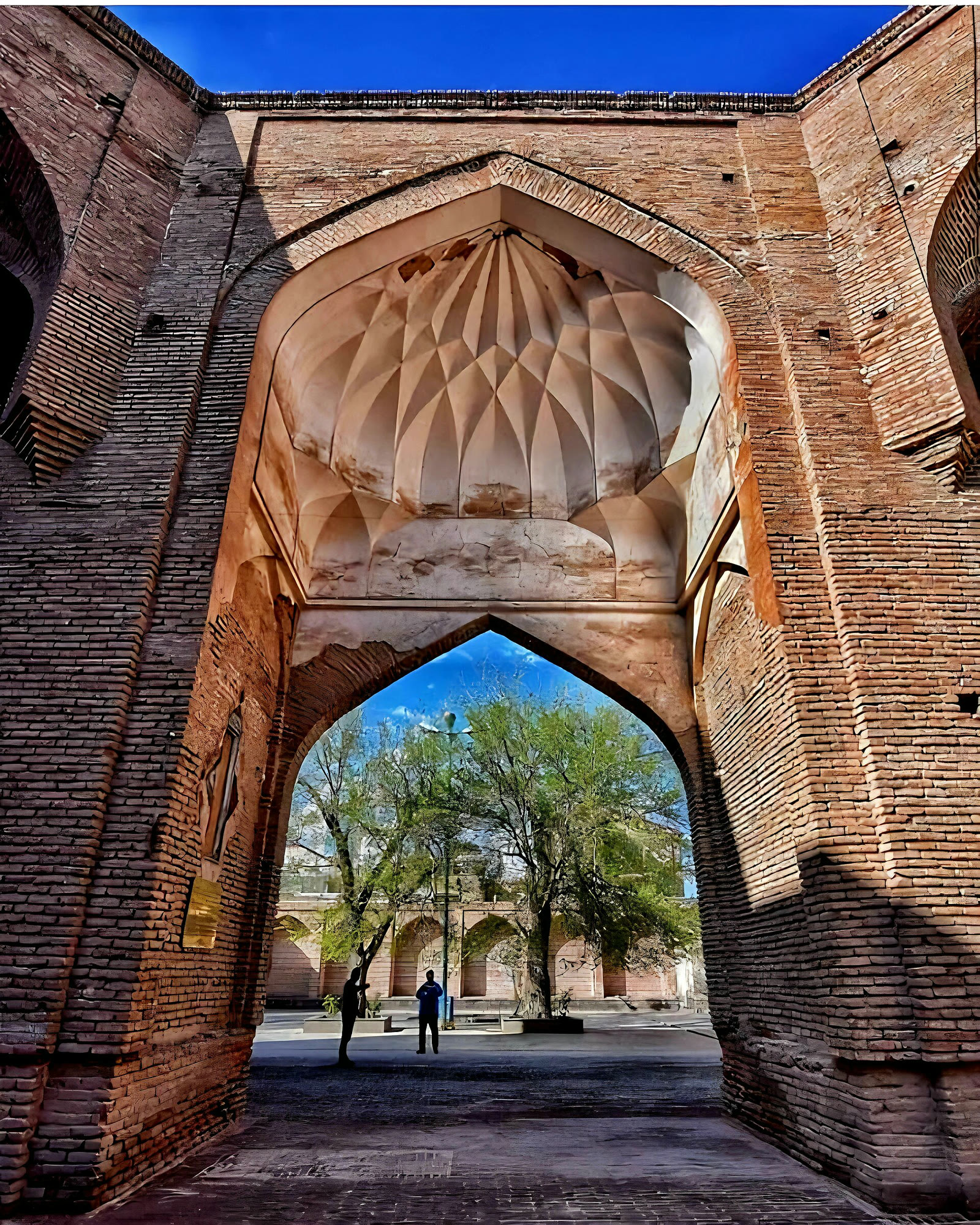
Mutellib Han Mosque in Iran is among the country’s notable places of worship with its square-plan prayer hall, two-story structure and geometric brickwork. The mosque’s mihrab is 12.5 meters long, its portico measures 15 meters and its iwan is 25 meters long.
Geometric brickwork and dedicated prayer areas
The building’s interior and exterior façades were constructed with bricks arranged in geometric formations without the use of patterns. The upper section of the mihrab features muqarnas made of geometric plaster ornamentation.
The second floor, separated by wooden railings, contains dedicated areas for women to pray. The floor is reached by staircases positioned at the mosque’s four corners.
The mosque was also used in the past as a place where students received religious education.
Mutellib Han gave the mosque its final form
Mutellib Han, chief jeweler to Abbas Mirza, the crown prince of Qajar ruler Fath-Ali Shah, gave the mosque its final form. A spacious courtyard with a decorative pool at its center stands in front of the building’s prayer hall.
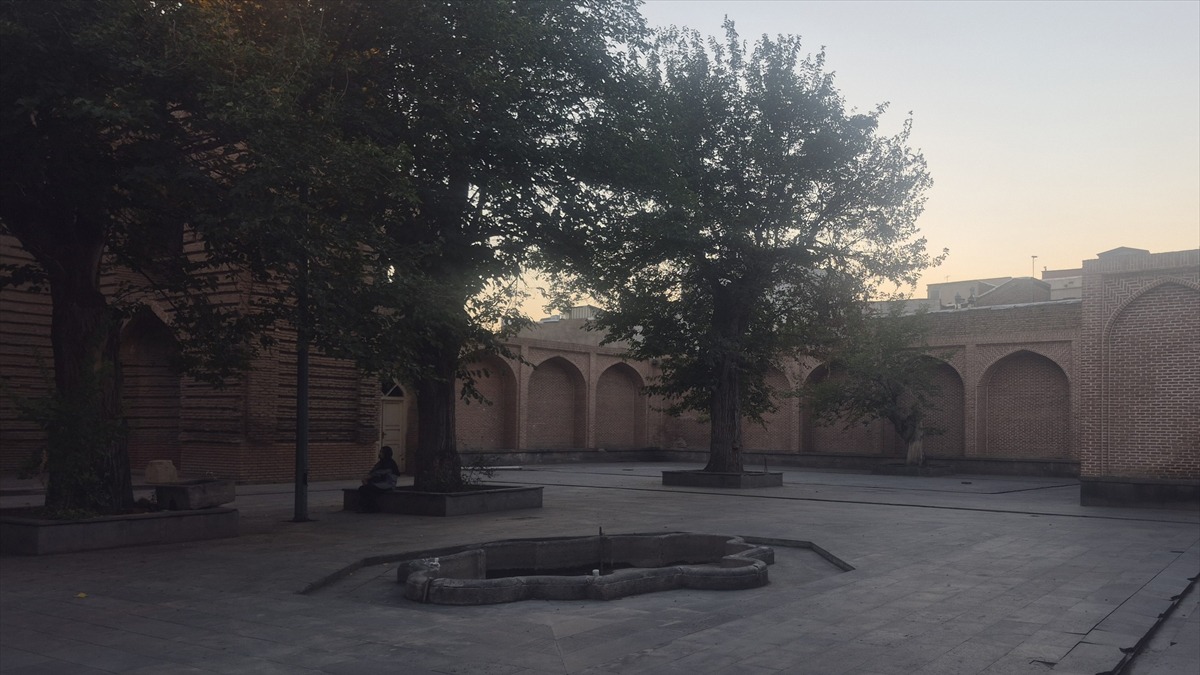
There is a tradition that the mosque’s domeless design is based on the first open-air prayer spaces from the time of the Prophet Muhammad. The building is said to have been designed in line with this approach, taking the earliest mosques in Islam as its model.
A portable, lightweight metal dome with an 18-meter span was later added to the building to reduce the adverse effects of the climate.
Listed among Iran’s national heritage
Mutellib Han Mosque underwent restoration work during various periods and was added to Iran’s National Heritage List on March 19, 2000.