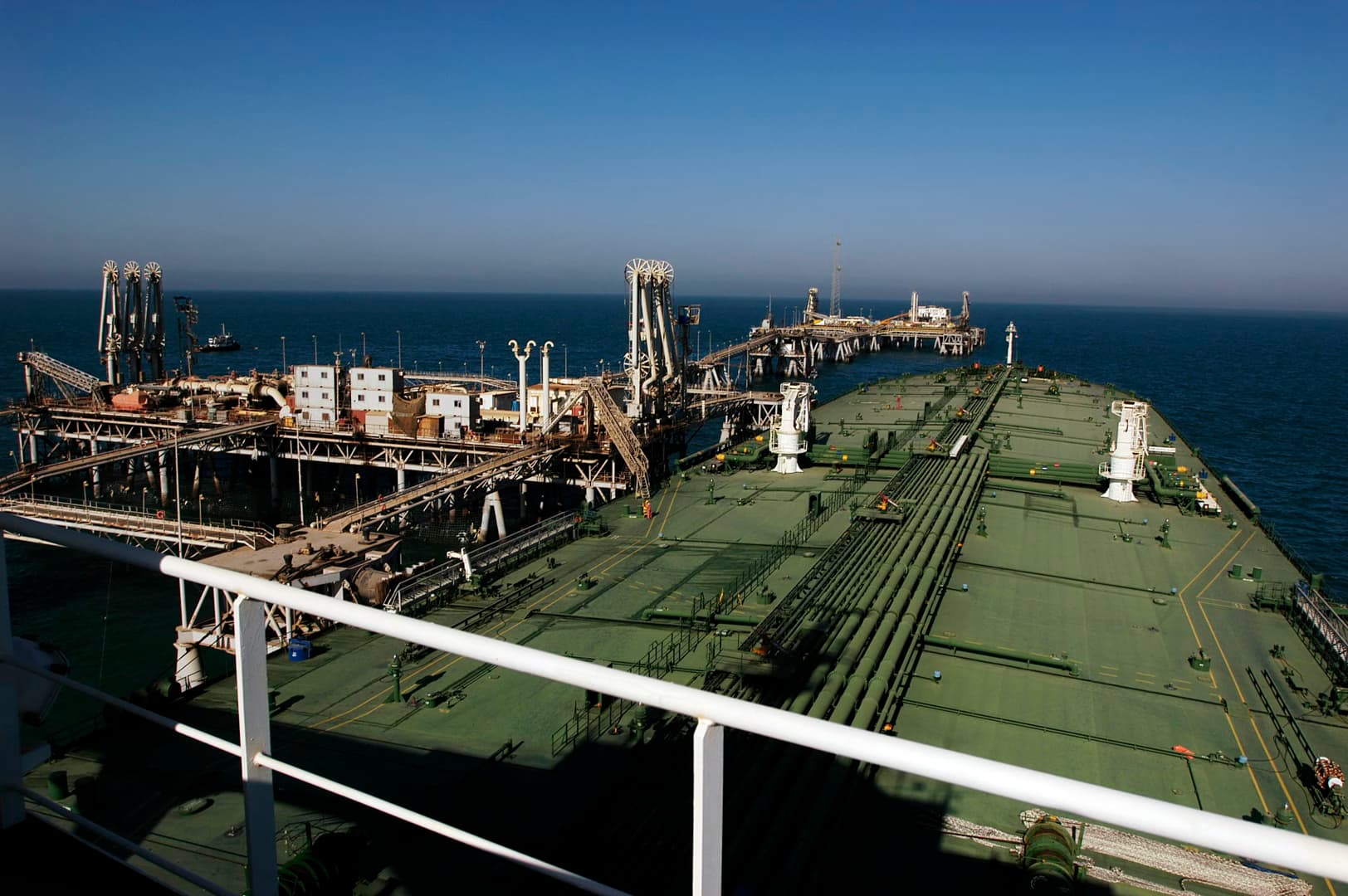
Following the agreement between the U.S. and Iran, attention turned to the Strait of Hormuz, where the passage of 25 commercial vessels yesterday reached the highest level since the beginning of this month, with at least 8 million barrels of crude oil transported through the strait.
U.S.-IRAN AGREEMENT TURNS EYES TO HORMUZ
The 14-point agreement, prepared as a result of talks mediated by Pakistan and known publicly as the 'Islamabad Agreement', was signed digitally by the leaders of the two countries and entered into force.
The agreement includes provisions such as ending the war, reopening the Strait of Hormuz, and lifting the U.S. naval blockade against Iran. Following the deal, a significant increase in ship traffic was observed in the Strait of Hormuz, which global energy markets have been closely monitoring.
OVER 8 MILLION BARRELS OF OIL TRANSPORTED IN A DAY
According to data from analytics company Kpler and MarineTraffic, a total of 25 commercial vessels passed through the strait yesterday carrying liquefied natural gas (LNG), crude oil, petroleum products, fertilizer, dry bulk, and containers. Nine of these vessels were identified as loaded, while four supertankers transported a total of at least 8 million barrels of crude oil.
A significant portion of the transported oil consisted of shipments from Saudi Arabia. It was determined that most of the approximately 6.2 million barrels of Saudi crude oil on three supertankers was shipped to Japan and South Korea. The supertanker Tenzan, loaded with approximately 1.8 million barrels of crude oil from the United Arab Emirates, is also heading towards Japan.
QATARI LNG BEING TRANSPORTED TO PAKISTAN
Among the vessels passing through the strait, energy shipments also drew attention. The French-flagged LNG tanker Mraikh is transporting 169,000 cubic meters of liquefied natural gas from Qatar's Ras Laffan facilities to Pakistan. The Hong Kong-flagged tanker Tong Lin Wan carries approximately 592,000 barrels of clean petroleum products loaded from the United Arab Emirates.
The tanker's route is reported to be Singapore. Meanwhile, two dry bulk carriers passing through the strait were recorded transporting fertilizer to India and China.
SHIP TRAFFIC GRADUALLY RECOVERING
According to MarineTraffic data, the number of commercial vessels passing through the Strait of Hormuz has followed a volatile trend in recent days.
On June 14, 12 vessels passed; on June 15, 10; on June 16, 14; and on June 17, 7 commercial vessels made the crossing. Yesterday's recorded traffic of 25 vessels marked the highest level in recent weeks.
'IRAN ROUTE' STANDS OUT
Since the start of the U.S./Israel-Iran war, it has been noted that a significant portion of commercial vessels passing through the strait operate under fleets on sanctions lists or those referred to as 'shadow fleets'.
Furthermore, a significant portion of the transits through the strait are reportedly conducted via the route known in the maritime sector as the 'Iran route', which uses Iranian territorial waters. Experts assess that if the agreement's effect on the ground proves lasting, energy and trade flows through the Strait of Hormuz could accelerate further in the coming days.