The blockades in two vital maritime passages in the Middle East are pushing global energy supply and trade into severe fragility. Ankara Yıldırım Beyazıt University faculty member Assoc. Prof. Dr. Recep Yorulmaz, in his article for AA Analysis, assessed the multifaceted impacts of the blockage in the Strait of Hormuz and the Bab el-Mandeb Strait.
"The U.S.-Israel bloc used such overwhelming military force as to kill Iran's religious leader, but why did the same bloc remain so helpless in calculating how this force would plunge the global economy into fragility?"
De facto paralysis in the Strait of Hormuz
According to Yorulmaz's analysis, the number of ships passing through the Strait of Hormuz, the narrow passage of the Persian Gulf, dropped from 41 to 6 in one month. This represents not a slowdown but de facto paralysis. Yorulmaz noted that the U.S. southern escort line became dysfunctional after the July 20-21 attacks, and that the United Kingdom Maritime Trade Operations (UKMTO) confirmed three tankers were hit in the southern corridor. He emphasized that the remaining ships had to hug the Iranian coast, creating the contradiction of using the attacker’s route for safe passage.
Yorulmaz stated that LNG shipments from Qatar's Ras Laffan terminal are also at risk, and that QatarEnergy declared force majeure after the attacks, with 17 percent of its export capacity damaged. He said that such a disruption of a producer supplying one-fifth of the world's LNG supply represents a structural break in the spot market.
Bab el-Mandeb route also locked down
Yorulmaz noted that the Yanbu terminal in Saudi Arabia, which was seen as an alternative with the growing risk in Hormuz, was also knocked out after the Houthis declared a naval blockade on July 20, and that three large tankers carrying crude oil to China and India made a U-turn off Bab el-Mandeb and headed for Suez. He stressed that the journey from Yanbu to Asia via the Bab el-Mandeb route, which normally takes 16 days, extends to 50 days when going around Africa via Suez.
Yorulmaz pointed out that China established direct contact with the Houthis for the safe passage of its own tankers and had each vessel approved individually, adding, "The freedom of navigation recognized by international law has disappeared. A fragmented system is emerging that operates based on flag, ownership and bilateral negotiations."
Costs and inflation risk rising
Yorulmaz stated that the blockage in the two straits is imposing a heavy bill on the markets, and that Brent crude rose from $70 before the war to $103 in March, reached $88 in late July in Asian trading, and temporarily pushed toward the $100 mark due to the Houthi blockade.
Yorulmaz noted that marine insurance premiums in Hormuz jumped from 0.25 percent of the vessel's value to between 3 and 10 percent, so that insurance costs for a $100 million tanker soared from $250,000 to $10 million. He stressed that the rise in freight rates and route extensions risk reversing the disinflation trend, and said that the U.S. Federal Reserve's (Fed) decision to hold rates steady in late July, together with three members calling for a rate hike, is a concrete reflection of this unease.
Turkey’s Development Road alternative stands out
Yorulmaz also drew attention to the regional repercussions of the crisis, noting that Egypt's Suez Canal revenues are melting away and that Algeria and Libya have gained new visibility in Europe’s search for energy diversification. Although the geostrategic value of corridors in the Caspian basin has increased, the existing infrastructure cannot substitute the volumes flowing from Hormuz in the short term, he said.
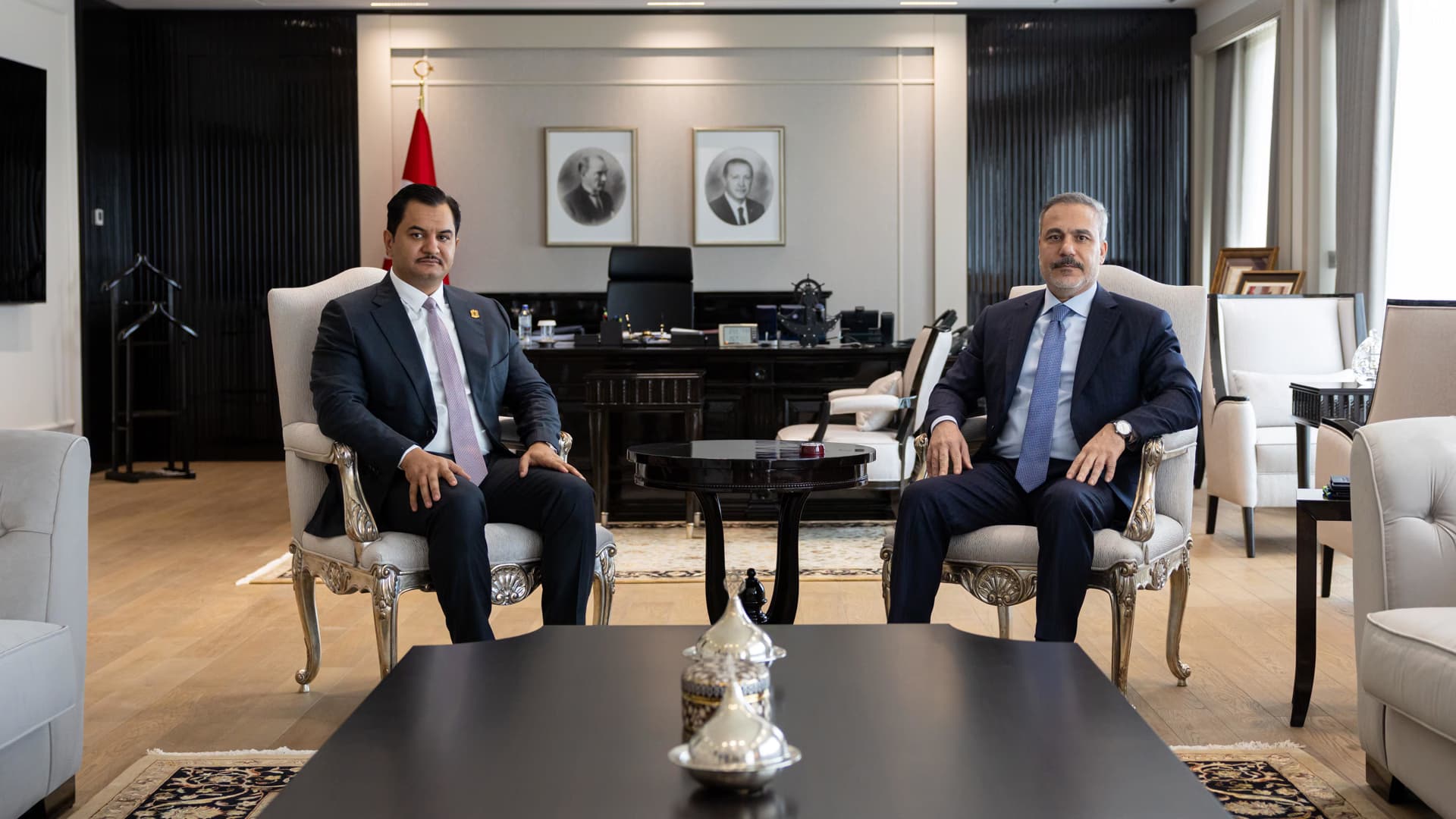
Stressing that the truly notable development came from Turkey, Yorulmaz noted that Ankara signed five separate cooperation agreements with Iraq, the most critical component of which is the Development Road Project that will connect the Faw Port in the Persian Gulf to Europe via Turkey. He stated that this 1,200-kilometer corridor of rail and highway represents an energy and trade route independent of Hormuz and Bab el-Mandeb, and that the partnership of the Turkish Petroleum Corporation (TPAO) in the Kirkuk production field and the prospect of 1 million barrels of oil per day flowing to Turkey complete the energy dimension of this vision.
Yorulmaz said, "It is now undeniable that Turkish foreign policy read this picture long ago and began designing alternative corridors before the crisis. A strategy that keeps land corridors ready while sea routes are locked down stands out today as the region’s most accurate move."