- BIST10011,117-0.92%
- USD49.65+0.05%
- EUR55.60-0.19%
- GOLD4,007.90-1.29%
- INTEREST36.00%-1.00
- BITCOIN80,398-0.84%
- October 24, 202614°
- BIST10011,117-0.92%
- USD49.65+0.05%
- EUR55.60-0.19%
- GOLD4,007.90-1.29%
- INTEREST36.00%-1.00
- BITCOIN80,398-0.84%
- October 24, 202614°
Palestinian Jibran Trio to Close Tunisian Oud Festival
The fourth International Oud Festival, which began in Tunisia's capital on October 16, brought together concerts, workshops, exhibitions and academic meetings while encouraging young people to learn the Tunisian oud. Artists from Türkiye, Lebanon and Palestine took part in the festival, where challenges in oud education, production and performance were discussed.


A concert by the Palestinian Jibran Trio at the City of Culture in the capital will be the closing event of the fourth International Oud Festival held in Tunisia's capital. The festival, which began on October 16, aims to return the Tunisian oud to the center of the musical stage and encourage young people to learn the instrument.
In addition to concerts, the events in the Medina of Tunis featured workshops, exhibitions, a national oud performance competition and academic meetings. The festival program also examined the characteristics that distinguish the Tunisian oud from the Mashriq oud.
The Tunisian oud at the heart of the festival
The festival opened with an exhibition on Tunisian and Mashriq ouds prepared by craftsman Hadi al-Asfar and artist Amin al-Harrat. Tunisian artist Ziyad Garse, known for performing the Tunisian oud, took the stage at the opening concert.
Hadi al-Asfar was honored at the festival's opening for his work in oud making. During a practical workshop, audiences were shown the stages involved in producing the instrument.
Siham Ben Toumi, director of the Tahir Haddad Cultural Club, which organized the festival, announced that the fourth edition was held under the supervision of the Ministry of Cultural Affairs and the regional cultural delegation. The Tunis Opera Theatre, the National Agency for the Development of Festivals, the Music and Dance Administration, the Centre for Arab and Mediterranean Music, and the Tunisian Oud House also contributed to the event.
The program included an exhibition of Tunisian and Mashriq ouds, a national oud performance competition and workshops in which artists shared their experiences. In addition to the gathering at the Tunisian Oud House, an academic meeting titled "The Tunisian Oud: Contemporary Critical Approaches and Searches for Renewal" was held.
Artists from Palestine, Lebanon and Türkiye take the stage
Siham Ben Toumi said that concerts by foreign artists, alongside local events, had been included since the festival's second edition. This year, oud artist Mehmet Emin Mitmaz from Türkiye performed on Tuesday, while Lebanese artist Charbel Rouhana took the stage on Friday. The Palestinian Jibran Trio will perform at the festival's closing.
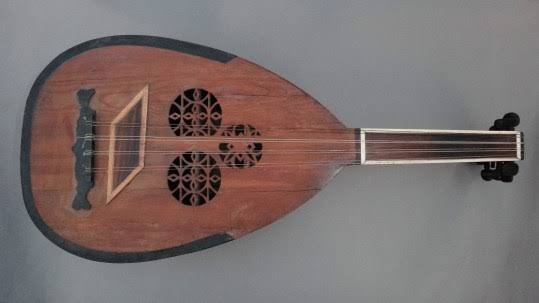
Although international participation has been expanded, the festival organizers are keeping the Tunisian oud at the center of the program. Ben Toumi said the idea for the festival emerged from research on the oud. She said discussions with experts showed that interest in the instrument was limited and that preparing a diverse program based solely on the Tunisian oud was difficult.
"The Tunisian oud is a symbol of our cultural identity and musical history," Ben Toumi said. Ben Toumi said they had dedicated a significant part of the academic meeting, exhibition and workshops to the instrument, adding that the festival organizers aim to help young people learn the oud through partnerships with the Tunisian Oud House and artist Ziyad Garse's art academy.
Oud and piano meet in the same concert
As part of the festival, a concert was also held in which Tunisian artist Ziyad al-Mahdi and US pianist Kyle Shafer brought the oud and piano together. The work prepared by al-Mahdi over several years under the guidance of Zafir Yusuf includes the composition "The Bey's March" and music from the album "Tunisian Sky."
"The Bey's March," composed by oud artist Ziyad al-Mahdi, was prepared as part of a project carried out with Back Beat Editions, owned by Zafir Yusuf. At the concert, the piano accompanied the oud's melodic structure and contributed to the developing musical flow in the later sections of the piece.
Challenges in education and production discussed
Aziz al-Wartani, a music lecturer at the University of Gabes, described the challenges facing the Tunisian oud at an academic meeting held in the Sidi Bou Said suburb of the capital. Al-Wartani said studies in the field of music assess the instrument on three levels: education, production and performance.
Al-Wartani listed inadequate specialized training, the high cost of oud making and limited demand among the main challenges. He said these conditions had weakened the Tunisian oud's presence on the country's musical stage compared with the Mashriq oud, adding that the festival was an initiative aimed at restoring the instrument to its rightful place.
Al-Wartani noted that dedicating the academic meeting in this edition specifically to the Tunisian oud represented a different approach from previous years, when the oud had been addressed in general terms.
Stay Updated with Hilal Times
Subscribe to be informed about special news, developments and announcements. We will keep you informed.
By signing up, you agree to our Privacy Policy