- BIST10011,117-0.92%
- USD49.65+0.05%
- EUR55.60-0.19%
- GOLD4,007.90-1.29%
- INTEREST36.00%-1.00
- BITCOIN80,398-0.84%
- October 24, 202614°
- BIST10011,117-0.92%
- USD49.65+0.05%
- EUR55.60-0.19%
- GOLD4,007.90-1.29%
- INTEREST36.00%-1.00
- BITCOIN80,398-0.84%
- October 24, 202614°
Gaza water line damaged as Hamas warns of starvation
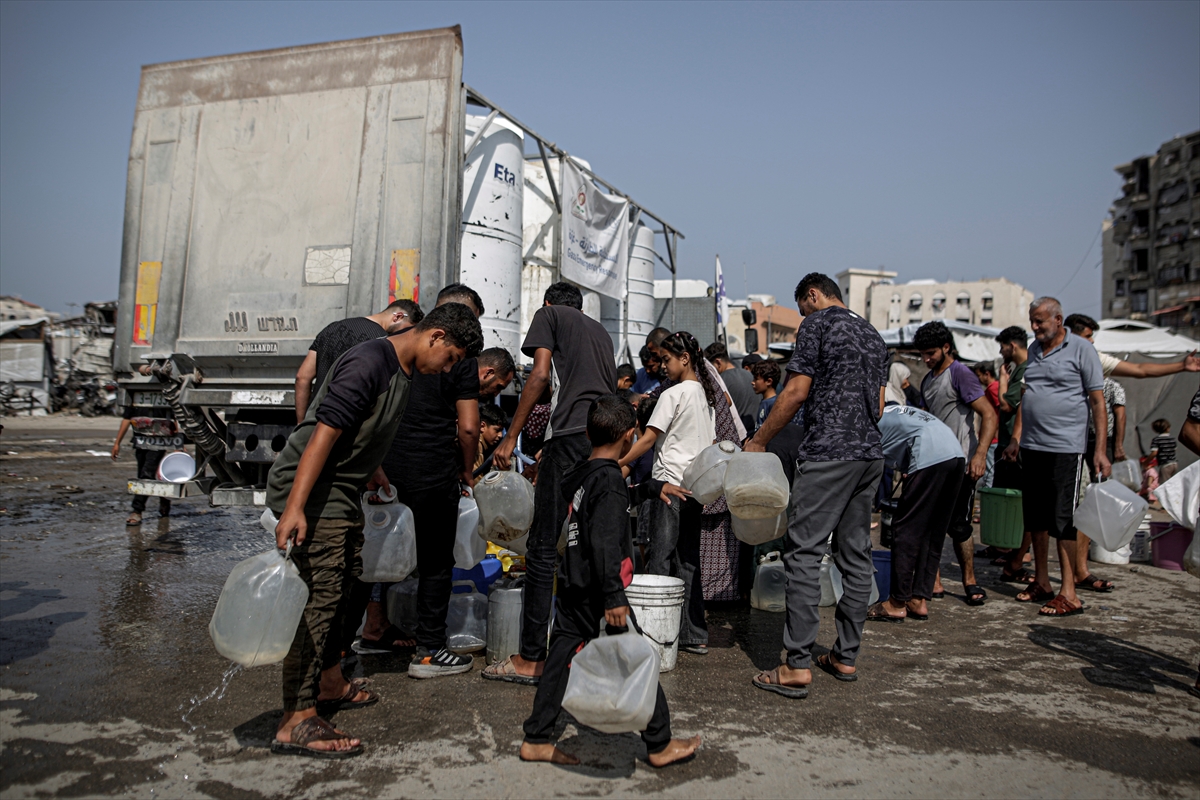
Gaza Municipality said water supplies were cut across large parts of the city after Israel’s bombardment damaged the main water line in the Shuja’iyya neighborhood. Hamas warned of concerns that a starvation policy could be reimposed in Gaza, while shortages of basic food products and restrictions on aid deliveries continue.


Damage to Gaza’s water infrastructure has caused disruptions across large parts of the city. Gaza Municipality said Israel’s bombardment damaged the main water line in the eastern Shuja’iyya neighborhood.
The municipality said the damaged line belongs to Israel’s Mekorot water company. It said coordination was under way with the relevant institutions to repair the line and restore the water flow.
Damage to water sources continues
The Mekorot line is among the main sources supplying water to the Gaza Strip. Gaza Municipality said the latest disruption occurred as severe damage to underground wells and water networks continued.
Environmental expert Said al-Akluk said in an earlier assessment that more than 80 percent of the water infrastructure in the Gaza Strip had been destroyed.
Hamas warns of starvation in Gaza
Hamas said it was concerned that a starvation policy could be reimposed in Gaza. The movement alleged that the international community, the Peace Council and institutions affiliated with it had failed to counter the policy and had become complicit in Israel’s practices.
Hamas also called on official and civil organizations in the Arab world not to allow the blockade and starvation policy to be reimposed in Gaza.
Struggles to access basic food
The Geneva-based Euro-Mediterranean Human Rights Monitor warned that shortages of flour and basic food products, the suspension of operations by some bakeries and the decline in residents’ purchasing power had once again increased the risk of famine in Gaza.
The monitor alleged that restrictions on the quantity and types of food entering Gaza had deprived more than 2 million Palestinians of basic necessities.
Nahid Shuhayber, head of the Gaza Association of Special Transport Companies, also said markets were facing difficulties accessing basic products such as potatoes, onions, cucumbers, tomatoes and flour. Shuhayber said Israel decided which products could enter the area, preventing traders from freely selecting the goods they needed.
Restrictions on aid truck access
According to a statement by Gaza’s government media office, Israel increased restrictions on aid and food deliveries to northern areas in late 2023. The delivery of aid to the area became even more difficult in May 2024, when Israel took control of the Palestinian sides of the Rafah and Kerem Abu Salem crossings.
On March 2, 2025, Israel tightened restrictions at the crossings and blocked the entry of thousands of aid trucks waiting to enter. This tight closure lasted 81 days. On May 22, 2025, the entry into Gaza of 87 aid trucks allocated to international and civil organizations was allowed.
Aid deliveries later continued on a limited and intermittent basis under strict restrictions. In February 2026, the number of trucks reaching Gaza saw a limited increase under the ceasefire agreement. However, Palestinian officials said the aid arriving was insufficient to meet basic food needs.
Gaza’s government media office said the total number of trucks carrying aid and commercial goods did not exceed 33.7 percent of the agreed figure.
Stay Updated with Hilal Times
Subscribe to be informed about special news, developments and announcements. We will keep you informed.
By signing up, you agree to our Privacy Policy














