The Arab Jerusalem Committee, which met in Cairo under Jordan's chairmanship, called for increased Arab and international pressure against practices targeting the status of Al-Aqsa Mosque and other holy sites in Jerusalem.
The committee's 11th meeting was held as part of the 166th session of the Arab League Council of Ministers. Jordanian Deputy Prime Minister and Foreign Minister Ayman Safadi, committee members and the secretary-general of the Arab League attended the meeting.
Condemnation of the E1 plan
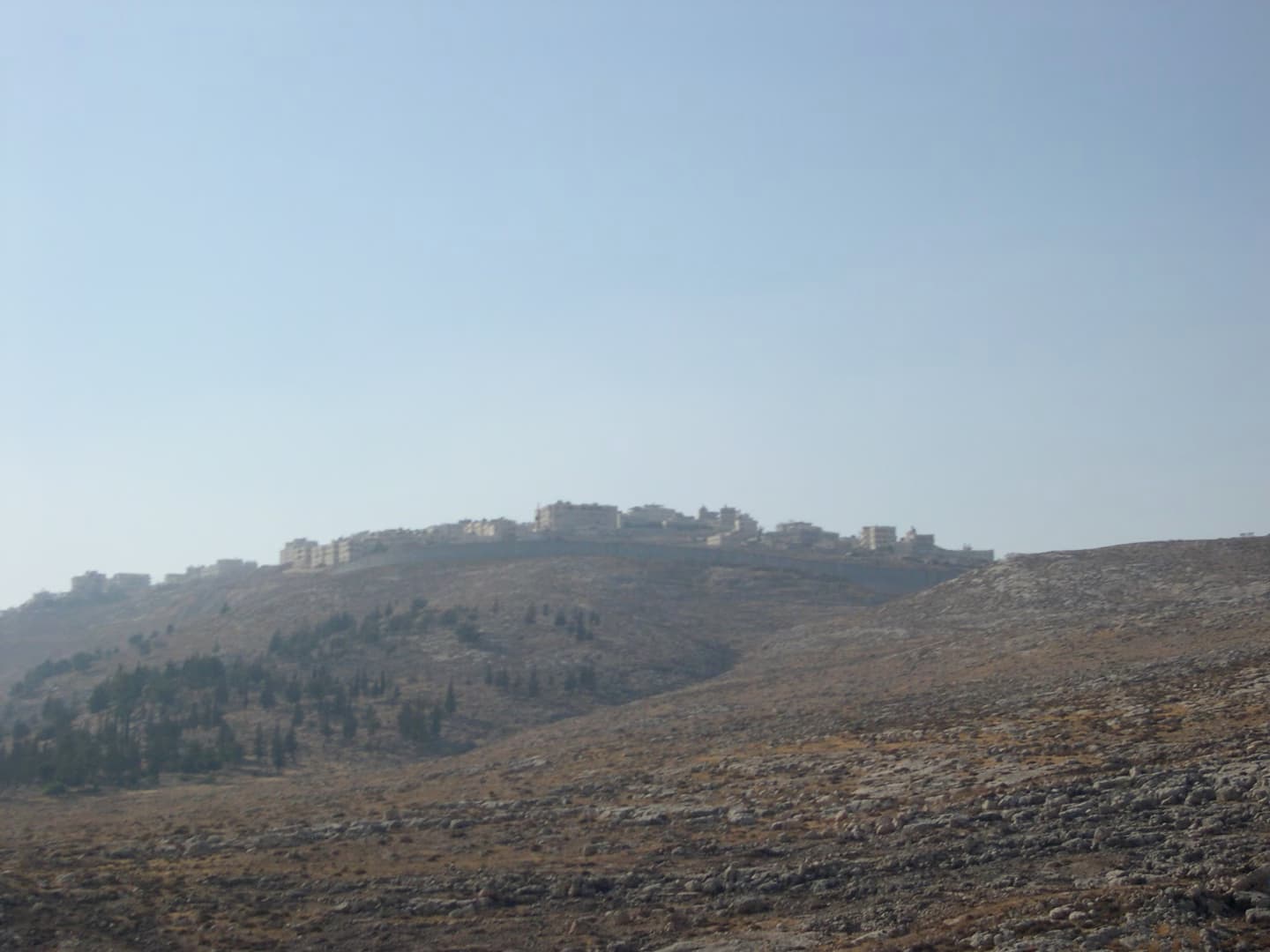
The committee strongly condemned the tender issued by Israeli authorities for the construction of 1,234 settlement units under the E1 plan east of East Jerusalem.
The committee argued that the plan could sever the geographic connection between the northern and southern parts of the West Bank, separate East Jerusalem from its Palestinian surroundings and weaken the possibility of establishing an independent, viable and territorially contiguous Palestinian state.
On August 18, Israeli authorities opened a tender for the construction of 1,234 units under the E1 plan, which covers approximately 3,400 settlement units in the area between East Jerusalem and the settlement of Ma'ale Adumim. The plan faces international objections because of its impact on the geographic connection between the northern and southern parts of the West Bank.
Call for international action on Jerusalem
The Arab Jerusalem Committee called for strengthening the efforts of Arab countries and diplomatic contacts with influential international parties to stop practices targeting holy sites and settler attacks.
The committee called for Israel to be held responsible and held accountable for its practices in Jerusalem. Calling for a strong international position against these practices, the committee warned of their consequences for regional and global peace and security.
The committee decided to intensify Arab countries' efforts at the United Nations, particularly before the United Nations Security Council. These efforts aim to compel Israel to stop its practices targeting Islamic and Christian holy sites and to respect the historical and legal status quo in Jerusalem.
It was also decided to continue contacts with regional and international organizations to document violations in Jerusalem and at its holy sites. A joint ministerial meeting on Jerusalem between the Arab League and the Organization of Islamic Cooperation is expected to be held in New York during the high-level week of the United Nations General Assembly in September.
Mechanism to document violations
The committee welcomed Qatar's initiative to establish a sustainable and institutional mechanism, including a media platform, to monitor, document and expose violations in Jerusalem.
The Arab League General Secretariat was tasked with overseeing the implementation of the mechanism in coordination with member states, determining its working methods and identifying sources of funding.
The committee also called for the launch of a coordinated Arab and international diplomatic and media campaign to publicize violations in Jerusalem and the occupied Palestinian territories, increase international pressure and ensure that they are stopped.
At a ministerial meeting hosted by Jordan on August 5, a call was also made, together with Islamic countries including Türkiye, Pakistan, Indonesia and Malaysia, to establish an institutional mechanism including a media platform for documenting violations.
Entry into the Qalandia Training Centre
The committee also condemned the entry by Israeli authorities into the Qalandia Training Centre in Jerusalem, which is affiliated with the United Nations Relief and Works Agency for Palestine Refugees in the Near East, and the evacuation of the centre.
Describing the move as a serious violation of international law and of the immunities and privileges of United Nations organizations, the committee argued that a systematic campaign was being waged against UNRWA and its activities.
Israeli forces entered the centre on August 25 and removed its employees. Israeli National Security Minister Itamar Ben-Gvir announced that the authorities had begun the process of evacuating the centre, while Israeli Prime Minister Benjamin Netanyahu said the operation was carried out as part of the implementation of the UNRWA law adopted in Israel.
The Qalandia Training Centre is known as one of the oldest vocational training facilities affiliated with a United Nations organization.
The status of Al-Aqsa Mosque
The Arab Jerusalem Committee argued that violations at Al-Aqsa Mosque and practices aimed at changing its historical and legal status quo had increased at an unprecedented rate. The committee condemned the entry of settlers and Israeli officials into Al-Aqsa Mosque and the performance of Jewish rituals and prayers there.
The committee stated that the entire 144-dunam area is exclusively a Muslim place of worship. It emphasized the importance of Jordan's historic custodianship in protecting Islamic and Christian holy sites in Jerusalem and preserving the existing historical and legal status quo.
It was stated that the Jerusalem Endowments and Al-Aqsa Affairs Department, affiliated with Jordan's Ministry of Awqaf, has exclusive authority over the administration of Al-Aqsa Mosque and the regulation of access to it.
The committee reiterated that Israel has no sovereignty over Jerusalem or the Islamic and Christian holy sites in the city. It stated that East Jerusalem is the capital of the Palestinian state that is intended to be established within the June 4, 1967 borders, in accordance with the two-state solution, international law, the Arab Peace Initiative and relevant international references.
The Arab Jerusalem Committee was established by a decision of the Arab League Council in May 2021 to conduct initiatives and contacts with the permanent members of the United Nations Security Council and other influential countries regarding Israel's policies and practices in Jerusalem.