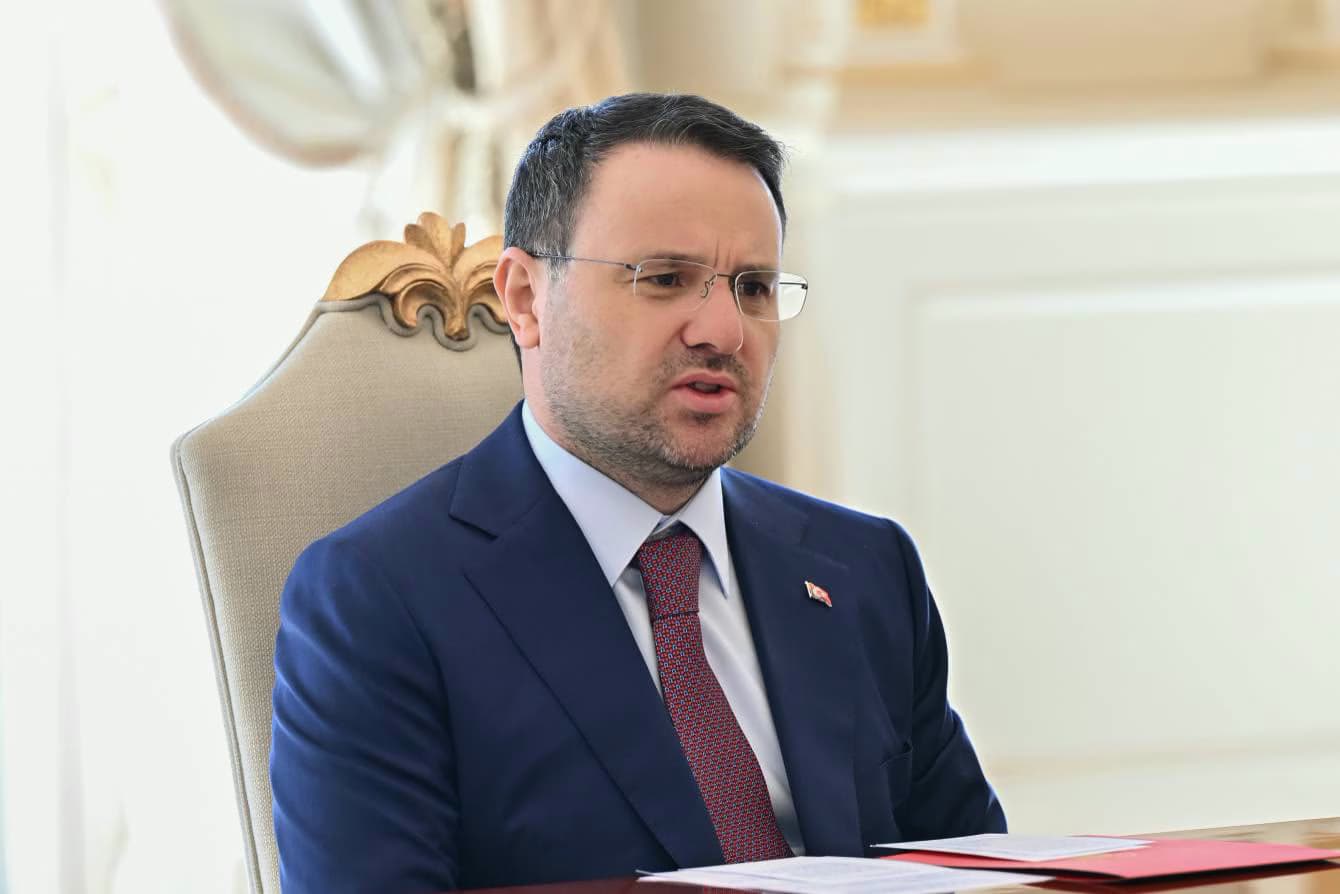
Lebanon’s Deputy Prime Minister Tarek Mitri called at a session in Beirut for official institutions and civil society organizations to coordinate their work to document Israel’s violations and crimes in Lebanon. Mitri said the documents collected should be taken to court.
The session, held on Thursday, addressed how information on violations of international humanitarian law should be collected, verified and recorded.
Documentation efforts to be brought together in one center
Mitri asked civil society organizations and institutions conducting research and preparing reports on the violations to submit their work to the Lebanese government. Saying that efforts in this field needed to be consolidated, Mitri also praised the work of volunteers serving on the National Committee for International Humanitarian Law.
Mitri announced that the Lebanese government was working to establish a permanent center responsible for documenting violations. He said the structure was intended to help coordinate official and civil society efforts.
Rome Statute poses obstacle to ICC application
Assessing Lebanon’s ability to apply to the International Criminal Court, Mitri recalled that his country was not party to the Rome Statute, which established the court. He therefore said that, under the current legal circumstances, the Lebanese state could not apply to the court against Israel.
Mitri said that crimes committed during a specific period in the territory of a country that is not fully party to the Rome Statute could be examined by the court under certain conditions and legal mechanisms.
Mitri said Lebanon’s previous government had decided to join the Rome Statute but later reversed that decision, adding that the necessary procedures could not be completed. He said the current government had also been unable to restart the process last year.
Lebanese individuals can apply to European courts
Mitri said the state’s current inability to apply to the International Criminal Court did not prevent Lebanese individuals from filing cases in European courts. He said courts in Spain, Belgium and France could assess applications under the conditions set out in their respective laws.
The toll of the attacks in Lebanon
Nasir Yasin, director of the center in Beirut, said they had been working since the start of Israel’s attacks on Lebanon to draw attention to the violations, the cost of the war and the damage to vital sectors such as education, health and agriculture.
Members of the Lebanese Parliament, Inaya Ezzeddine, Ibrahim Mounaymineh and Michel Moussa, as well as people working in law and human rights, attended the session.
On June 26, Lebanon and Israel signed an agreement in Washington on a framework providing for the phased withdrawal of Israeli forces from Lebanese territory, the deployment of the Lebanese army and the implementation of security arrangements. The arrangements were planned to begin under a “testing zones” model.
According to data released by Lebanese authorities, 4,335 people were killed, 12,277 were injured and more than 1 million were displaced in the attacks that began on March 2. Israel continues to occupy several areas in southern Lebanon, some for decades and others since the previous war between 2023 and 2024; it advanced more than 10 kilometers during the current attacks.
On November 21, 2024, the International Criminal Court issued arrest warrants for Israeli Prime Minister Benjamin Netanyahu and former Defense Minister Yoav Gallant on charges of war crimes and crimes against humanity against Palestinians.