Fighting between Yemen's government forces and the Houthis has intensified again on the Al Jawf, Taiz and Al Bayda fronts in the country's north and southwest. Government forces announced that they had captured several positions in Al Jawf and Taiz and had also made advances on the ground in Al Bayda.
Advance toward the Labanat camp in Al Jawf
Government forces announced that they had secured the upper and lower Labanat areas in Al Jawf province and had advanced toward the Labanat camp. The statements said that several strategic points in the area had also been brought under control.
Yemen Armed Forces spokesperson Colonel Majid al-Nazili said new positions had been captured on the Al Jawf and Al Bayda fronts. Al-Nazili said the Houthis had suffered losses in personnel and military equipment, that operations were continuing with the support of various military units, and that fighting remained intense.
Yemen's state television reported that dozens of Houthi members had surrendered to government forces in Al Jawf along with their weapons.
Airstrikes west of Taiz
The Yemeni army announced that Houthi reinforcements in the Al-Rubai'i area west of Taiz city had been targeted in airstrikes. According to the army, the convoy included 21 vehicles carrying fighters, military equipment and 23-millimeter guns.
The military statement said the strikes caused damage and fires in the vehicles. Government forces announced that they had prevented the reinforcements from reaching the Al-Barh and Maqbanah fronts west of Taiz.
Fighting on the Al-Barh front was said to be continuing with heavy use of heavy weapons. Government forces also announced that they had successively destroyed three Houthi defensive lines and inflicted losses in attacks carried out by unmanned aerial vehicles.
On the Al-Qadhah front in Maqbanah district, government forces announced that they had taken control of Naqil and Mount Al-Qura after clashes with the Houthis. Mount Al-Qura overlooks parts of the Al-Qadhah area, and the road between Taiz and Al-Mokha to the west also runs through the area.
13 airstrikes in Al Bayda and Marib
Government forces announced that 13 airstrikes had targeted Houthi positions, gathering sites and vehicles in Al Bayda province. They said the targets included sites in the districts of Al-Sharayah, Dhi Naim, Al Bayda and Al-Sawadiyah, including a rocket-launching platform.
Houthi positions and military barracks in Marib province were also targeted in airstrikes, according to the announcement.
Houthis say they shot down two armed reconnaissance aircraft
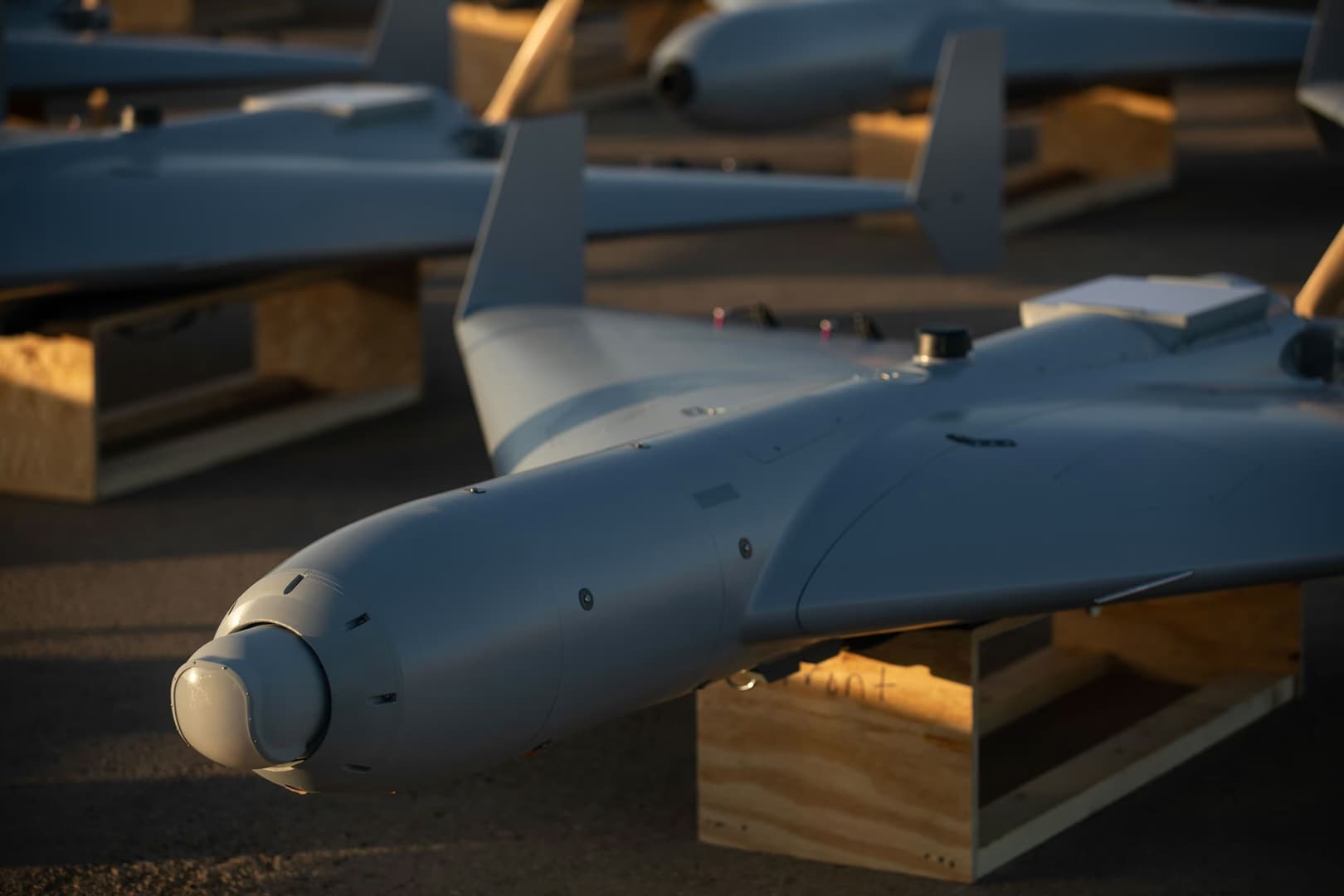
Houthi military spokesperson Yahya Saree announced that they had shot down two armed reconnaissance aircraft in Al Jawf and Al Bayda that he claimed belonged to Saudi Arabia. Saree claimed that the aircraft shot down in the airspace over the Habb and Al-Sha'af districts of Al Jawf was a CH-4 and had been carrying out "hostile activities."
Saree said another Wing Loong II aircraft had been shot down in Al Bayda's airspace, making it the third aircraft they claimed to have downed within 24 hours. The Houthis had announced the previous day that another aircraft of the same type had been shot down northwest of Maqbanah district in Taiz.
Saudi Arabia did not comment on the Houthi claims.
A brief chronology of the Yemen war
The war in Yemen began after the Houthis seized control of the capital, Sana'a, and several provinces in September 2014. The Arab coalition led by Saudi Arabia intervened in the conflict in March 2015 to support the internationally recognized government.
The ceasefire that took effect under United Nations mediation in April 2022 officially ended in October of the same year. Despite this, large-scale fighting along the main front lines remained relatively low-intensity for a period; with the latest developments, military activity has again increased on the Al Jawf, Taiz and Al Bayda fronts.